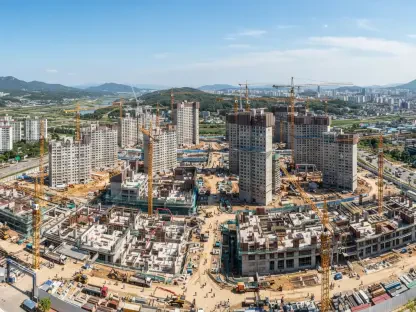

The long-term economic value of these facilities will eventually shift from physical construction to the frequent three-to-five-year cycles of high-value IT equipment refreshment. This reality defines the current Australian infrastructure landscape, which is undergoing a massive transformation as the nation enters an unprecedented data center construction boom. Driven by a decade of cloud computing expansion and the rapid acceleration of Artificial Intelligence, this sector is transitioning from a niche component of the building industry into a primary economic driver. According to recent data, the industry is in the early stages of a development cycle that will see it become a dominant force in the national construction market. By the 2025/26 financial year, construction work is expected to reach approximately $5.3 billion, but the true peak is projected for late in the decade. By 2029, construction activity is estimated to hit $14 billion in constant prices, making data centers the seventh-largest sector.
Evaluating Infrastructure Demands: Power and Grid Capacity
The Energy Surge: Projecting National Consumption
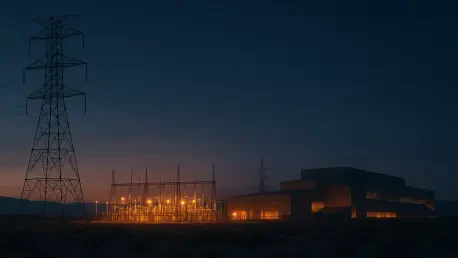
While the construction pipeline is vast, its realization is heavily dependent on the availability of electricity. Data centers are uniquely energy-intensive, requiring constant, high-volume power to run servers and cooling systems. National data center energy usage is expected to rise from 5 Terawatt-hours in 2026 to nearly 34 Terawatt-hours by 2036, causing the sector’s share of the National Electricity Market to jump from 2.8% to over 13%. This surge in demand creates a strained relationship with the broader electricity infrastructure sector. Although investment in power generation is skyrocketing, the lack of immediate grid access remains a primary constraint. Power availability will ultimately dictate the geographical distribution of these projects; a developer may have the funding and the land, but without a guaranteed high-voltage connection, a project cannot proceed. Consequently, many announced developments remain in a state of limbo until utility providers can catch up.
Grid Integration: Balancing Load and Reliability
Beyond the mere volume of power, the quality and reliability of the grid integration represent a massive logistical hurdle for Australian utility providers. As data centers move toward high-density computing to support generative AI workloads, the thermal and electrical load per rack is increasing significantly. This shift necessitates a complete reimagining of local substation capacity and transmission lines. Grid operators are forced to prioritize projects based on regional capacity, leading to a bottleneck that favors established industrial zones over new developments. Moreover, the integration of renewable energy sources into the grid adds a layer of complexity to the stability required by hyperscale facilities. Developers are increasingly looking for ways to co-locate with energy generation sites or invest in massive battery storage solutions to mitigate these risks. The success of the sector hinges on whether the public and private sectors can coordinate on long-term energy strategy.
Addressing Operational Challenges: Labor and Resources
Resource Scarcity: The Competition for Skilled Labor
The constraints on the boom extend beyond the electrical grid to encompass specialized labor and natural resources. Building these facilities requires specific engineering skills, forcing the sector to compete with other major infrastructure projects for a finite pool of skilled tradespeople. This competition has driven up labor costs and extended project timelines across the nation. Specialized electricians, mechanical engineers, and project managers with experience in high-uptime environments are particularly in high demand. Unlike traditional commercial buildings, data centers require intricate HVAC systems and complex fire suppression technologies that necessitate a higher level of technical oversight. This labor shortage is compounded by the fact that many of these projects are being built in similar geographic hubs, leading to a concentrated strain on the local workforce. Contractors must now adopt more aggressive recruitment and training programs to ensure they have the personnel.
Domestic Value: Capital Expenditure and Local Retention
It is vital for stakeholders to distinguish between total Capital Expenditure and the actual economic value retained within Australia. While total annual investment is expected to exceed $60 billion by the end of the decade, a significant portion of this money flows offshore to purchase advanced chips and specialized servers manufactured internationally. The construction phase represents the period of highest domestic economic capture because the physical shells must be built locally using Australian labor and materials. However, as the industry matures, the proportion of spending on physical structures compared to high-tech hardware will likely shift. Most of the value in a modern data center lies in its silicon, which is currently dominated by global tech giants outside the domestic market. This dynamic creates a scenario where the headline investment figures may overstate the actual boost to the local GDP unless there is a concerted effort to foster a more robust domestic hardware supply chain.
Shifting Investment: From Construction to Hardware Refreshment
Over time, the nature of this investment will shift as the industry moves from building shells to refreshing hardware. While a building may last thirty years, the IT equipment inside typically requires replacement every three to five years to keep pace with technological advancements. Consequently, in the long term, a greater share of capital will be directed toward international hardware procurement rather than the local construction industry, altering the domestic economic impact of the sector. This lifecycle necessitates a shift in how policymakers view the long-term sustainability of the data center industry. While the initial construction boom provides a welcome surge in activity, the subsequent operational phase produces fewer jobs and lower direct local spending. Strategies to capture more value during the operational lifecycle, such as localizing component assembly or specializing in high-value maintenance services, could help ensure that the economic benefits are more durable.
Managing Future Risks: Reliability and Evolution
Pipeline Reliability: Market Fluctuations and AI Returns
The scale of the current pipeline should not be mistaken for a guaranteed forecast, as several factors could lead to the downsizing or delay of projects. If the financial returns on AI investments do not meet current expectations, the pace of capital deployment may slow significantly. The high costs associated with training large language models have led some analysts to question the immediate profitability of these ventures. Additionally, higher interest rates or tighter lending standards could make these large-scale developments less viable for investors who require high leverage for entry. The global nature of the data center market means that Australian projects are competing for the same capital as projects in North America and Europe. Should the global appetite for digital infrastructure cool, the local pipeline could contract rapidly. Investors are becoming more discerning, looking for projects with clear pathways to profitability rather than just potential capacity.
Strategic Outlook: Navigating the Digital Transition
Technological advances also posed a risk to the construction boom, as future improvements in computing efficiency reduced the physical footprint or power requirements of new facilities. For investors and contractors, the challenge laid in identifying real projects that had secured power and permits versus those that remained speculative. To navigate these hurdles, organizations moved toward modular and scalable designs that allowed for gradual expansion. Strategic planners prioritized locations with resilient energy infrastructure and proximity to end-users to minimize latency and operational costs. Looking forward, the focus turned to enhancing energy efficiency and integrating with local communities through shared-resource models. This transition ensured that the data center sector remained a cornerstone of the digital economy without overwhelming the national infrastructure. The boom eventually stabilized, moving from a period of rapid physical growth into a mature phase of evolution.