
A New Vision for Urban Living at Oldham Mumps
The transformation of nearly four hectares of dormant brownfield land into a bustling residential hub signifies a major shift in how Northern towns utilize transit-oriented development to combat housing shortages. The approval of 147 new homes at the former Oldham Mumps Railway Station marks a pivotal moment in the town’s ongoing regeneration. This project, known as the Southlink development, is not merely a construction exercise; it is a strategic effort to breathe life into a long-neglected gateway to the town center. By converting this land into a residential hub, the partnership between Vistry and First Choice Homes Oldham (FCHO) aims to tackle the local housing crisis while revitalizing the urban fabric. This analysis explores how this 100% affordable housing scheme reshapes the local economy, enhances connectivity, and sets a new standard for sustainable community building in Greater Manchester.
From Transit Hub to Residential Landmark: The Historical Context
For decades, the Oldham Mumps site served as a vital node in the region’s industrial and transport network. However, following the closure of the original railway station and the transition to the Metrolink system, the land became an underutilized brownfield space, often seen as a gap in the town’s landscape. Historically, such derelict sites have acted as barriers to investment and social cohesion. Understanding this transition is essential for grasping the significance of the Southlink project. By reclaiming land held by the Oldham Council and Transport for Greater Manchester, the development shifts the area’s identity from a transient transit point to a permanent, high-quality residential neighborhood, addressing decades of industrial decline with modern architectural purpose.
Redefining Social Equity Through Affordable Housing
Addressing the Local Housing Shortage with Diverse Tenures
A critical aspect of the Southlink development is its unwavering commitment to 100% affordable housing, a rarity in large-scale urban developments. With 125 units dedicated to social rent, 11 for buy-to-rent, and 11 for shared ownership, the project provides a tiered entry point into the housing market. This mix is supported by data indicating a high demand for social housing in Oldham, where rising costs have displaced many long-term residents. By offering a variety of configurations—from one-bedroom apartments to four-bedroom detached family houses—the project ensures that the demographic makeup of the new community is diverse and inclusive, catering to single professionals and large families alike.
Integrating Architectural Heritage with Modern Design
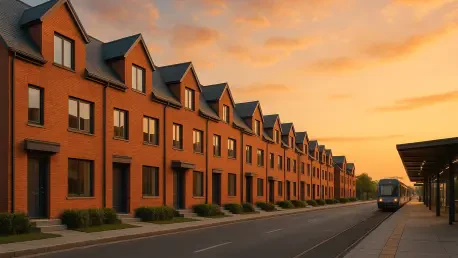
The project builds upon the aesthetic established by the nearby Princes Gate development, ensuring that the new community feels like a natural extension of Oldham rather than an isolated enclave. The use of a red multi-brick palette and grey roof tiles mirrors the local vernacular, honoring the town’s industrial heritage while providing contemporary energy efficiency. This thoughtful design approach mitigates the risk of “placelessness” often found in modern developments. By harmonizing the new structures with the existing environment, the project fosters a sense of pride and belonging among future residents, which is a key component in the long-term success of social housing initiatives.
Environmental Stewardship and Public Realm Enhancements
The Southlink development explores complexities beyond mere bricks and mortar by integrating a robust environmental strategy. The inclusion of a £743,000 contribution toward local education and green spaces, alongside the planting of 152 new trees and wildflower meadows, addresses the “green deficit” often found in urban centers. This focus on biodiversity, governed by a 30-year Habitat Management and Monitoring Plan, ensures that the ecological benefits are permanent rather than cosmetic. Furthermore, the strategic layout of walking and cycling routes connects the Glodwick area directly to the town center, encouraging active travel and reducing the community’s carbon footprint—a move that aligns with wider Greater Manchester sustainability goals.
The Future of Public-Private Partnerships in Oldham
The Southlink project signals an emerging trend where local councils, transport authorities, and private developers collaborate more closely to unlock difficult brownfield sites. Looking ahead, this model of “mixed-tenure, high-density” living is likely to become the blueprint for other Northern towns facing similar housing pressures. Future developments place an even greater emphasis on “transit-oriented development,” where housing is built in immediate proximity to transport interchanges to discourage car ownership. As regulatory frameworks continue to prioritize brownfield-first policies, the success of the Mumps transformation likely influences how similar derelict sites across the UK are appraised and developed from 2026 to 2030 and beyond.
Key Takeaways for the Oldham Community
The transformation of Oldham Mumps offers several vital insights for residents and stakeholders. First, the project demonstrates that affordable housing does not have to come at the expense of design quality or environmental responsibility. Second, the heavy investment in local infrastructure and education suggests that the development is designed to benefit the wider town, not just those living within its borders. For prospective residents, the mix of social rent and shared ownership provides a tangible pathway to secure housing in a well-connected location. For the town of Oldham, the takeaway is clear: repurposing derelict land through strategic partnerships is the most effective way to drive economic and social progress.
A Catalyst for Long-Term Urban Renewal
The Southlink development at Oldham Mumps is more than just a collection of 147 homes; it is a catalyst for the broader regeneration of the town. By prioritizing social equity, environmental health, and architectural continuity, Vistry and FCHO are turning a historical transit site into a cornerstone of the community. The significance of this project lies in its ability to address immediate housing needs while laying the groundwork for a more sustainable and connected urban future. As construction begins, the transformation of Mumps stands as a powerful reminder that with the right vision, even the most neglected spaces can be reimagined to serve the common good.