
Arboricultural maintenance remains a high priority for the borough, with numerous emergency five-day notices filed for the felling of hazardous trees in conservation areas like Hampstead. This ongoing commitment to public safety and ecological health serves as a backdrop for a wider narrative of urban transformation currently unfolding across North London. The 2026 planning submission cycle for the London Borough of Camden reveals a complex interplay between the preservation of historic architecture and the urgent requirement for modernized residential and commercial infrastructure. By analyzing a diverse range of applications—from major redevelopments near international transit hubs like Euston to minor property adjustments in protected districts—a clear picture emerges of a municipality in a state of strategic evolution. A central theme in current development is the reclamation of historic commercial spaces for residential use, illustrating a significant shift in how urban land is valued and utilized. This trend reflects a broader post-pandemic reality where the demand for premium city living often takes precedence over traditional office footprints in heritage buildings. At the same time, the borough is witnessing a drive toward higher density through the subdivision of existing apartments and the conversion of underutilized storage facilities into new dwellings. Effective community engagement remains a cornerstone of this developmental process, facilitated largely by digital transparency initiatives.
Evolution of Residential and Commercial Spaces
Reclaiming the Domestic Core: Historic Conversions
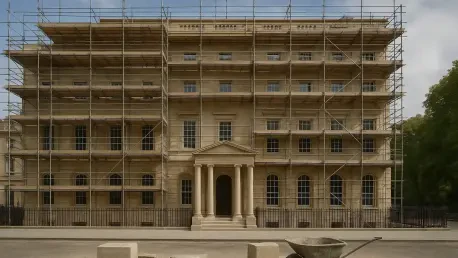
The transition of 5 Fitzroy Square from a commercial office back into a grand single-family home (Ref. No: 2026/4015/P) serves as a primary example of Camden’s shifting land-use priorities. This project signals a return to the residential roots of the borough’s historic squares, where the neoclassical aesthetic value of the architecture is matched by a renewed desire for premium city living. For decades, many of these stately buildings were occupied by professional services, but the current market environment favors a restoration of original domestic purposes. This process requires a sophisticated understanding of structural preservation, as developers must integrate modern amenities within a framework that remains protected by strict conservation status. Such conversions are not merely about changing floor plans; they represent a long-term investment in the architectural legacy of the area, ensuring that these historic assets remain occupied and maintained by private owners who value the heritage of the square.
Similar efforts to revitalize the domestic core are visible in Camden Street, where redundant commercial and storage structures are being cleared to make way for modern housing. The project at 166A Camden Street involves the demolition of existing facilities to construct a new three-bedroom dwelling, demonstrating how smaller pockets of industrial or commercial land are being reclaimed for high-quality residential use. This shift is crucial for addressing the housing shortage in North London without encroaching on the borough’s limited green spaces. By focusing on brownfield redevelopment and the adaptive reuse of commercial structures, planners are able to increase the residential population in well-connected areas. These developments often prioritize sustainable building materials and contemporary design, creating a visual dialogue between the historical character of the surrounding streetscape and the functional requirements of modern urban life.
Density and Small-Scale Innovation: Maximizing Space
Beyond large-scale conversions, there is a noticeable push to maximize the existing housing stock through clever internal restructuring and re-densification. In areas like Barter Street, specifically at Lytton Court, developers are seeking to subdivide standard two-bedroom flats into multiple smaller units, such as studios and one-bedroom apartments. This trend addresses the growing need for diverse housing options in a borough where space is at an absolute premium and every square foot of the built environment must be utilized efficiently. This strategy allows for a more flexible housing market, catering to single professionals and smaller households who wish to live in central locations. While these projects are smaller in scope than entire building conversions, their cumulative effect on the borough’s population density is significant, providing a necessary solution to the persistent demand for centrally located accommodation.
The conversion of underutilized commercial storage facilities into residential units is another key component of this densification strategy. Projects that transform derelict or low-value storage spaces into functional homes represent a highly efficient form of urban development. By identifying these overlooked “micro-sites,” developers can introduce new dwellings into established neighborhoods without the need for large-scale demolition. These projects often involve innovative architectural solutions to manage challenges such as limited light access or narrow footprints. The result is a more diverse and resilient urban fabric that can adapt to the changing needs of its residents. This approach to development emphasizes the importance of incremental growth, where small-scale innovations contribute to the overall sustainability and vitality of the borough’s housing market, ensuring that even the most constrained spaces are utilized for the benefit of the community.
Modernizing Institutional and Leisure Infrastructure
Hospitality and Educational Growth: Future-Proofing Assets
Camden’s commercial sector is currently experiencing a period of revitalization, with significant investments flowing into the hospitality and education industries to meet the demands of a modern global city. Major hotel conversions, such as the Kelvin House project on Judd Street, are leading the way by incorporating advanced sustainability features like greywater recycling and comprehensive dust monitoring systems. These elements are essential for meeting the borough’s stringent environmental standards and ensuring that new hospitality developments contribute positively to the local ecology. The transformation of commercial buildings into high-end hotels not only boosts the local tourism economy but also ensures that historic structures are preserved through profitable reuse. These projects often serve as catalysts for further investment in the surrounding streets, improving the overall public realm and supporting local businesses.
Local educational institutions are also undergoing essential refurbishments and utility upgrades to ensure their facilities remain functional and efficient for the current generation of students. Notable examples include Wac Arts College and Acland Burghley School, both of which are addressing critical infrastructure needs such as air-conditioning installation and assembly hall refurbishments. These improvements are vital for maintaining a high-quality learning environment and ensuring that historical school buildings can support contemporary educational technologies. By modernizing these institutional assets, the borough is investing in the long-term success of its youth while respecting the architectural significance of its educational heritage. These upgrades often involve complex engineering solutions to integrate new mechanical systems into older building envelopes, requiring a high level of coordination between school boards, architects, and conservation officers to balance utility with aesthetic preservation.
Adaptive Reuse and Recreational Pop-ups: Flexible Urbanism
Innovation is appearing in underused urban spaces through the creative repurposing of infrastructure, such as the proposal for the O2 Centre Car Park on Finchley Road. The plan to install temporary padel courts, saunas, and golf pods indicates a growing trend toward “pop-up” recreational facilities that provide immediate value to the community without requiring permanent or irreversible structural changes. This model of flexible urbanism allows the borough to test new leisure concepts and respond quickly to shifting public interests in fitness and wellness. By utilizing parking structures and other transitory spaces, Camden can provide much-needed recreational amenities in densely populated areas where dedicated parkland is scarce. These facilities often become social hubs, fostering community interaction and promoting physical activity in an accessible, urban setting.
The success of these recreational pop-ups lies in their ability to activate dormant spaces and generate economic activity with relatively low capital expenditure. Because these structures are often temporary or modular, they can be easily modified or relocated as the needs of the neighborhood evolve. This adaptability is a key characteristic of the 2026 urban planning landscape, where the goal is to create a dynamic city that can change alongside its inhabitants. Furthermore, these projects often incorporate sustainable materials and portable energy solutions, aligning with the borough’s broader environmental objectives. By embracing this flexible approach to land use, Camden is proving that even the most functional or uninviting spaces, such as car parks, can be transformed into vibrant community assets that enhance the quality of life for local residents and visitors alike.
Heritage Preservation and Sustainable Integration
Stewardship of Listed Buildings: Balancing Tradition and Utility
Maintaining the structural integrity of Camden’s vast collection of listed buildings requires a delicate balance of traditional craftsmanship and modern technical necessity. Recent applications for listed building consent range from critical repairs of water-damaged plaster in Chalcot Square to the sensitive installation of lifts and mechanical ventilation in Sicilian Avenue. These interventions are vital for ensuring that historic properties remain habitable and relevant in a modern context while strictly adhering to conservation guidelines that protect their unique character. The process of repairing and modernizing a listed building is often labor-intensive and requires specialized knowledge of historical building techniques. This commitment to stewardship ensures that the borough’s architectural history is not just preserved as a museum piece but remains a living, breathing part of the contemporary urban landscape.
The challenge for property owners and planners is to implement these modern updates without compromising the aesthetic or structural value of the heritage asset. For instance, the reconstruction of roof loggias and drainage channels at the Alexandra and Ainsworth estate highlights the ongoing need for high-quality maintenance in even the most iconic modernist developments. These projects demonstrate that heritage preservation is not limited to Victorian or Georgian structures but extends to significant 20th-century architecture as well. By prioritizing the repair and sympathetic modernization of these buildings, the borough ensures that they can continue to provide high-quality housing and workspace. This proactive approach to heritage management prevents the gradual decay of historic districts and maintains the unique visual identity that makes Camden a desirable place to live and work.
Future-Proofing Through Green Energy: Sustainable Retrofitting
A definitive trend in the 2026 cycle is the aggressive integration of sustainable technology into both old and new structures, reflecting a borough-wide commitment to carbon reduction. Residents and developers are increasingly seeking to install photovoltaic panels and air-source heat pumps to improve energy efficiency and decrease reliance on fossil fuels. Large-scale redevelopments, such as the one on Jamestown Road, are leading by example with the installation of extensive solar arrays. These technological upgrades are becoming a standard requirement for planning approval, as the borough pushes toward ambitious net-zero targets. The challenge lies in integrating these modern systems into the historic fabric of Camden, which often involves the use of specialized acoustic enclosures to mitigate noise in dense residential zones, ensuring that green energy does not negatively impact the neighborhood’s tranquility.
This shift toward sustainable retrofitting is not limited to new builds; it is increasingly common in older residential properties as homeowners look to future-proof their assets. The installation of solar panels on historic rooftops or the placement of heat pumps in small urban gardens requires careful planning to ensure minimal visual impact on conservation areas. Despite these challenges, the high volume of applications for green technology suggests a strong communal desire for environmental responsibility. These investments not only reduce the ecological footprint of the borough but also offer long-term financial benefits for residents through lower energy costs. By fostering an environment where sustainable innovation is encouraged and streamlined within the planning process, Camden is positioning itself as a leader in urban environmental management, proving that historic preservation and modern sustainability can coexist successfully.
Environmental Management and Neighborhood Specifics
Preserving the Urban Forest: Active Canopy Management
Camden’s reputation as one of London’s greenest boroughs is upheld through rigorous and ongoing arboricultural management. The high volume of tree-related applications—ranging from emergency removals of hazardous species to routine crown thinnings—highlights a community-wide effort to maintain a healthy and safe urban forest. Whether it involves pruning a significant London plane tree or felling an unstable “tree of heaven” in Highgate, these actions are essential for balancing the growth of the natural environment with public safety and light access. Professional arborists are frequently called upon to perform pollarding and crown reductions, techniques that allow large trees to thrive in confined urban spaces without interfering with buildings or overhead utilities. This active management is crucial for the long-term health of the canopy, as it prevents the spread of disease and ensures that trees remain resilient to climate-related stresses.
The felling of trees is rarely a first resort and is typically governed by strict regulations, especially within conservation areas where the aesthetic and ecological value of every tree is recognized. Emergency five-day notices are reserved for cases where a tree poses an immediate risk to life or property, often due to decay or storm damage. In other cases, strategic removals are permitted to allow for more sustainable landscaping or to replace diseased specimens with more appropriate native species. This cycle of maintenance and replanting ensures that Camden’s green corridors continue to provide vital services such as air filtration, temperature regulation, and biodiversity support. The borough’s commitment to its urban forest is a key component of its overall environmental strategy, recognizing that a well-managed natural environment is essential for the health and well-being of all urban residents.
Regional Development Patterns: Geographic Diversity
Geographically, the borough exhibits distinct development patterns that reflect the unique identity and socioeconomic profile of each neighborhood. In high-end residential areas like Hampstead and Belsize Park, the focus remains on sophisticated property modifications, such as basement extensions and high-specification internal refurbishments. These projects often involve complex legal and architectural negotiations to ensure they meet the expectations of affluent homeowners while respecting the strictures of a conservation area. In contrast, the corridor near Euston and St. Pancras is dominated by major infrastructural projects and large-scale commercial developments. These areas are evolving into high-density hubs of transit, hospitality, and corporate innovation, reflecting their role as international gateways to the city. The diversity of planning applications across these regions shows how a single borough can accommodate vastly different urban functions simultaneously.
Northern clusters like Highgate and Dartmouth Park are increasingly characterized by “resort-style” amenities within private gardens, such as the installation of water features, treehouses, and sophisticated outdoor living spaces. This trend points to a desire for high-quality private outdoor environments that serve as a retreat from the dense urban surroundings. Meanwhile, central districts like Camden Town and Primrose Hill are focusing on the “youth economy,” with developments centered around student housing, vibrant commercial branding, and the revitalization of historic markets. These varied approaches demonstrate the borough’s ability to cater to a wide demographic, from families and students to international travelers and business professionals. By allowing for localized development strategies, Camden ensures that each neighborhood can grow in a way that is appropriate for its specific context and community needs.
Strategic Incremental Growth: Optimizing Localized Utility
In areas such as Kentish Town and West Hampstead, the focus remains on incremental development that optimizes the utility of existing terraces and mews houses. The prevalence of rear extensions and the installation of modern climate control units show how homeowners are adapting traditional London housing to meet contemporary standards of comfort and functionality. These projects, though often modest in scale individually, represent a significant collective investment in the borough’s residential fabric. They allow families to expand their living space and stay within their communities rather than moving elsewhere, which helps to maintain local social networks and support neighborhood schools and businesses. This steady, piece-by-piece improvement of the housing stock ensures that Camden’s residential areas remain vibrant, modern, and capable of supporting a growing and changing population.
The cumulative impact of these small-scale developments is a more resilient and adaptable built environment. By encouraging homeowners to invest in their properties, the borough promotes the long-term maintenance of its housing stock. This approach also allows for the gradual introduction of modern architectural styles and sustainable technologies into established streetscapes, creating a layered and interesting urban landscape. These incremental changes are often more easily absorbed by the community than large-scale redevelopments, as they respect the existing scale and character of the neighborhood. Through this strategy of localized growth, Camden is able to evolve organically, ensuring that the development process is responsive to the needs of individual residents while still contributing to the broader strategic goals of the borough’s planning framework.
A Unified Vision for the Urban Fabric
The planning activities observed throughout this cycle demonstrated a borough that successfully navigated the tensions between its historical legacy and the demands of modern urban living. The transition toward converting commercial spaces back into single-family dwellings, alongside the push for higher residential density, addressed the critical need for housing in a way that respected the architectural heritage of the area. These efforts were supported by a robust system of listed building management, which ensured that necessary repairs and modern upgrades did not compromise the aesthetic integrity of Camden’s most significant structures. The borough’s commitment to transparency through digital portals allowed residents to remain informed and engaged with these changes, fostering a sense of shared responsibility for the evolution of the local environment.
The findings also highlighted the importance of integrating green energy and sustainable infrastructure as a non-negotiable standard for current development. The widespread adoption of solar panels and heat pumps across both residential and commercial sectors proved that historic preservation and environmental responsibility were not mutually exclusive goals. Furthermore, the active management of the urban forest remained a vital component of the borough’s ecological health, ensuring that the natural environment was protected even as the built environment expanded. Moving forward, the borough should continue to prioritize the adaptive reuse of underutilized spaces and the implementation of flexible recreational facilities, as these projects provide immediate community benefits. By maintaining this balanced approach, Camden will continue to serve as a model for sustainable and heritage-conscious urban development in the years to come.