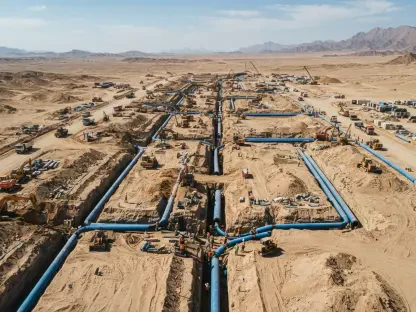

State-level departments of transportation are implementing precision requirements that are nearly impossible to meet without the use of 3D modeling and machine control technology. For decades, the construction industry was characterized by a sharp technological divide where high-precision tools such as Global Navigation Satellite Systems (GNSS) and laser scanning were the exclusive domain of industry titans. The prohibitive upfront costs and massive administrative overhead required to manage such systems meant that smaller contractors were often left using manual processes, even as project requirements became more complex. However, as analyzed in the current landscape, two pivotal shifts are leveling the playing field: the transition to subscription-based pricing models and the development of right-sized software solutions tailored for smaller operations. These changes are not merely financial adjustments; they represent a fundamental restructuring of how small and mid-size contractors compete and manage data.
Financial Barriers: The Shift from Capital to Operating Expenses
The most immediate barrier to entry for advanced construction technology has always been the initial capital outlay. A single robotic total station or a grade control system can cost tens of thousands of dollars, a figure that becomes astronomical when scaling across a fleet of trucks or multiple job sites. For a small business, a massive capital expenditure represents a significant risk and a potential drain on liquid assets that could be used for other critical areas. Purchasing such equipment in 2026 requires a level of liquidity that many growing firms simply do not possess without taking on substantial debt. This financial hurdle historically kept smaller players from bidding on high-stakes infrastructure projects where precision was non-negotiable. Consequently, the industry remained stratified, with smaller firms relegated to less demanding tasks while larger corporations consolidated their hold on the most lucrative and technically advanced government contracts.
The emergence of subscription pricing has transformed these high-cost assets into predictable operating expenditures. By converting a massive lump-sum payment into a manageable monthly fee, contractors can now treat high-end technology as a utility rather than a looming debt. This shift offers several strategic advantages, including better predictability for bidding processes where monthly costs are fixed and known. Capital that would have been tied up in hardware can be redirected toward labor, materials, or general business expansion. Furthermore, the burden of hardware obsolescence is shifted from the contractor to the provider, ensuring that the firm always has access to the latest innovations. This financial democratization allowed smaller firms to leverage the same precision tools as global conglomerates, effectively neutralizing the advantage that massive capital reserves once provided. It has turned the focus from who has the most money to who has the best technological strategy.
Software Evolution: Right-Sizing Digital Management Tools
Parallel to the financial shift is a significant change in software architecture across the industry. In the past, software providers often marketed the same one-size-fits-all enterprise solutions to every client, regardless of their size. These systems were frequently too complex for smaller firms that lacked dedicated IT departments or specialized accounting teams to manage the intricate data flows. Modern developers have begun right-sizing their offerings, creating streamlined versions of project management and financial tools that cater specifically to the agile nature of smaller teams. Solutions like Trimble Financials are designed for contractors who may not need a full-scale ERP but still require the ability to capture field expenses and manage invoices without manual data reentry. These platforms focus on the core necessities of job costing and project tracking, removing the unnecessary features that often made legacy enterprise software feel like a burden rather than a benefit.
The integration of plain-language Artificial Intelligence further simplifies this process, allowing users to query their financial status without navigating complex spreadsheets. This accessibility ensures that field supervisors and office managers can communicate through a single source of truth, reducing the likelihood of errors that stem from fragmented data. When a foreman can code a receipt or log machine hours directly into a mobile application, the administrative burden on the front office is drastically reduced. This efficiency is vital in a market characterized by razor-thin margins and a chronic shortage of experienced administrative staff. By automating the data entry cycle, technology allows small contractors to maintain a lean operation while still possessing the sophisticated reporting capabilities of a much larger firm. The result is a more resilient business model that can respond to project changes in real-time, ensuring that profitability is protected throughout the lifecycle.
Strategic Implementation: Maintaining a Competitive Edge
Smaller firms are now held to the exact same precision standards as the largest contractors in the nation. Without technology like machine control or 3D modeling, meeting these specifications becomes prohibitively slow or requires excessive rework that eats into the bottom line. Beyond compliance, technology acts as a force multiplier for workforce development, as seen in companies like Allied Construction. This Michigan-based paving contractor serves as a prime example of the pay-as-you-grow philosophy, starting with a single subscription and expanding into a multi-disciplinary operation. Notably, the technology served as a catalyst for internal career pathways. A laborer who joined a firm as a general hand was able to transition into a site surveyor role by learning 3D modeling software, demonstrating how digital tools can solve labor shortages. This internal mobility is crucial for retention, as employees see a future in a modern, tech-forward work environment.
The transition toward a connected digital ecosystem provided the final piece of the puzzle for small contractors. Cloud-based platforms allowed for a seamless flow of information between the field and the office, effectively eliminating the data silos that once caused frequent project delays. Firms that adopted a phased approach to technology saw immediate improvements in their bidding accuracy and field efficiency. The most successful contractors began by identifying their primary operational bottlenecks and implemented targeted, right-sized software solutions to address them. These organizations utilized remote visibility tools to manage multiple job sites with a fraction of the staff previously required. By prioritizing data integrity and embracing flexible subscription models, smaller players secured their place in a competitive market. The focus shifted to maintaining an agile tech stack that could scale alongside revenue, ensuring that the gap between small firms and industry giants remained closed.