
Building the Millennium Stadium in Cardiff was a feat of engineering that defied the traditional logic of urban development, transforming a 1995 pipe dream into a 70,000-seat reality in just four years. As a construction expert with a deep fascination for the intersection of architectural design and rapid-delivery technology, Luca Calarailli brings a unique perspective to this monumental project. The stadium, which became the home of Welsh rugby, was born out of a desperate race against time to meet the 1999 Rugby World Cup deadline, despite having no initial funding or solidified plans. This interview explores the logistical nightmare of rotating a massive structure within a cramped city center, the political horse-trading required to secure £120 million, and the technical compromises that resulted in the infamous “Glanmor’s Gap.” We delve into how the team managed to construct self-supporting stands and 400-tonne roof panels while keeping the city’s heart beating, ultimately delivering a venue that has since hosted everything from Champions League finals to global pop icons.
When a massive construction project requires rotating the entire orientation of a stadium within a tight urban footprint, how do you manage the structural and logistical shifts that come with such a radical change?
Rotating a stadium 90 degrees in the middle of a bustling city center is like trying to solve a Rubik’s Cube where the pieces are made of concrete and steel. Originally, the plan was simply to modernize the existing ground, but we realized we only had about 50 centimeters of extra land to play with, which was nowhere near enough for a 70,000-capacity venue. To make it fit, the entire orientation had to be flipped, which meant we were no longer just building a stadium; we were re-engineering the entire urban fabric around it. This required the demolition of iconic Cardiff landmarks like the BT Exchange, the Army Cadets barracks, and the Empire Pool just to clear the necessary land. Because the city roads could not be shut down during construction, we had to perform all the heavy lifting from four massive cranes positioned strictly within the existing footprint, a process described as trying to put on a duvet from inside the cover.
Operating within a city center that cannot be closed to traffic presents a unique set of challenges for heavy machinery and material delivery, so how did the team maintain momentum without crippling the local infrastructure?
The logistics of this project were a constant battle against the limitations of space and the flow of city life, requiring a level of precision that most builders never have to face. Since we couldn’t block the surrounding roads, we had to ensure that every single piece of steel and every cubic meter of concrete was funneled through a very narrow access point. The four massive pillars that hold up the roof were the anchors of the entire site, and they had to be erected while the stands were simultaneously being built as self-supporting structures. This “inside-out” construction method meant that the cranes were essentially trapped within the bowl of the stadium, working furiously to meet the stands in the middle. It was a high-stakes dance of heavy machinery where one wrong move could have caused a gridlock that would have paralyzed the heart of Cardiff for months.
Securing £120 million for a project that lacks a finalized plan or guaranteed funding sounds like a high-stakes gamble, so what were the most difficult financial and political hurdles to overcome during those four years?
The financial side of the Millennium Stadium was just as chaotic as the construction site, involving intense horse-trading between major banks and government ministers. We managed to secure £54 million from the government, but that still left a massive shortfall that the Welsh Rugby Union had to cover through match-funding. Glanmor Griffiths was essentially playing a game of financial brinkmanship between Midland Bank and Barclays, eventually securing around £70 million from the latter to keep the contractors on site. To bridge the remaining gap, the team had to sell £29 million worth of debenture seats in a stadium that, at the time, was still purely theoretical and existed only on paper. This constant pressure to find the next infusion of cash meant that construction didn’t even begin until early 1998, leaving us with less than two years to finish a project that should have taken twice that long.
The retractable roof is one of the stadium’s most iconic features, but what are the technical complexities involved in moving two 400-tonne metal panels safely over a crowd of thousands?
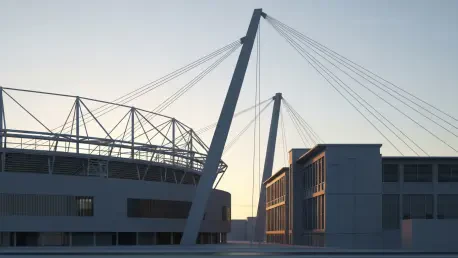
The retractable roof was a massive engineering undertaking, designed specifically to provide a controlled environment for world-class events regardless of the unpredictable Welsh weather. Each of the two metal panels weighs a staggering 400 tonnes, and they were purposely engineered to close no faster than 20 minutes to prevent the massive structures from crashing into each other due to momentum. This slow, deliberate movement is a safety necessity, ensuring that the structural integrity of the four supporting masts isn’t compromised by sudden shifts in weight. Because we couldn’t acquire a specific corner of land from the Cardiff RFC, the masts at one end of the stadium actually have to lean out at a more exaggerated angle than the others. It’s a fascinating example of how a legal dispute can dictate the physical laws of a building’s architecture, forcing us to adapt the roof’s support system to a footprint that wasn’t perfectly symmetrical.
You mentioned “Glanmor’s Gap” as a significant architectural compromise, so how did the standoff with the Cardiff RFC ultimately shape the final design and functional layout of the stadium?
“Glanmor’s Gap” is perhaps the most visible scar of the project’s difficult birth, representing a permanent void where a complete bowl of stands should have been. When the Cardiff RFC refused to budge on their land unless they received £5 million in compensation—far more than the £1 million we offered along with a new stand—the decision was made to simply build the stadium around them. This resulted in a “hernia” in the footprint, where the stands suddenly stop, creating a disconnect that prevents the Millennium Stadium from being a perfectly enclosed arena. This gap forced the engineering team to tilt the roof masts at an awkward angle to avoid encroaching on the RFC’s land, a compromise that still irritates purists today. It remains a testament to the stubbornness of local politics and a reminder that even a £120 million project can be humbled by a single corner of disputed dirt.
With the 1999 Rugby World Cup looming and the stadium still being painted just hours before the opening ceremony, what was the atmosphere like during those final months of the “race to the finish”?
The final months were a blur of adrenaline and anxiety, characterized by a desperate scramble to secure safety certificates while fans were practically knocking at the gates. Even after a test event where 29,000 people watched Wales beat South Africa 29-19, we still had about 18 months’ worth of work to cram into less than 90 days. We were literally installing seats and applying final coats of paint right until the moment the opening ceremony began, waiting with bated breath for the official word that we could host 70,000 fans. The euphoria of that first victory over South Africa helped distract the media from the unfinished state of the venue, but behind the scenes, it was a 24-hour operation to ensure the building was functional. It was a miracle of project management that we went from a “dirt” reputation for demolishing local icons to opening a world-class stadium on the world stage in such a compressed timeframe.
What is your forecast for the future of multi-use urban stadiums in cities with limited space?
I believe the future of urban stadiums lies in hyper-flexibility and the integration of smart technology to manage the “duvet” problem of building in tight spaces more efficiently. As cities become more crowded, we will see more stadiums following the Cardiff model of 90-degree rotations and retractable elements, but with modular designs that allow sections to be swapped or updated without total demolition. We are moving toward venues that aren’t just for sports, but act as 365-day hubs for entertainment, much like how the Millennium Stadium transitioned from rugby to hosting Taylor Swift and national congresses. The key will be using predictive AI to manage the logistical flow of construction materials in real-time, ensuring that a four-year build doesn’t require the project manager to sacrifice their health or family life to get the job done.