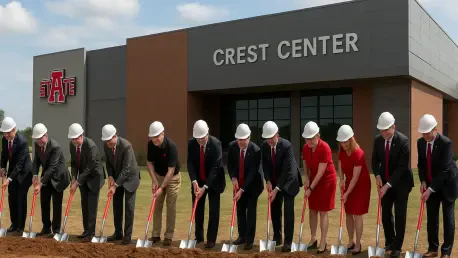

The upcoming construction of a specialized facility near the Judd Hill Farmers’ Market marks a pivotal expansion of industrial education in the Jonesboro region. This ambitious project, known as the Career Readiness Education and Skills Training (CREST) Center, serves as a cornerstone for a new era of economic development in Northeast Arkansas. By uniting the resources of Arkansas State University, ASU-Newport, and Arkansas Northeastern College, the initiative addresses a critical misalignment between traditional academic output and the rapidly evolving requirements of modern industrial sectors. A formal groundbreaking ceremony scheduled for October 16 signaled the commencement of a multi-phase endeavor that promises to reshape the local labor market. This collaborative effort emphasizes the importance of regional partnerships in securing long-term prosperity. As manufacturing becomes increasingly competitive, such localized hubs are essential for maintaining a robust workforce capable of meeting sophisticated industrial demands.
Designing a Hub for Industrial Excellence
The manifestation of this vision begins with a 26,000-square-foot facility, a structure currently under development with an estimated valuation of approximately $17 million. This first phase, which remains on schedule for completion by the spring of 2027, is designed to accommodate high-bay manufacturing laboratories, modern computer facilities, and various collaborative spaces for community interaction. Unlike traditional classroom environments, these labs are engineered to simulate real-world industrial settings, providing students with hands-on experience that mirrors the operational realities of the factory floor. The academic focus within this building prioritizes the delivery of “stackable” credentials. These modular educational paths allow students to earn technical certificates and associate degrees in specialized fields such as industrial controls and steel technology. By breaking down complex degrees, the center makes high-level technical education accessible to a broader demographic of learners.
Central to the mission of this development is the strategic alignment with the most dominant economic drivers in the region, specifically steel production, food processing, and advanced manufacturing. Northeast Arkansas has emerged as a significant hub for these industries, yet the persistent challenge of a skilled labor shortage has often tempered the pace of potential expansion. The CREST Center acts as a bridge, ensuring that the local talent pipeline is directly connected to the technical needs of regional employers. By involving industry leaders in the curriculum design process, the institution ensures that graduates possess the exact competencies required for immediate employment in high-wage roles. This proactive approach benefits the students while providing a stabilizing force for the regional economy. When businesses have confidence in the availability of a qualified workforce, they are more likely to commit to long-term investments, fostering a cycle of growth that strengthens the community.
Strategic Investment and Future Trajectory
The realization of such an extensive project required a sophisticated financial strategy supported by a $7.5 million grant from the Arkansas Department of Commerce’s HIRED program. This state-level investment was bolstered by contributions from local government and private sector partners like Hytrol Conveyor Co., underscoring a regional commitment to workforce innovation. Beyond initial funding, the center’s academic trajectory is designed to evolve into more specialized domains. Subsequent phases aim to introduce applied bachelor’s degrees in engineering technology and food science, filling a gap for professionals seeking management roles. Furthermore, the third phase focuses on advanced steel research through the Center for Advanced Materials and Steel Manufacturing. By integrating artificial intelligence and data analytics into the curriculum, the university creates a unique ecosystem that attracts top-tier talent. This integration ensures the local workforce is prepared for today’s jobs and equipped to lead technological transformations.
The establishment of this training hub provided a blueprint for how higher education institutions responded to the shifting needs of the industrial landscape. By prioritizing industry-specific research and modular certification, the initiative successfully bridged the gap between academic theory and practical application. Stakeholders who navigated this transition realized that the key to sustained economic growth lay in the continuous adaptation of training programs to match technological advancements like automation. Moving forward, it became clear that other regions should look toward similar tri-partnership models to revitalize their manufacturing bases. Future considerations included the expansion of digital twin technologies to further refine the training experience without the overhead of physical machinery. The project demonstrated that when educational goals were synchronized with private sector requirements, the resulting workforce was more resilient and better prepared for competition. Investing in infrastructure remained the best strategy.