
Modern commercial real estate is currently undergoing a fundamental transformation where digital connectivity has moved from being a hidden utility to a primary driver of tenant satisfaction and operational efficiency. The Wireless Infrastructure Association has officially recognized this paradigm shift by unveiling the “Connected Spaces Series,” a specialized program integrated into the upcoming annual conference in Fort Lauderdale. This initiative represents a concentrated effort to bridge the tactical gap between traditional real estate management and cutting-edge telecommunications engineering. As buildings become increasingly reliant on high-density data for everything from environmental controls to occupant safety, the need for a unified forum has never been more urgent. Industry veterans and technology innovators will gather at the Broward County Convention Center to deconstruct the complexities of modern networking within massive public structures and private enterprise campuses alike. This program serves as a critical collaborative platform where leaders from real estate and technology sectors synchronize their long-term infrastructure strategies.
The Strategic Evolution of In-Building Wireless Networks
Neutral Host and Private Network Integration
The shift toward neutral host architectures and the proliferation of private wireless networks are currently redefining how large-scale venues manage their internal communication requirements. By utilizing a neutral host model, property owners can support multiple carriers through a shared infrastructure, effectively reducing capital expenditure while ensuring that every visitor enjoys consistent high-speed access regardless of their service provider. This approach is particularly critical in the current market, where the 2026 landscape demands that stadiums, hospitals, and transit hubs function as fully connected ecosystems. Beyond consumer access, the integration of private 5G and Citizens Broadband Radio Service provides the secure, low-latency backbone necessary for industrial automation and sensitive data handling. These localized networks allow facility managers to prioritize critical traffic, such as security systems or internal logistics, without the interference common in congested public spectrum bands, creating a robust foundation for modern operations and high-performance connectivity.
The Future of Smart Building Architecture and Analytics
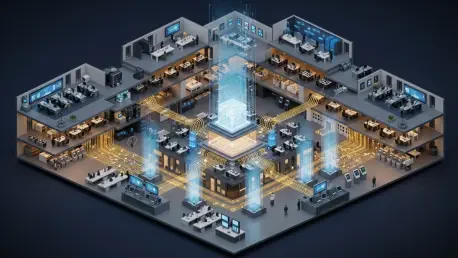
Designing network architectures specifically tailored for artificial intelligence is the next major frontier for smart buildings, moving beyond simple connectivity to create truly predictive environments. Property owners are now prioritizing infrastructure that can support the immense data throughput required by real-time AI processing at the edge, allowing for autonomous climate adjustments and proactive security monitoring. Previous implementation strategies often focused on retrospective data, but the current focus shifted toward utilizing resilient, data-rich environments to anticipate tenant needs before they arise. Stakeholders in the commercial sector successfully moved away from siloed technological deployments toward integrated platforms that prioritize interoperability and long-term scalability. The deployment of Wi-Fi 7 and advanced distributed antenna systems provided the primary methods for future-proofing these physical assets. Decisions regarding fiber density and spectrum allocation determined the competitive viability of these properties, reinforcing the need for continuous professional development.