
Managing the intricate energy requirements of a modern international airport requires a departure from traditional architectural strategies due to the sheer scale and fluctuating nature of passenger traffic. This specific challenge has led to a pioneering partnership between Concordia University and Aéroports de Montréal, which has transformed YUL Montréal-Trudeau International Airport into a dynamic “Living Lab.” Led by Professor Mohamed Ouf, the initiative is designed to investigate and implement advanced energy management protocols within one of the most high-traffic environments in the country. Instead of viewing the terminal as a static structure, the team treats it as a breathing ecosystem where heating, cooling, and lighting systems must be optimized in real-time. This collaboration represents a significant shift toward data-driven sustainability, moving away from theoretical models to test hypotheses in a facility that operates every hour of every day without pause and never closes.
Complexity of Transit: Addressing Unpredictable Passenger Infrastructure
Standard office buildings typically follow predictable occupancy patterns, allowing facility managers to schedule energy use based on a standard nine-to-five workday. However, international airports operate under a different set of rules, characterized by constant motion and unpredictable fluctuations caused by flight delays, weather events, and varying seasonal travel demands. These variables make traditional, rigid energy management strategies inefficient and often obsolete in a transit hub. The researchers at YUL are currently analyzing how these erratic surges in human density affect the thermal load of the building. By understanding the relationship between flight schedules and actual energy consumption, the team aims to eliminate the waste that occurs when systems continue to run at full capacity in underutilized areas. This approach requires a deep dive into aviation logistics, where a single delayed wide-body aircraft can suddenly increase the cooling demand of a gate area.
Moving beyond the constraints of static building codes, the project focuses on developing a more responsive and flexible energy architecture. Most contemporary climate control systems are designed to maintain a uniform temperature throughout a structure, regardless of where people are actually located. In contrast, the Living Lab model emphasizes a granular approach to energy distribution, where resources are redirected to where they are needed most at any given second. This level of responsiveness is essential for large-scale infrastructure where heating or cooling an empty wing represents a massive financial and environmental cost. The research team is working on algorithms that can anticipate these needs by integrating real-time flight data directly into the building management system. By doing so, the airport can pre-cool a terminal before a large influx of passengers arrives, rather than reacting after the temperature has risen, which is a key cornerstone of urban planning.
Adaptive Intelligence: Implementation of Intelligent Systems and Human-Centric Feedback
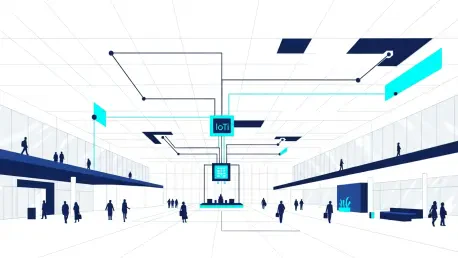
To facilitate this level of automated intelligence, the technical team installed an extensive network of sophisticated sensors across the sprawling terminals of Montréal-Trudeau. These devices provide a continuous stream of data regarding air quality, humidity levels, and the movement of electricity throughout the facility’s vast electrical grid. This infrastructure allows the building to effectively “think” by interpreting environmental cues and adjusting its mechanical systems accordingly. For instance, if sensors detect a drop in carbon dioxide levels in a specific lounge, the system can automatically reduce the ventilation rate to conserve energy. Conversely, as a boarding gate becomes crowded, the system can ramp up fresh air intake to maintain air quality without human intervention. This integration of Internet of Things technology ensures that every kilowatt of energy is utilized with maximum efficiency, transforming the airport from a passive shell into an active participant.
While technical efficiency is a primary goal, the project maintains a steadfast focus on the comfort and health of the travelers and staff who inhabit the space. To bridge the gap between automated systems and human experience, researchers have implemented a feedback loop that includes detailed surveys and direct observations of occupant behavior. They have analyzed various factors, including what passengers are wearing, to better understand how clothing levels influence the perception of thermal comfort. This data is critical because an energy-efficient building that leaves occupants shivering or overheated fails to meet its primary purpose as a service hub. By correlating sensor data with actual human feedback, the researchers can fine-tune the environmental parameters to hit a “sweet spot” that maximizes savings while improving the overall passenger experience. This holistic perspective proves that high-performance engineering can coexist with human well-being for future infrastructure.
Workforce Development: Scaling Innovation and Training for Net-Zero Targets
The impact of the Living Lab extends far beyond the immediate walls of the airport by serving as an intensive training ground for the next generation of green engineering experts. Graduate students working on this initiative gain invaluable hands-on experience by collaborating with professional energy managers in a high-stakes, 24/7 operational environment. This practical immersion allows them to confront the complexities of integrating renewable energy sources and managing peak demand in ways that a classroom or computer simulation could never replicate. These future leaders are learning how to balance technical constraints with financial realities and operational safety, preparing them to lead similar projects in various sectors of the economy. The knowledge gained here is being documented to create a roadmap for other major institutions, such as hospitals and university campuses, which face similar energy challenges and want to ensure that the innovations developed at YUL continue to grow.
The findings from this extensive collaboration provided a clear pathway for the airport to achieve its ambitious goal of net-zero emissions by 2040. By treating the terminal as a living experiment, the project successfully demonstrated that smart technology and human-centric design could significantly reduce the carbon footprint of large-scale infrastructure. These insights established a new standard for sustainable urban development, proving that even the most complex buildings could be managed with precision and environmental responsibility. Moving forward, stakeholders in the construction and aviation industries were encouraged to adopt these integrated sensor networks and real-time data analytics as baseline requirements for all new projects. The success at Montréal-Trudeau validated the necessity of cross-sector partnerships in solving the climate crisis, suggesting that future investments should prioritize adaptable systems that respond to real-world usage in an efficient way.