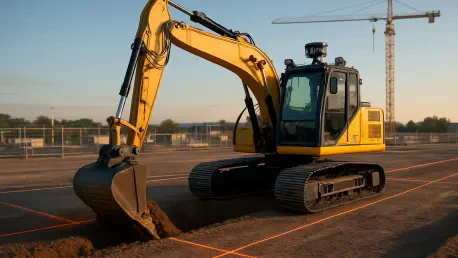

A single person requires five or more years of intensive training to master an excavator, creating a bottleneck that autonomous systems aim to eliminate. As the infrastructure demands of 2026 continue to surge across the United States, the construction industry faces a critical deficit of skilled heavy equipment operators. Bedrock Robotics has emerged as a pivotal player in this landscape, providing a sophisticated automation stack designed to transform standard excavators into self-operating machines. Unlike traditional methods that rely on human intuition and decades of muscle memory, this technology leverages advanced spatial computing to execute complex digging and grading tasks with millimeter-level precision. The shift toward autonomy is not merely about replacing labor but about augmenting the existing workforce to meet deadlines that were previously considered impossible. By integrating high-fidelity sensors with machine learning algorithms, the company addresses the fundamental reality that modern construction cannot wait for a new generation of human operators to reach peak proficiency.
Technological Integration: Retrofitting the Modern Jobsite
The core of this automation transition lies in the ability to retrofit existing fleets rather than requiring contractors to purchase entirely new, purpose-built machinery. Bedrock Robotics utilizes a combination of LiDAR, high-resolution cameras, and inertial measurement units to provide the excavator with a comprehensive 360-degree understanding of its environment. These sensors feed data into an onboard processing unit that translates high-level mission objectives into hydraulic movements. Because the system is designed to be hardware-agnostic, it can be installed on various models from major manufacturers, effectively democratizing access to high-end robotics for medium-sized firms. This technical approach ensures that the machine can identify obstacles, such as buried utilities or ground personnel, in real-time, executing emergency halts faster than a human operator could react. The integration process focuses on bridging the gap between digital site plans and physical earthmoving, ensuring that the machine follows topographical blueprints with absolute fidelity.
Beyond the physical hardware, the software layer enables a paradigm shift in how project managers oversee their assets on the ground. Cloud-based connectivity allows for the remote orchestration of multiple units from a centralized command center, where a single supervisor can manage several excavators simultaneously. This remote oversight does not remove the human element but repositions it to a higher level of strategic management. When the autonomous system encounters an edge case that falls outside its programmed parameters, it alerts a human overseer who can take control via a low-latency teleoperation interface. This hybrid model minimizes downtime and ensures that the automation is constantly learning from human intervention to improve its future performance. The data gathered during these sessions is processed to refine the neural networks, making the system more resilient against varying soil conditions and weather patterns. Consequently, the machines become more efficient with every cubic yard of dirt moved, steadily closing the gap between robotic capability and human expertise.
Operational Efficiency: Redefining Productivity and Safety Standards
Implementing autonomous excavators fundamentally alters the traditional project timeline by enabling continuous operation through shifts that would typically exhaust human crews. In the current economic climate of 2026, the ability to maintain steady progress during night hours or in extreme weather conditions provides a massive competitive advantage. These machines do not suffer from fatigue, dehydration, or the distractions that often lead to site accidents, which remain a primary concern for heavy civil engineering projects. Furthermore, the precision of the Bedrock Robotics system reduces material waste and the need for secondary grading, as the excavator achieves the desired depth and slope on the first pass. By optimizing hydraulic flow and engine load through algorithmic control, the system also lowers fuel consumption and wear on the mechanical components. This level of efficiency transforms the cost-to-benefit ratio of large-scale excavations, allowing developers to allocate resources more effectively across different phases of the construction lifecycle.
To address the ongoing evolution of the sector, stakeholders recognized that the long-term solution involved a total integration of autonomous workflows into regional infrastructure plans. Industry leaders prioritized the deployment of these systems to bridge the gap left by an aging workforce, ensuring that critical projects remained on schedule. The focus shifted toward creating standardized safety protocols and certified training programs for the technicians who maintained these robotic fleets. As the technology matured, developers discovered that the most successful implementations occurred when they utilized the data-rich outputs from autonomous machines to inform future site designs. Moving forward, the industry adopted a strategy centered on hybrid worksites where human ingenuity and robotic consistency functioned in tandem. The transition proved that automation was not a distant possibility but a necessary adaptation for survival in a resource-constrained market. By investing in these scalable solutions, the construction world secured a path toward sustainable growth and enhanced site safety for the upcoming decade.