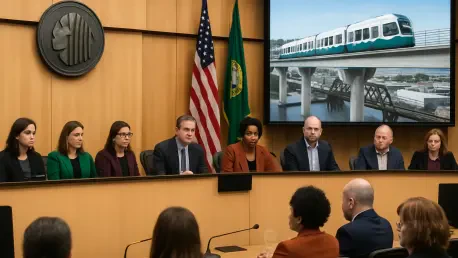

The landscape of urban transportation in Seattle currently stands at a precarious crossroads where the grand ambitions of a connected metropolitan area clash with the harsh fiscal realities of large-scale infrastructure development. As the Sound Transit Board recently moved forward with a pivotal vote, the local government found itself navigating a complex series of negotiations intended to safeguard the Ballard Light Rail extension against burgeoning costs and logistical delays. This specific project, which promises to link some of the city’s most densely populated residential and industrial zones, has become a litmus test for the regional authority’s ability to deliver on long-term promises while managing immediate financial constraints. While the board successfully secured a long-term funding plan, the outcome remains a bittersweet reality for many transit advocates who fear that the vital connection between Seattle Center and the Ballard neighborhood might suffer from a lack of construction capital.
Strategic Budgetary Shifts and Urban Connectivity
The DilemmManaging Unfunded Transit Segments
The primary friction point in recent deliberations centered on the significant budget shortfalls that forced Sound Transit to prioritize certain segments over others. In a move that drew sharp criticism from local representatives, the board approved a plan that guarantees service to the Seattle Center but leaves the high-demand Ballard portion in a state of indefinite funding limbo. Councilmember Dan Strauss emerged as a vocal opponent of this specific proposal, arguing that moving forward without clear design goals or secured construction timelines for the northernmost section of the line risks alienating the very communities the system is designed to serve. This decision underscores a growing tension between the agency’s commitment to constructing a second downtown tunnel and the urgent, tangible need to provide rail access to northern hubs where ridership projections remain high. Consequently, the city now faces the task of maintaining the project’s viability without a clear path to groundbreaking.
Public Momentum: Advocacy as a Strategic Catalyst
Despite the sobering financial outlook, the continued inclusion of the Ballard extension in regional plans is largely credited to an unprecedented level of community mobilization and public advocacy. Thousands of residents, local business owners, and transit advocacy groups utilized public forums and town hall meetings to pressure the board into maintaining the project’s priority status, even as other segments faced potential deferment. This surge of public momentum effectively shifted the internal political climate within Sound Transit, forcing board members to acknowledge that abandoning the Ballard connection would carry a high political cost. The result was a broader consensus on the project’s essential nature than had been observed in previous budget cycles, ensuring that the extension remained on the official roadmap. This grassroots pressure has transformed the conversation from whether the line should be built to how the agency can bridge the capital gap through creative financing and phased construction.
Legislating Progress Through Design and Transparency
Technical Continuity: Securing the Design Phase
To prevent the Ballard extension from becoming a purely theoretical exercise, several legislative safeguards were implemented to maintain technical momentum during this period of fiscal uncertainty. Most notably, the Seattle City Council helped secure full funding for a three hundred million dollar design phase, a critical move that ensures engineering and environmental work continues despite the absence of immediate construction funds. By keeping the design process active, the city avoids the catastrophic delays associated with restarting a dormant project once new revenue streams are identified. Furthermore, new transparency mandates now require Sound Transit to release a specific date range for the eventual opening of the Ballard segment. These requirements are intended to provide the public with a baseline for accountability, preventing the agency from obscuring project delays behind vague timelines. This focus on procedural progress serves as a hedge against the inertia that often plagues multi-decade projects.
Fiscal Reform: Optimizing Debt and Technology
Beyond design funding, the council is pushing for significant fiscal reforms and technological reconsiderations to address the current budgetary constraints. One major focus involves the optimization of Sound Transit’s financial tools, specifically its legal debt capacity, which is currently utilized at only about thirty percent. By leveraging more of this borrowing power, the agency could potentially offset the corrosive effects of inflation and secure the capital necessary to accelerate construction timelines. Additionally, the agency is now mandated to explore alternative, cost-saving technologies and construction methodologies that could reduce the overall price tag of the Ballard crossing. This includes evaluating different bridge designs or tunnel configurations that might offer the same level of service at a lower cost. These efforts represent a shift toward a more pragmatic approach to transit planning, where financial ingenuity is viewed as being just as important as engineering prowess in delivering the final product.
Future Frameworks for Regional Mobility
Operational Agility: The Starter Line Alternative
The search for solutions has also led to the serious consideration of the Starter Line concept, a strategy that would decouple the Ballard-to-Westlake segment from the more complex and expensive downtown tunnel construction. By treating this portion of the line as a standalone project, the city could potentially deliver rail service to Ballard significantly sooner than if it remained tethered to the broader regional expansion schedule. While the specific amendment for this approach has not yet been formally adopted, it remains a central pillar of the ongoing discussion regarding how to maximize utility in a resource-constrained environment. This concept reflects a broader shift toward a philosophy of accountability through transparency, where the council views the current financial setbacks as an opportunity for systemic reform. This strategy prioritizes the delivery of functional transit segments that can serve immediate needs while the larger, more intricate parts of the system are slowly pieced together.
Forward Strategy: Bridging the Capital Gap
The recent legislative and community efforts established a framework that prioritized long-term regional connectivity while addressing the immediate fiscal challenges facing the transit agency. Decision-makers recognized that the path forward required a combination of aggressive advocacy for debt-limit expansion and the adoption of more flexible construction phases like the proposed starter line. By focusing on the full funding of the design phase and demanding greater transparency regarding project timelines, the council provided a clear roadmap for keeping the Ballard extension on track. Moving forward, the focus shifted toward securing federal grants and exploring public-private partnerships to bridge the remaining capital gap. These actions ensured that the project moved beyond theoretical planning and into a phase of active development. The integration of technological innovations and fiscal reform ultimately created a more resilient strategy for urban transit, ensuring that the high-demand corridors of Seattle remained a central focus of growth.