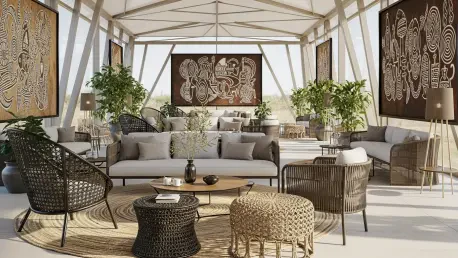

The global design landscape is currently witnessing a profound transformation as traditional motifs evolve from superficial trends into a formalized intellectual movement led by visionary creators like Sarah Langa. By establishing her brand, SL Interiors, she has effectively transitioned from the ephemeral world of social media influence to the enduring realm of interior architecture. This transition signifies a broader cultural shift where African designers are no longer content with being participants in global trends but are instead defining their own distinct philosophical frameworks. Her debut at the Decorex Africa exhibition served as a pivotal moment, showcasing a strategic effort to codify a Native African Design Philosophy. This initiative is designed to elevate the continent’s visual language, ensuring it receives the same academic and commercial respect accorded to historical Western movements. By centering authentic heritage and local craftsmanship, the focus shifts toward a sustainable future where African design is recognized for its inherent depth rather than its novelty.
Theoretical Foundations of a New Aesthetic
Bridging the Divide: From Influence to Expertise
Langa’s career pivot was a calculated move toward professional longevity within an increasingly crowded digital landscape. After a decade of navigating the influencer industry, she recognized that social media often poses significant challenges for personal growth and long-term economic sustainability. To ensure her craft could mature alongside her personal development, she successfully completed an intensive three-year interior design program in London. This formal education provided her with the essential technical tools, spatial reasoning, and historical context needed to transition from an intuitive decorator to a licensed professional designer. By prioritizing formal qualifications, she effectively insulated her career from the volatility of digital trends and positioned herself as a serious authority in the field. This shift allowed her to engage with design not merely as a visual medium, but as a structured discipline that requires a deep understanding of architecture and human psychology.
Global Perspectives: Intellectualizing the African Aesthetic
During her extensive studies abroad, she identified a significant and persistent absence of African perspectives within global design theory and academic curricula. While major movements like Art Deco, Minimalism, and Brutalism are meticulously defined and celebrated in textbooks, African design is frequently treated as a niche category or a temporary aesthetic gimmick. She sought to correct this imbalance by establishing a rigorous philosophy that treats African heritage with the same intellectual and commercial gravity found in established European or Asian styles. This approach involves moving away from the consumption of imported trends and instead focusing on the wealth of knowledge embedded in the continent’s history. By documenting and formalizing these design principles, she provided a framework that allows African aesthetics to be taught and practiced with professional precision. This move toward intellectualization ensures that the cultural output of the region is seen as a legitimate contribution to global design.
Materiality and the Architecture of Feeling
Indigenous Resources: Crafting the New Luxury
A central pillar of this emerging design philosophy is the strategic revaluation of indigenous materials that are frequently overlooked or undervalued in contemporary South African contexts. Langa deliberately incorporates high-quality animal hides, traditional textiles, and hand-woven grasses into sophisticated, high-end settings to challenge the outdated notion that luxury must adhere to Western standards. She redefined luxury as an authentic expression of identity, where the materials utilized carry the weight of history and the traditions necessary to create a truly meaningful home. This focus on local resources not only supports regional economies but also ensures that the physical environment remains connected to the land from which it originated. By highlighting the durability and aesthetic versatility of these materials, she demonstrated that they are capable of meeting the rigorous demands of modern interior design while providing a unique textural narrative. This approach encouraged a new generation of designers.
Emotional Architecture: The Power of Nostalgia
In her showcase at the Decorex Africa exhibition, she reimagined the concept of “The Soft Life” through a sophisticated lens of nostalgia and emotional comfort rather than mere material wealth. She successfully avoided the sterile and impersonal feel often associated with typical furniture showrooms, opting instead for spaces that felt lived-in, warm, and deeply familiar. By tapping into the emotional memories of a multi-generational household, she ensured that the value of a space was measured by its comfort and the length of time guests felt compelled to linger within its walls. This design strategy prioritized the human experience, focusing on how a room makes an individual feel rather than just how it appears in photographs. She argued that a home should serve as a sanctuary that evokes a sense of security and history, bridging the gap between modern functionality and traditional domesticity. This focus on the “architecture of feeling” provided a new metric for evaluating high-end projects.
Collaborative Craft and Artisanal Heritage
Human-Centric Production: Preserving Legacy Skills
The human element remains an essential component of her design process, as she consistently prioritizes the work of seasoned local artisans over the convenience of industrial mass production. She became a vocal advocate for the preservation of traditional skills, collaborating closely with master craftsmen who have spent decades perfecting their specialized techniques in woodworking and textile arts. This focus on artisanal quality ensures that her furniture consists of legacy pieces designed to last a lifetime, effectively resisting the disposability that characterizes many modern furniture trends. By creating a direct link between the designer and the maker, she fostered a production model that values the narrative of the object as much as its utility. This commitment to craftsmanship serves as a vital safeguard for cultural heritage, ensuring that ancient skills are passed down to younger generations through viable commercial opportunities. This method reinforced the idea that true luxury is found in human hands.
Multidisciplinary Synergy: The Art of Synthesis
Innovation in her work often stems from a commitment to multidisciplinary collaboration across a wide variety of creative sectors. She successfully integrated the unique talents of ceramic artists like Bheki Ndlovu and various weaving specialists to create a cohesive and highly innovative aesthetic that defies simple categorization. By combining her extensive fashion background with traditional beadwork, woodworking, and metalwork, she demonstrated that African design is a collective effort that thrives on the synthesis of various artistic forms. This collaborative spirit allowed her to push the boundaries of what is possible within a single interior space, creating custom elements that are both functional and sculptural. This approach also highlighted the interconnectedness of the African creative economy, suggesting that the future of design lies in the ability to bridge different industries. By acting as a curator of diverse talents, she was able to present a unified vision that respected individual artistry.
Establishing a Permanent Design Identity
Market Transformation: Meeting Global Demands
The reception of her professional debut indicated a deep and largely unmet demand for authentic, African-centered luxury within the global design market. Her showroom experiment, during which guests were encouraged to inhabit the space for an entire day, proved that emotional resonance serves as a more effective design tool than superficial beauty or brand prestige. Her prominent presence at major industry events signaled a broader shift toward acknowledging the continent’s potential to set its own standards rather than simply following global directives. This successful entry into the professional design world challenged established industry norms and forced a reevaluation of what constitutes a luxury interior in a globalized society. Investors and developers increasingly looked toward these culturally grounded projects as a means of differentiating their portfolios in a saturated market. The growth of this sector suggested that consumers are seeking more than just aesthetics; they are looking for a connection.
Future Perspectives: Designing for Cultural Belonging
The implementation of this philosophy offered a clear roadmap for the future of regional design by emphasizing that a sense of belonging was the ultimate goal of any residential space. Designers recognized that the most effective way to foster this connection was through the creation of environments that acted as mirrors for the inhabitants’ own histories and personal stories. By rejecting imported identities, the industry successfully transitioned toward a model where luxury was synonymous with cultural authenticity. Moving forward, the focus shifted to expanding these artisanal networks and integrating digital fabrication with traditional techniques to ensure scalability. Professionals were encouraged to look inward for inspiration, effectively turning the African aesthetic into a sophisticated global reality that honored its lineage while building a resilient economic foundation. This strategic shift paved the way for a design industry that remained both rooted in its heritage and competitive on the international stage.