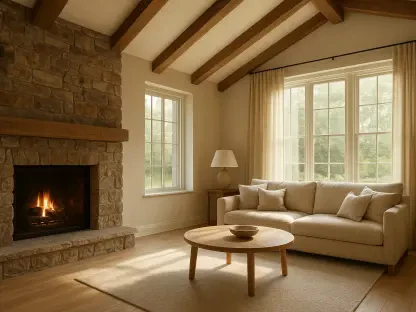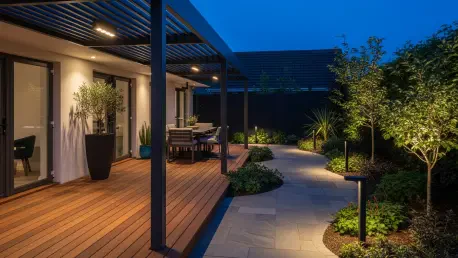

Contemporary residential architecture has evolved to the point where the physical threshold between interior sanctuaries and exterior landscapes has become nearly indistinguishable. This transformation is driven by homeowners who view their backyards as essential extensions of their living space rather than secondary aesthetic additions. Recent industry data reveals that a significant majority of renovation projects prioritize lounge and seating configurations that mirror the comfort and personality of indoor settings. By extending the aesthetic identity of the home into the garden, designers have created a seamless transition that fundamentally alters how individuals interact with their property. Lighting has emerged as the central fixture of this modern lifestyle, moving beyond its basic functional purpose to become a sophisticated design element. It acts as a primary tool for extending the utility of the outdoor room, ensuring that the space remains inviting long after sunset. Consequently, lighting is now a top priority for prospective buyers who seek homes with versatile and fully integrated exterior environments that offer both beauty and safety.
Designing Flexible Landscapes With Adaptive Technology
The development of modular lighting systems originated from a pervasive design challenge where traditional, rigid light strands failed to meet the needs of complex landscapes. Standard lighting products often forced a linear aesthetic that conflicted with the organic, sprawling shapes found in nature, such as the intricate canopies of ancient oaks or the winding paths of stone gardens. This limitation sparked a wave of innovation focused on creating systems where additional strands could connect through individual sockets, allowing the light to branch out in multiple directions. Much like sunlight filtering through tree limbs, these modular components offered a way to follow the natural geometry of the environment rather than fighting against it. By breaking away from the constraints of single-circuit designs, engineers allowed for a more nuanced application of light that could highlight specific textures and depths. This leap in technology provided the necessary foundation for a more artistic approach to landscape illumination, turning hardware into a medium for environmental sculpting.
Embracing this customizable approach has effectively empowered homeowners to transition from passive consumers into active designers of their own domestic atmospheres. The ability to build a bespoke system ensures that each installation is precisely tailored to the specific topography of a property, whether it features a multi-tiered patio or a dense woodland area. This shift reflects a much larger trend in the consumer market where individuals increasingly demand flexible solutions that adapt to their unique lifestyles rather than accepting static products. Modern lighting systems now offer a level of personalization that was previously reserved for high-end professional installations, making sophisticated design accessible to a wider audience. As users experiment with different configurations, they develop a deeper connection to their surroundings, fostering a sense of pride and ownership over the nighttime aesthetic of their homes. This democratization of design tools has redefined the relationship between hardware and the user, encouraging a proactive stance toward home improvement projects.
Creating Atmosphere Through Advanced Connectivity
Beyond the technical aspects of installation, modular lighting plays a critical role in establishing the emotional tone of a space, facilitating deeper human connections. Homeowners frequently serve as the primary architects of their home’s atmosphere, and versatile lighting tools allow them to pivot between various social contexts with ease. A single system can provide the soft, intimate glow necessary for a quiet family dinner or the vibrant illumination required for a large-scale community gathering. This inherent flexibility has shifted the perception of outdoor lighting from a seasonal luxury to a year-round necessity that supports a wide range of life milestones. Events such as graduations, weddings, and casual summer celebrations are now regularly hosted in these illuminated environments, extending the social life of the home into every month of the year. By providing a reliable and adjustable backdrop, these lighting systems foster a sense of continuity and warmth that encourages residents to spend more time outdoors, regardless of the occasion or the specific season.
The success of these innovative lighting solutions also underscores a broader spirit of creative problem-solving that prioritizes curiosity and the integration of high-tech solutions into domestic life. As the boundary between indoor and outdoor living continues to dissolve, the longevity and adaptability of residential products have become more important than ever. Designers are increasingly focused on creating components that offer both aesthetic beauty and structural resilience, ensuring that the lighting system can withstand environmental stressors while maintaining its performance. This commitment to durability represents a shift toward more sustainable consumption patterns, where homeowners invest in high-quality systems that evolve alongside their changing needs. Furthermore, the integration of these systems highlights a future for residential design where products are not just seen as utility items, but as part of a cohesive ecosystem. This holistic approach ensures that the home remains a resilient and adaptable space, capable of hosting diverse activities while maintaining a consistent and professional design aesthetic.
Strategic Integration: The Path Toward Resilience
The adoption of modular lighting systems offered a transformative path for property owners who sought to maximize the utility of their external environments through intentional design. Strategic implementation began with a thorough assessment of the landscape’s natural focal points and the primary activities the space was intended to host throughout the seasons. By prioritizing components that offered scalability, homeowners avoided the pitfalls of outdated, static installations and instead cultivated environments that grew alongside their families. Future considerations for outdoor living involved the deeper integration of smart controls and energy-efficient modules that further enhanced the resilience of the home. Professionals in the field noted that the most successful transitions were those that balanced technical precision with artistic flair, ensuring that every light source served a distinct purpose. As these systems became more prevalent, they provided a blueprint for how modern technology could be harnessed to create more sustainable and inviting living spaces for everyone.
Furthermore, the transition to modular systems established a standard for long-term property maintenance that emphasized the replacement of individual parts rather than entire units. This approach reduced waste and encouraged a more mindful interaction with household technology, as homeowners learned to troubleshoot and expand their setups with minimal professional intervention. The practical benefits of this flexibility were realized during various community-wide events where properties were quickly reconfigured to accommodate changing social needs. Looking ahead, the focus remained on the synergy between advanced optics and user-centric design to ensure that light was directed only where it was needed. This precision helped in minimizing light pollution while maximizing the dramatic impact of the landscape’s architectural features. By investing in modularity, residents secured a future where their homes remained adaptable to both technological advancements and the evolving demands of their daily lives, ensuring that every evening spent outside was both functional and aesthetically pleasing.