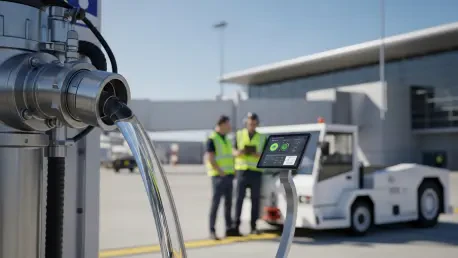

The global aviation industry stands at a critical juncture where the lofty promises of net-zero emissions must finally transform into measurable, high-impact operational changes across every major international hub. While many facilities previously relied on distant targets and carbon offsetting schemes to satisfy environmental requirements, the current landscape demands immediate physical interventions in infrastructure and fuel logistics. This shift is driven by both tightening regulatory frameworks and a growing public expectation for genuine transparency in how air travel impacts the planet. Transitioning from a theoretical strategy to a practical reality requires a holistic approach that integrates technology, finance, and policy into a single cohesive roadmap. Success in this area is no longer measured by the length of a sustainability report but by the actual reduction in carbon intensity per passenger and the deployment of tangible green technologies across the apron.
Decarbonizing Ground Operations
Electrification: Clean Support
The transition toward fully electric ground support equipment represents one of the most immediate opportunities for airports to slash localized carbon emissions and noise pollution. By replacing diesel-powered tugs and loaders with high-capacity battery-electric versions, hubs can achieve a significant reduction in Scope 1 emissions. However, this shift requires a complete overhaul of airside power distribution to ensure that charging stations are strategically located without disrupting tight turnaround schedules. Advanced telematics are now used to monitor battery levels in real time, ensuring that equipment is charged during off-peak hours to reduce strain on the local grid. Furthermore, the implementation of automated docking systems has begun to minimize human error and optimize fleet efficiency. This logistical evolution is essential for supporting the broader decarbonization of the apron as airports move away from fossil fuels. This sets a new standard for cleaner operations.
Architecture: Green Terminals
Modern terminal design has evolved beyond basic energy efficiency to incorporate biophilic principles and circular construction methods that minimize environmental impact. The use of low-carbon materials, such as cross-laminated timber and recycled steel, helps to lower the embodied carbon of new expansions significantly. Beyond materials, the integration of smart building management systems allows for precise control over HVAC operations based on real-time passenger density and ambient weather conditions. Natural lighting is maximized through advanced glazing technologies, which reduces the need for artificial illumination while improving the passenger experience. These architectural innovations are complemented by water reclamation systems that treat and reuse greywater for irrigation and sanitation. By treating the terminal as a living laboratory for green building technology, airport operators are proving that high-volume transit hubs can coexist with strict conservation and environmental stewardship.
Scaling Alternative Fuel Systems
SAF: Integrating Supply Lines
The large-scale adoption of sustainable aviation fuel (SAF) is recognized as the most effective lever for reducing the carbon intensity of flight in the short term. Airports are now moving beyond pilot programs to integrate SAF into permanent fueling infrastructure, often utilizing co-mingled systems that allow for seamless blending with traditional kerosene. To facilitate this, many hubs are investing in dedicated storage tanks and pipeline modifications that ensure a steady supply of low-carbon fuel to airline partners. However, the high cost of SAF remains a barrier, necessitating creative financing models and multi-year supply agreements to provide price certainty. Airports often act as central coordinators, bringing together fuel producers and government agencies to build robust local supply chains. This role is vital for ensuring that SAF becomes a standardized commodity rather than a niche alternative. This foundation allows airlines to meet increasingly rigorous decarbonization targets.
Future: Infrastructure Shift
The industry successfully navigated the initial complexities of this transition by moving from abstract environmental goals to concrete physical implementations across the globe. Leadership teams recognized that achieving deep decarbonization required a departure from isolated projects in favor of integrated systems that combined renewable energy, sustainable fuels, and circular waste management. The most effective hubs established cross-departmental task forces that aligned financial planning with environmental performance, ensuring that every infrastructure investment served a long-term objective. Furthermore, the collaboration between airports and local governments provided the regulatory stability needed to attract private investment for multi-billion dollar green upgrades. These actions proved that the path to a sustainable future was paved with operational discipline and a commitment to radical transparency. Ultimately, the focus shifted toward building a resilient ecosystem that could support flight without compromising the health of the planet.