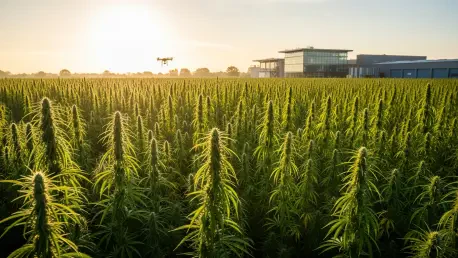

The fertile landscapes of Suffolk are currently witnessing a profound transformation as traditional cereal crops give way to the towering stalks of industrial hemp, a plant that was once sidelined but is now reclaiming its status as a cornerstone of sustainable agriculture. This shift is not merely a nostalgic return to heritage farming but a calculated response to the urgent need for carbon-negative industrial materials and regenerative land management practices. Farmers across the region are increasingly integrating hemp into their rotations, discovering that this versatile crop can detoxify soil, suppress weeds without heavy chemical intervention, and yield high-value fibers for the construction and textile sectors. While the regulatory landscape remains complex, the potential for Suffolk to become a domestic hub for bio-based manufacturing is more tangible than ever before. This movement represents a convergence of environmental necessity and economic pragmatism.
Ecological Resilience: The Carbon Sequestration Potential
Industrial hemp serves as a biological powerhouse, capable of capturing atmospheric carbon dioxide at a rate that significantly outperforms most commercial forestry ventures. Studies conducted from 2026 to 2028 indicate that a single hectare of hemp can absorb up to fifteen tons of carbon dioxide during its rapid growing cycle, effectively locking greenhouse gases into the biomass. For Suffolk’s farming community, this represents a unique opportunity to monetize carbon credits while simultaneously improving the structural integrity of their land. The deep taproots of the Cannabis sativa plant penetrate compacted soil layers, enhancing aeration and moisture retention for subsequent crops. Moreover, the crop acts as a natural phytoremediator, extracting heavy metals and toxins from the earth, which is particularly beneficial for sites transitioning from intensive industrial use. This dual capacity for environmental cleaning and carbon storage positions hemp as an essential tool.
Transitioning to hemp cultivation also offers a robust solution to the declining biodiversity often associated with monoculture grain production. Because hemp grows so densely and quickly, it naturally outcompetes most invasive weeds, drastically reducing the reliance on synthetic herbicides and pesticides that have long dominated regional agriculture. This reduction in chemical runoff protects local waterways and fosters a healthier habitat for beneficial insects and pollinators, which are vital for the broader ecosystem’s health. Furthermore, the stalks and leaves of the plant provide a temporary but significant refuge for ground-nesting birds and small mammals throughout the summer months. By diversifying the landscape with hemp, Suffolk farmers are creating a more resilient agricultural matrix that can better withstand shifting weather patterns. This ecological shift does not just benefit the immediate environment but also enhances the long-term viability of the soil.
Industrial Evolution: Building a Bio-Based Economy
The realization of a truly green economy in Suffolk depends heavily on the development of localized processing facilities that can transform raw stalks into usable industrial commodities. Currently, the lack of large-scale decortication plants—which separate the strong outer bast fiber from the woody inner shiv—remains a bottleneck that local entrepreneurs are racing to address. One of the most promising applications for these materials is the production of hempcrete, a bio-composite building material that offers exceptional thermal insulation and a negative carbon footprint. Unlike traditional concrete, hempcrete continues to absorb carbon dioxide as it cures, creating buildings that are essentially carbon sinks. Local architects and construction firms have begun to integrate these materials into residential projects across the county, signaling a shift toward sustainable architecture. By establishing regional hubs for manufacturing, Suffolk can minimize the carbon costs.
The successful integration of hemp into Suffolk’s economy was ultimately driven by a coordinated effort between private investors and regional policymakers who recognized the plant’s multifaceted value. To ensure the industry’s continued expansion, stakeholders prioritized the standardization of fiber quality and the streamlining of licensing procedures for primary producers. Researchers focused on developing specialized harvesting machinery that could handle the plant’s legendary toughness, which previously deterred small-scale farmers from participating. It was essential for the agricultural sector to form cooperatives that shared the high costs of industrial processing equipment, thereby democratizing access to the market. Furthermore, the introduction of financial incentives for carbon sequestration provided the necessary cushion for farmers to pivot away from subsidized food crops. These strategic steps effectively turned hemp from a niche curiosity into a foundational element.