
The modern architectural landscape has undergone a radical transformation as the industry moves away from seeing fire safety as a mere box-ticking exercise and toward embracing it as a fundamental design principle. This evolution is largely driven by the comprehensive requirements of the Building Safety Act, which demands that safety be prioritized from the very first sketch to the final day of a building’s operational life. Architects find themselves at the center of this shift, navigating a regulatory environment where the consequences of oversight are no longer just administrative but carry deep professional and ethical weight. By moving toward a model where information is transparent and accountability is shared, the profession is successfully shedding its reliance on siloed workflows. Instead, practitioners are adopting a holistic view of building performance that ensures every material choice and structural decision is justified by its contribution to occupant well-being and long-term structural integrity.
Establishing a New Era of Accountability
Evidence-Based Skill and Rigorous Training
Competence in the current architectural market is no longer a passive attribute based on historical qualifications; it is an active, evidence-based requirement that must be demonstrated at every project stage. Firms are moving toward a reality where every designer and lead professional must provide documented proof of their technical proficiency and understanding of the latest safety protocols. This necessitates a culture of continuous learning, where internal training programs are structured around complex regulatory updates rather than general design trends. By prioritizing rigorous professional development, architectural practices are ensuring that their staff can navigate the technical nuances of modern building systems. This proactive approach helps to mitigate the risk of error, as professionals are better equipped to identify potential safety hazards long before they become embedded in the construction drawings or physical structure during the early phases of the work.
The focus on proved expertise also means that reliance on superficial information from third parties is rapidly declining in favor of deep, self-initiated technical research. Architects are increasingly expected to interrogate the data provided by suppliers and consultants, ensuring that every component of a building’s envelope or core meets stringent safety criteria. This level of scrutiny fosters a more robust design process where decisions are backed by data and a thorough understanding of material science. As professional bodies continue to tighten their standards, the burden of proof remains with the lead designer to show that the team possesses the necessary skills for the specific building typology. This rigorous verification process not only elevates the status of the profession but also builds a foundation of trust with clients and regulatory authorities, who now demand a transparent trail of professional oversight throughout the life of the development and beyond.
Digital Precision and Gateway Compliance
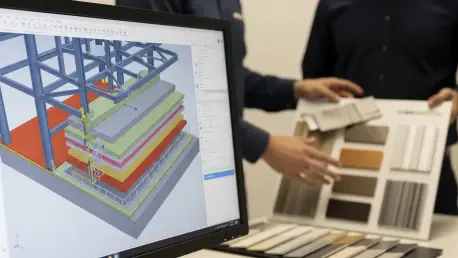
Digital transformation has become the backbone of modern safety compliance, with Building Information Modeling (BIM) serving as the primary tool for maintaining the “golden thread” of information. By utilizing high-fidelity digital twins, architectural teams can simulate and visualize complex safety assemblies, such as the placement of cavity barriers and fire-stopping materials, with extreme precision. This level of granular detail allows for the spatial coordination of various building elements, ensuring that safety components are not compromised by the installation of structural or mechanical systems. The ability to model these elements in a virtual environment before construction begins is essential for passing the rigorous checks required at different regulatory gateways. These digital records provide a reliable and immutable source of truth that stays with the building from the design phase through to completion, ensuring that information is never lost and remains accessible.
Furthermore, the implementation of digital gateways has created a more structured approach to project milestones, where safety documentation must be approved before work can proceed to the next stage. This “stop-and-check” mechanism prevents the rush to construction that often leads to critical errors or the omission of vital safety features in the final build. Architects are now managing vast quantities of data within these digital systems, ensuring that every specification is linked to a physical product and a verified performance standard. This integration of technology and regulation ensures that the original design intent is strictly followed throughout the construction process. As a result, the final building is not only a physical structure but also a comprehensive digital asset that provides future managers with the exact information needed to maintain fire safety systems. This digital-first mindset is redefining the architect’s role as a manager of complex systems.
Strengthening Collaborative Networks With Manufacturers
Transitioning to Early Engagement and System Testing
The traditional relationship between designers and manufacturers has been replaced by a collaborative partnership that begins during the earliest conceptual phases of a project. Rather than selecting materials based on aesthetic appeal alone, architects are now engaging with technical experts to understand how specific components will perform within a particular assembly. This early integration of technical data is crucial for developing a cohesive fire strategy that accounts for the interaction between different layers of a building’s facade or structural system. Manufacturers are expected to provide not just product data sheets but comprehensive evidence of how their materials behave in real-world scenarios. This collaborative approach allows for the early identification of potential conflicts, such as compatibility issues between insulation types and cladding panels, which could otherwise compromise the integrity of the fire safety strategy if left until the later stages of construction.
A significant part of this new collaboration involves the shift toward “system testing,” where entire wall or floor assemblies are evaluated as a single unit rather than as a collection of individual parts. This methodology acknowledges that the performance of a fire-rated material can be significantly altered by the components it is paired with during the installation process. Architects are increasingly demanding test reports that reflect the specific configurations used in their designs, pushing manufacturers to conduct more rigorous and varied testing of their products. This focus on holistic performance ensures that the interaction between rainscreens, masonry, and fire-stopping is fully understood and verified. By prioritizing system-level integrity over individual component compliance, the industry is creating buildings that are fundamentally safer. This shift also encourages innovation in material science, as manufacturers strive to create integrated systems that offer safety.
Reconciling Safety With Environmental Performance
The push for higher safety standards is occurring simultaneously with the urgent need for sustainable construction practices, leading to a new era of ethical design. Modern fire engineering is proving that these two goals are not in competition but can actually complement each other through innovative technical solutions. When fire engineers are involved at the very start of the design process, they can develop tailored strategies that allow for the use of sustainable materials like mass timber. This early collaboration ensures that the inherent risks of certain materials are managed through advanced suppression systems or protective coatings that do not detract from the building’s green credentials. By taking a first-principles approach to risk assessment, architects can create structures that are both environmentally responsible and safe for human habitation. This balance is achieved by considering the entire lifecycle of the building and the environmental impact of its materials.
Furthermore, the design of complex green facades and living walls is being re-evaluated to ensure that aesthetic and environmental features do not create new fire risks. Engineers are using computational fluid dynamics to model how fire might spread across these organic surfaces, allowing for the strategic placement of non-combustible zones and drainage systems. This level of technical sophistication ensures that the push for urban biodiversity and carbon reduction does not come at the expense of life safety. The focus on sustainability also extends to the durability of safety systems, ensuring that they remain functional for the life of the building with minimal environmental impact. As the industry continues to innovate, the integration of safety and sustainability will become a hallmark of professional excellence. This dual focus reflects a broader commitment to creating a built environment that respects both the planet and the people who live within it through very careful design.
Advancing Architectural Standards Through Integrated Safety
The industry successfully transitioned to a more rigorous and transparent framework that prioritized human life above all other design considerations. Project teams moved beyond the historical silos of expertise and embraced a collaborative model where information was shared freely and documented meticulously through every project phase. By integrating fire engineering and manufacturer expertise from the outset, architects realized that safety and sustainability could coexist without compromising design quality or environmental goals. This period of change required firms to invest heavily in digital tools and professional training, but the result was a significant improvement in the quality and safety of the built environment. Future practitioners were encouraged to maintain this momentum by continuing to challenge existing standards and adopting a proactive approach to risk management. The legacy of this transformation was a professional landscape where accountability was the norm and every building served as a testament to the industry’s commitment to protection.