
Modern landscape architecture often struggles to find a balance between the artistic vision of the designer and the raw, unpredictable demands of the natural environment itself. The San Francisco-based firm Surfacedesign, spearheaded by James A. Lord and Roderick Wyllie, has carved out a unique position by fundamentally rejecting the industry’s reliance on a recognizable “signature” style. Instead of forcing a pre-packaged aesthetic onto every site, the firm pursues a deep engagement with the local ecology, community history, and cultural nuances of a location. This methodology allows the landscape to emerge organically from the unique constraints of the soil and the wind, rather than being imposed from an external blueprint. From the volcanic expanses of Hawaii to the geothermal terrains of Iceland, the firm’s portfolio demonstrates a refusal to be categorized by a single look, prioritizing the authenticity of the place over the vanity of any specific designer or firm.
Rethinking the Friction Between Nature and Human Design
The profession of landscape architecture has historically been relegated to a secondary role, often perceived as mere decoration or the simple arrangement of greenery around a finished building. Surfacedesign challenges this conventional hierarchy by framing their work as a complex problem-solving discipline that thrives on the friction between human intervention and the unyielding forces of nature. Lord and Wyllie argue that the most successful projects are those that acknowledge and even celebrate elements that might not be considered traditionally beautiful. By integrating raw materials and local textures that reflect the true character of a site, they create spaces that are durable and intellectually stimulating. This approach forces a reconsideration of what it means to design a park or a plaza, moving beyond the superficial toward a more honest reflection of the environment. The result is a series of surprising spaces that defy expectations and offer a sense of belonging.
Unlike static architectural structures that are often at their peak aesthetic moment upon completion, landscape architecture is a living discipline defined entirely by the relentless passage of time. Surfacedesign operates with the understanding that a project is not a finished product but an ongoing process that may take years or even decades to reach its intended maturity. This long-term perspective is vital as the firm transitions from smaller site interventions to massive, complex civic commissions that reshape entire urban districts. Designing for the long haul requires a shift in mindset, viewing the landscape as a living system that must grow, adapt, and evolve alongside the communities it serves. By planning for growth cycles and seasonal changes, the firm ensures that their designs remain resilient and relevant as the decades pass. This commitment to the temporal nature of the land allows their work to build a legacy of ecological health and social connectivity.
Building Ecological Resilience Through Research and Collaboration
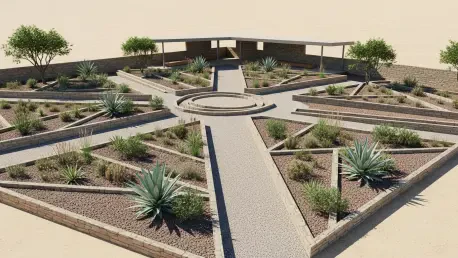
As environmental conditions become increasingly extreme, the practice of landscape architecture must pivot toward addressing scarcity and the more uncontrollable aspects of the natural world. Surfacedesign has placed ecological resilience at the forefront of its mission, particularly in the fire-prone regions of California and the arid deserts of the American West. By integrating rigorous academic research into their daily practice, especially concerning the dual threats of wildfire and chronic water scarcity, the firm develops designs that are functionally prepared for a changing climate. These are not merely sustainable gestures; they are deeply engineered solutions that utilize specific plantings and topographical strategies to mitigate disaster. This focus on functionality does not come at the expense of beauty, but rather informs a new kind of aesthetic that values survival and resourcefulness. Their work in Joshua Tree serves as a blueprint for how designers can work with the land.
The creative output of the firm is deeply influenced by the collaborative atmosphere maintained within its San Francisco studio, where diverse passions and skills are actively encouraged. By fostering an environment where interdisciplinary ideas can flourish, the principals ensure that every project benefits from a wide range of perspectives, from horticulture to urban planning. The studio’s physical location on the urban waterfront provides a constant source of inspiration, acting as a daily reminder of the interface between the built environment and the wilder elements of the sea. This connection to the site’s immediate geography reinforces the firm’s commitment to bridging the gap between human infrastructure and the natural world. Collaboration extends beyond the internal team to include local craftsmen and community stakeholders, ensuring that the final design is a collective achievement. This culture of shared inquiry allows the firm to tackle complex social issues with intensity.
Integrating Historical Context and Global Artistic Perspectives
The aesthetic diversity of the firm is fueled by the contrasting personal backgrounds and the shared artistic interests of its founders, who bring complementary sensibilities to the design process. Lord and Wyllie often describe their partnership as a balance between “light” and “dark” aesthetics, a dynamic that prevents any single project from feeling stagnant or repetitive. They are united by a profound devotion to art history and global travel, which informs their understanding of how humans have interacted with the land across different cultures and eras. These international experiences allow them to draw subtle inspiration from historic gardens and the works of classical painters, ensuring that their modern projects remain culturally grounded. By looking at the past through a contemporary lens, they create landscapes that feel both timeless and innovative. This intellectual depth provides a layer of meaning to their work that transcends utility, turning spaces into living narratives.
The evolution of landscape architecture required a departure from purely decorative motives toward a strategy that prioritized ecological integrity and cultural resonance over stylistic consistency. Designers who sought to replicate these successes focused on the integration of indigenous materials and the rigorous study of local hydrology to ensure long-term viability. It became clear that the most effective interventions were those that treated the landscape as an active participant in the urban dialogue rather than a passive backdrop. Stakeholders recognized that investing in resilient, time-aware design mitigated future costs associated with climate degradation and community displacement. The industry adopted a more collaborative model that bridged the gap between academic theory and on-site application. This shift ensured that the built environment did not merely survive but thrived by embracing the inherent volatility of nature to create a sustainable legacy.