
Constructing a modern residence that possesses the weathered character of a century-old structure requires a courageous rejection of contemporary architectural standards that favor sterile surfaces and geometric perfection. In the densely wooded landscapes of Michigan, a recent residential project has successfully challenged the traditional “white siding and green shutters” aesthetic by embracing a gritty, grounded philosophy. This retreat was not envisioned as a mere display of wealth but as a multi-generational sanctuary designed to facilitate a tech-free connection between a family of five and the rugged shoreline. By prioritizing a “crusty,” lived-in atmosphere over pristine luxury, the design team created a space that resists the temporary pressures of architectural trends. This home serves as a definitive testament to the idea that a “forever home” should feel as though it has already weathered decades of storms, providing a backdrop where every scratch or water ring on a wooden table is welcomed as a meaningful chapter in a family legacy.
Architectural Diversity and the Master Site Plan
The architectural strategy for this lakeside compound deliberately avoids the monolithic presence of a single large mansion by breaking the residence into four distinct cabin structures. Each of these buildings utilizes a different traditional vernacular—incorporating clapboard, shake, lathe, and board-and-batten—to suggest a property that evolved naturally over several generations rather than being built all at once. These individual volumes are unified by contemporary breezeways constructed from glass, steel, and concrete, providing a sharp modern edge that prevents the historical references from feeling like a mere imitation of the past. This fragmented layout allows the home to sit more naturally within the environment, mimicking the cluster of original kit cabins that once occupied the site. The result is a residence that feels both expansive and intimate, offering a variety of textures and visual experiences as one moves between the different functional zones of the compound.
This sophisticated layout maximizes the unique geography of the peninsula, offering sweeping 270-degree views of the lake while creating private pockets of outdoor space for family members to enjoy. The design process began with a significant challenge: balancing the husband’s desire for grand, light-filled rooms with the wife’s preference for a rustic, “wonky” aesthetic that felt ancient. By translating a simple napkin sketch into a complex site plan, the architects managed to accommodate large-scale volumes without sacrificing the cozy, hand-built character essential to a traditional retreat. Every building was positioned to preserve existing trees and natural features, ensuring that the new construction felt integrated into the landscape from the very first day. The use of breezeways as connectors serves a dual purpose, acting as literal bridges between architectural eras while allowing the residents to remain constantly aware of the surrounding elements as they move through the house.
The Art of the Patina and Reclaimed Textures
Interior design within the home is governed by a strict “no coasters allowed” policy, ensuring that every material selected is durable enough to withstand the rigors of family life and the passage of time. The material palette is dominated by reclaimed elements, including French white oak floors, salvaged structural beams, and cedar repurposed directly from the original structures on the property. These materials provide a sense of organic permanence, ensuring that the interior feels heavy, grounded, and authentically aged. The design team sought out wood with visible knots, cracks, and variations in grain, viewing these “imperfections” as essential components of the home’s soul. By selecting materials that only improve with wear, the owners removed the stress of maintenance and replaced it with a philosophy of appreciation for the natural aging process. This approach ensures that the home will only become more beautiful as it is used by subsequent generations.
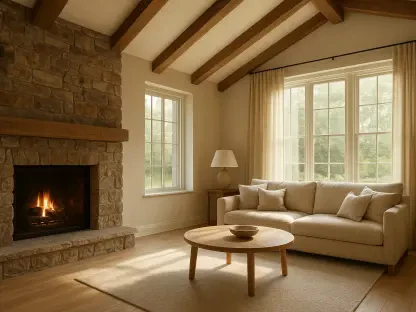
The heart of the home, the great room, features soaring ceilings paneled with salvaged barn boards that create an immediate sense of historical gravity and warmth. Throughout the house, the design team actively avoided perfectly square or plumb lines, seeking instead to replicate the slight irregularities found in vintage craftsmanship. The fireplace, for instance, was intentionally built with an asymmetrical “wonky” design to mimic the charm of an old, hand-laid stone structure that might have been built by a local mason decades ago. This commitment to intentional imperfection is what ultimately deceives the eye, making the new construction indistinguishable from a heritage building to even the most observant visitors. One telling anecdote involves a professional window treatment installer who apologized because the shades would not line up perfectly due to the “age” of the house, a comment that the owners received as the highest possible compliment for their new construction project.
Functional Spaces With a Curated History
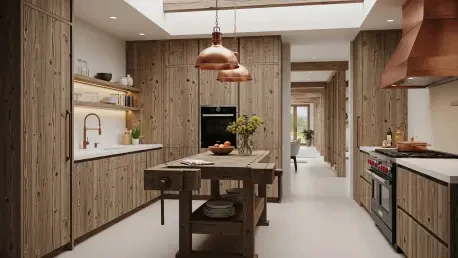
Every room in the cabin serves as a functional gallery for antique finds and local craftsmanship, blending utility with a deep sense of place. The entryway sets a moody tone with deep, dark paint and a vintage Freemason’s bench used for storing fishing gear, immediately establishing that this is a house meant for active use rather than formal display. The kitchen avoids the sterile appearance of modern appliances by using bandsawn oak and Michigan-sourced copperware, creating a space that feels more like a traditional larder than a high-tech cooking zone. In the guest wing, the design pays homage to mid-century simplicity by exposing the raw structural framing and hiding insulation behind planks rather than traditional drywall. This architectural choice emphasizes the “cabin” feel, reminding guests that they are in a rustic retreat where the beauty lies in the honesty of the construction materials and the simplicity of the lakeside lifestyle.
Even the bathrooms and private quarters are designed with adaptive reuse in mind, such as a primary vanity repurposed from a vintage European workbench found during the design phase. The bedrooms offer a respite from the heavier wood tones of the main lodge, utilizing custom walnut beds and airy paint colors to create a serene environment that highlights the natural light. By blending high-end custom furniture with “crusty” antiques, the home achieves a sophisticated but rugged balance that feels both refined and ready for the occasional mess of lakeside living. The focus remains on durability and comfort, with spaces designed to encourage reading, conversation, and rest. With only one television hidden away, the home functions as a tool for lifestyle modification, encouraging the family to engage with the environment through fishing, boating, and long summer evenings spent outdoors under the stars.
Forward Looking Heritage and Design Legacy
The successful completion of this Michigan lake retreat proved that authenticity in the modern age is achieved through a commitment to materials that possess an inherent history. By prioritizing the “rust and crust” of reclaimed wood and stone over the fleeting trends of polished luxury, the project established a blueprint for creating homes that age gracefully. The architects and designers demonstrated that a house can be both technologically modern in its efficiency and ancient in its atmosphere. This synthesis of four distinct architectural styles, unified by glass breezeways and a shared palette of salvaged materials, resulted in a property that was both unique and deeply rooted in its local context. It was a perfect reflection of a family looking to simplify their lives amidst modern complexities, choosing to invest in a legacy that will remain relevant for decades. The project showed that by looking backward to the simplicity of heritage cabins, builders can create a forward-looking sanctuary.
The actionable takeaway from this project was the realization that imperfection can be a deliberate and valuable design choice in high-end residential construction. Builders and homeowners who embraced “wonky” lines and reclaimed textures found that these elements provided a level of soul that new materials simply could not replicate. The focus shifted from achieving a flawless finish to creating a durable environment where the signs of daily life were celebrated as part of the home’s character. Future projects in this vein likely prioritized the integration of local history and salvaged components to ensure that new structures did not feel like intruders in established landscapes. By treating a house as a living entity that grows more beautiful with use, the design team ensured that the family’s legacy was built into the very walls of the structure. This approach offered a sustainable model for luxury, where the value was found in the stories told by the materials and the memories made within the space.