
The shift toward sophisticated al fresco dining has transformed the humble backyard gathering into a meticulously curated experience that rivals the most exclusive indoor venues. While traditional outdoor meals often lean toward casual simplicity, the modern high-end tablescape demands a delicate balance between the raw unpredictability of nature and the disciplined refinement of fine dining. This design philosophy relies on the concept of an outdoor dining room, where the environment is not merely a backdrop but an active participant in the aesthetic narrative. By treating the patio or garden with the same architectural intent as a formal dining hall, one creates an immersive atmosphere that feels both expansive and intimate. The key lies in intentionality, where every selection—from the weight of the flatware to the weave of the napkins—serves to elevate the sensory experience beyond the expected. Achieving this level of polish requires a strategic departure from the ordinary, focusing instead on materials that command attention while harmonizing with the landscape.
Establishing a Structural Anchor: Texture and Materials
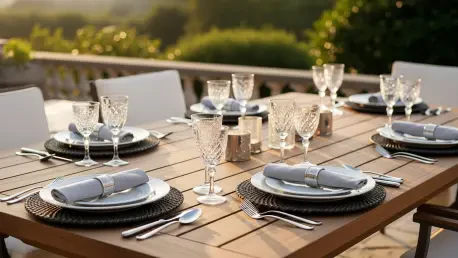
The foundation of any premium tablescape begins with anchoring each place setting to prevent individual elements from looking lost on the expansive table surface. Using textured chargers and placemats made from dark wicker, woven rattan, or seagrass provides a sense of visual weight that grounds the arrangement immediately. These items serve as the architectural base of the meal, setting a professional tone that signals a carefully planned event rather than a last-minute gathering. When a table is set without these foundational layers, the porcelain and glassware often appear to float, losing their impact against the grain of the wood or the slickness of a stone tabletop. By introducing these heavy, tactile elements, the design establishes a clear boundary for each guest, creating a sense of individual space within the communal setting. This structural anchoring is essential in an outdoor context where the scale of the open air can easily overwhelm delicate or undersized decorative details.
Utilizing Texture and Materiality
Beyond just providing structure, the use of organic textures helps harmonize the table with the surrounding natural environment through a sophisticated play of light and shadow. By layering different materials—such as a sleek, polished glass plate over a rugged woven charger—one creates visual movement and depth that captures the eye from every angle. This multi-dimensional approach ensures the table feels substantial and well-thought-out, providing a tactile experience that complements the outdoor setting while maintaining a clear sense of order. The contrast between the refined finish of high-end dinnerware and the rustic appeal of natural fibers bridges the gap between the wild and the civilized. Moreover, these textures interact beautifully with the soft glow of evening lanterns, adding a dynamic quality to the arrangement that evolves as the day progresses. The result is a cohesive look that honors the organic roots of the setting while firmly establishing an atmosphere of luxury and curated elegance.
Creating Visual Weight through Organic Bases
Building on the foundation of texture, the selection of materials must extend to the larger serving pieces and centerpieces to maintain a consistent sense of luxury. Utilizing heavy stoneware or hand-forged metal trays adds a layer of permanence that disposable alternatives simply cannot replicate. These items act as anchors for the eyes, drawing attention to the center of the table and providing a sense of stability in an open-air environment. When choosing these pieces, focus on items that possess a hand-crafted quality, as the minor imperfections in artisanal ceramics or hammered copper provide a bridge to the natural world. This approach prevents the table from looking too sterile or industrial, which can often happen when high-end indoor decor is moved outside without adjustment. By prioritizing materials that feel as though they belong in the garden while retaining a high level of finish, the host creates a space that is both grounded and exceptionally refined, ensuring the dining experience remains memorable.
Softening the Setting with High-End Textiles
Linens are perhaps the most effective tool for injecting luxury into an outdoor space, as they offer a soft contrast to the ruggedness of the elements and the hard surfaces of furniture. Moving away from simple, flat tablecloths in favor of high-quality fabrics with intricate patterns or summery florals can instantly elevate the mood of the entire area. The goal is to avoid a “flat” appearance, which often occurs when a table lacks the necessary layers to stand out against a lush, green landscape or a neutral stone patio. A heavy linen base provides a canvas of color and texture that muffles the sound of plates and cutlery, contributing to a more refined and quiet dining experience. These fabrics should possess enough weight to resist the occasional breeze, ensuring that the visual composition remains intact throughout the evening. By selecting textiles that feature sophisticated prints, the host signals that the outdoor meal is an occasion of significance.
Mastering the Art of Layering Linens
To achieve a truly professional look, one should embrace a layered approach that includes a base tablecloth, a contrasting runner, and high-quality linen napkins that feel substantial to the touch. Utilizing materials like cheesecloth or hand-embroidered fabrics creates a “polished and foraged” aesthetic that feels both expensive and effortless in its execution. This attention to detail demonstrates a level of care that distinguishes a high-end tablescape from a standard outdoor setup, ensuring the arrangement feels intentional and curated. A linen runner, draped slightly off-center or layered over a solid cloth, adds a horizontal line that guides the eye across the length of the table, making the setting appear more expansive. Meanwhile, oversized napkins secured with elegant rings or folded with precision provide a final touch of sophistication. This layering technique not only adds visual interest but also provides a sense of warmth and comfort that balances the cool air and open surroundings.
Selecting Fabrics for Outdoor Sophistication
The choice of fabric is not merely about aesthetics but also about the tactile experience and the durability required for an al fresco environment. Premium heavy-weight linens and cotton blends are preferred over synthetic materials because they hang more elegantly and provide a superior feel when handled by guests. These natural fibers also breathe better in warm weather, enhancing the comfort of the diners as they linger over multiple courses. When coordinating colors, one might look to the surrounding garden for inspiration, selecting hues that either blend seamlessly with the foliage or provide a bold, purposeful contrast. Deep forest greens, muted terracottas, or soft sky blues can ground the table in its environment while maintaining a high-fashion sensibility. By investing in a collection of high-quality textiles, a host ensures that the table is always prepared for the transition from a bright afternoon brunch to a moonlit dinner, maintaining a consistent standard of luxury.
Curating a Refined and Natural Atmosphere
No luxury outdoor table is complete without the inclusion of fresh, seasonal greenery that grounds the setting in its specific location and provides a living connection to the garden. Rather than relying on mass-produced arrangements, consider foraging branches, vines, or garden clippings from the immediate surroundings to create an authentic and unique centerpiece. Whether the choice is for dramatic garlands that spill over the edges of the table or minimalist bud vases that highlight the beauty of a single stem, these living elements bridge the gap between the table and the wider landscape. Timing is crucial to ensure these botanical elements remain vibrant throughout the event, as the heat of a summer afternoon can quickly wilt delicate petals. Selecting hardy varieties such as eucalyptus or olive branches ensures that the decor remains fresh and inviting from the first course to the final toast. This organic integration creates a sense of place, making the meal feel like a natural extension of the garden.
Integrating Seasonal Greenery and Permanent Materials
The most common mistake that detracts from a high-end feel is the use of disposable paper or plastic products, which can easily blow away and feel temporary or cheap in a luxury context. To maintain a sophisticated atmosphere, it is essential to use permanent materials such as vintage silver napkin rings, ceramic platters, and quality glassware that catch the light beautifully. Choosing durable, high-end alternatives to plastic ensures that the tablescape retains a sense of prestige, showing guests that every aspect of the dining experience was chosen with quality in mind. Glassware with a slight tint or an interesting texture can complement the natural hues of the outdoors, while heavy flatware adds a satisfying tactile element to every bite. These permanent pieces act as the jewelry of the table, providing a reflective quality that contrasts with the matte finishes of stone or wood. By investing in reusable, high-quality components, the host creates a sustainable yet opulent environment.
Finalizing the Design with Actionable Steps
The design process for high-end outdoor tablescapes shifted focus toward a holistic integration of architectural principles and natural aesthetics to create truly memorable dining environments. Designers and hosts moved away from the fragility of temporary setups and instead embraced the permanence of high-quality materials and layered textiles. This transition allowed for the creation of spaces that felt both grounded in their environment and elevated by human artistry, proving that luxury and the outdoors are not mutually exclusive. Looking forward, the focus remained on the longevity of these design choices, where the selection of weather-resistant yet beautiful components ensured that the investment in style would yield returns across many seasons. Those seeking to replicate this level of sophistication found success by prioritizing the sensory experience, from the weight of a linen napkin to the scent of freshly foraged greenery. By refining the relationship between the built table and the natural world, a new standard for al fresco elegance was established.