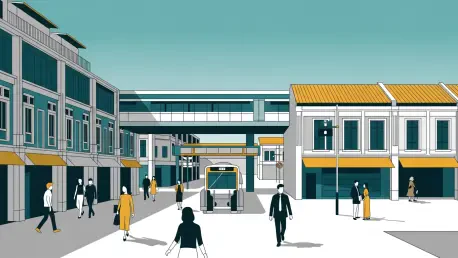

In a global economic landscape often defined by volatility, the enduring performance of Singapore’s HDB shophouses serves as a testament to the power of localized retail demand and strategic urban planning. While newer commercial developments often struggle with tenant retention and fluctuating occupancy rates, these heartland assets have maintained a remarkable level of stability that attracts both institutional investors and wealthy private individuals. Recent market trends in 2026 show that properties in mature estates are commanding prices that once seemed reserved for prime Orchard Road locations. This phenomenon is not merely a byproduct of a low-interest-rate environment but a reflection of the inherent value found in proximity to high-density residential hubs. Investors are increasingly looking past the remaining lease durations, focusing instead on the consistent cash flow generated by essential services like medical clinics, banks, and established eateries that anchor these neighborhoods.
The Influence of Prime Locations and Urban Transformation
Commercial Dominance: The Centrality of Toa Payoh
The shophouse located at 178 Toa Payoh Central stands as a prominent example of how strategic positioning within a town center can transform a standard property into a premier “trophy asset.” Situated directly along a major pedestrian mall, this specific unit enjoys some of the highest footfall rates in the entire country, driven by its immediate proximity to the Toa Payoh MRT station and the HDB Hub. This location serves as more than just a retail spot; it is a critical node for administrative and social activity where thousands of residents congregate daily for work and leisure. The commercial utility of such a space is immense, as it provides businesses with an almost guaranteed stream of customers that remains independent of broader tourism trends. Consequently, the valuation of these units reflects their role as indispensable community hubs, where the sheer volume of pedestrian traffic justifies the premium prices per square foot that investors are currently willing to pay.
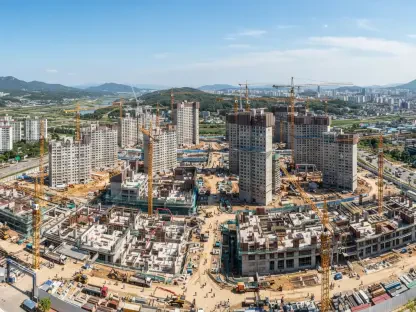
Furthermore, the sustained value of these central properties is inextricably linked to long-term government redevelopment initiatives that ensure their continued relevance. Large-scale rejuvenation projects slated for completion by 2030 are set to introduce a 12-hectare integrated development featuring a modern sports hall, stadium, and polyclinic in the immediate vicinity. These infrastructure improvements do more than just modernize the aesthetic of the neighborhood; they create new reasons for residents to visit the town center, thereby reinforcing the economic ecosystem. For an investor, such planned upgrades act as a buffer against capital depreciation, as the surrounding environment is constantly being improved and expanded. The synergy between government-led urban renewal and private property ownership creates a unique dynamic where the public sector’s commitment to township vibrancy directly supports the private asset’s long-term growth and its ability to attract high-quality, stable commercial tenants.
Demographic Synergy: Growth Patterns in Kovan City
The commercial landscape surrounding Kovan City offers a sophisticated investment profile that bridges the traditional heartland experience with the needs of a more affluent demographic. Shophouses near the Kovan Food Centre benefit from a diverse customer base, ranging from long-term residents of established HDB blocks to the growing population of high-end condominium dwellers in the area. This demographic mix creates a resilient retail environment where businesses can cater to both budget-conscious shoppers and those looking for premium services or specialized dining options. This versatility is a key driver of the high rental yields often observed in Kovan, as the local population has the spending power to support a wide variety of business models. Investors recognize that this demographic diversity provides a safety net, ensuring that the property remains occupied even if specific market sectors experience a temporary downturn, as the local demand remains consistently high.
Looking ahead to the immediate future, the completion of the Kovan Wellspring residential project and its integrated community club is poised to further increase the local population density. This influx of new residents provides a direct boost to the local economy, creating a larger captive audience for the retail businesses operating within the nearby HDB shophouses. By being integrated into these master-planned community hubs, these properties are positioned to capture the benefits of increased urban density without the risks typically associated with new commercial ventures. The strategic value of these shophouses lies in their ability to evolve alongside the neighborhood, adapting to new lifestyle trends and consumer behaviors as the community grows. As residential density increases, the scarcity of available commercial floor space in these prime locations becomes even more pronounced, leading to sustained upward pressure on both rental rates and overall capital values for savvy property owners.
Mechanisms of Scarcity and Market Stability
Inventory Constraints: Policy Drivers and Scarcity
A primary reason for the exceptional resilience of HDB shophouses is the finite and strictly controlled nature of their supply. The government ceased the sale of these units to private owners in 1998, effectively capping the total number of privately held HDB shophouses at approximately 8,500 units nationwide. This hard limit on inventory means that no new competition of this specific asset type will ever enter the market, creating a natural hedge against the supply-side risks that often plague the private commercial sector. Unlike the constant influx of new shopping malls or office buildings, the stock of HDB shophouses remains static, making them highly desirable “collector’s items” for investors who prioritize rarity. This scarcity is a fundamental pillar of the asset’s value, as the growing demand from a sophisticated investor class competes for an ever-shrinking pool of available properties, especially as more units are held for long-term income rather than short-term gain.
Moreover, the policy-driven nature of these assets provides a level of predictability that is rarely found in other segments of the real estate market. Since these shophouses are located within public housing estates, their surrounding environment is managed by the Housing and Development Board, ensuring that the infrastructure is well-maintained and that the town’s overall plan remains cohesive. This institutional oversight mitigates many of the risks associated with neighborhood decline, as the state has a vested interest in maintaining the vibrancy of heartland centers. For the private owner, this means that the external factors affecting their property are largely controlled and aimed at long-term community success. This structural stability, combined with the absolute limit on supply, transforms these properties into a low-risk vehicle for capital preservation, where the value is derived not just from the building itself, but from its guaranteed role in Singapore’s social and economic fabric.
Adaptive Utility: Versatility and Capital Protection
The dual-use nature of HDB shophouses offers a level of functional flexibility that significantly enhances their appeal as defensive investment assets. Most of these properties feature commercial space on the ground floor with residential living quarters on the upper levels, allowing owners to tap into two distinct rental markets simultaneously. This configuration provides a unique form of risk diversification; for example, if the retail sector faces temporary headwinds, the residential portion can still provide a steady stream of income. Furthermore, the upper floors can be utilized for various purposes, such as staff accommodation or even as an extension of certain business operations, depending on the specific zoning regulations and HDB guidelines. This adaptability ensures that the property remains productive under a variety of economic conditions, making it an ideal choice for investors who seek multi-functional assets that can pivot as the market evolves.
Strategic shifts in investor behavior in 2026 also indicate that the immediate utility of a location now frequently outweighs the traditional concerns regarding lease decay. Many buyers are increasingly comfortable acquiring shophouses with less than 60 years remaining on their leases, provided the property is located in a high-traffic zone with proximity to major transport interchanges. This mindset reflects a sophisticated understanding of the “recession-proof” nature of heartland retail, where the necessity of local services ensures a constant demand that transcends the specifics of the leasehold duration. These assets are being treated as high-yielding income generators rather than purely speculative plays, with the focus shifting toward the net operating income and the reliability of the tenant base. By prioritizing properties that serve the daily needs of the population, investors have successfully insulated their portfolios from the volatility of the luxury retail and high-end office sectors.
Future Considerations: Adapting to New Heartland Realities
The investment landscape for HDB shophouses transitioned into a more mature phase where capital preservation became the primary objective for seasoned market participants. In the preceding years, the market witnessed a clear separation between standard commercial units and “trophy” assets located in transit-oriented developments. Investors who focused on properties with high social utility, such as those housing medical suites or essential grocery providers, secured the most consistent returns. This era taught the market that the resilience of a property was not just about its physical structure but about its integration into the daily life of the local community. The most successful strategies involved identifying neighborhoods undergoing early-stage rejuvenation, allowing for capital growth before the full impact of new infrastructure was realized. These moves allowed owners to benefit from the rising tide of urban development while maintaining a relatively low-risk profile compared to the volatile central business district.
The evolution of heartland commerce dictated a new approach to asset management that prioritized long-term community engagement over short-term rental spikes. As the population became more localized in its consumption habits, shophouse owners who curated their tenant mix to include modern lifestyle services alongside traditional trades saw the highest levels of property value appreciation. This period demonstrated that the most effective way to future-proof an investment was to align it with the government’s broader goals for township self-sufficiency. Moving forward, the focus must remain on the digital transformation of these traditional spaces, ensuring they can support omnichannel retail and modern delivery logistics. Those who proactively upgraded their properties to meet these changing technical requirements established a significant advantage. This historical context provides a clear roadmap for future acquisitions, emphasizing that the value of an HDB shophouse is ultimately defined by its ability to serve as a vital, adaptable anchor within its residential ecosystem.