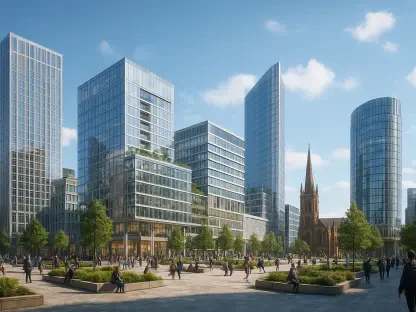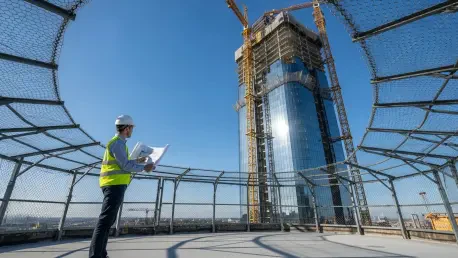

As metropolitan centers across the United States increasingly trade horizontal expansion for the dizzying heights of modern vertical architecture, the construction industry finds itself navigating an unprecedented era of legal and operational vulnerability. This fundamental shift toward high-rise residential and mixed-use development represents much more than a change in the urban skyline; it signifies a complete transformation in how risk must be managed and assigned. When a project reaches upward of forty or fifty stories, the margin for error effectively vanishes, and a minor safety oversight that might cause a compensable injury on a ground-level site often escalates into a catastrophic fatality. This inherent “rising risk” phenomenon has forced a critical re-evaluation of the legal frameworks governing the construction sector. While smaller projects often see risk pushed downward toward subcontractors, the sheer gravity and complexity of skyscraper construction tend to reverse this flow, sending liability straight back to the owners, developers, and general contractors who oversee the environment.
Analyzing the Dynamics of Modern Vertical Liability
The Evolution of Systemic Accountability
For a significant portion of construction history, legal defense strategies relied heavily on the “worker error” narrative, which suggested that accidents were primarily the result of individual negligence or a failure to follow established safety protocols. However, in the current legal landscape of 2026, this defense is rapidly losing its effectiveness as juries become increasingly skeptical of blaming a single individual for what appears to be a systemic failure. Instead of focusing solely on why a specific worker fell or made a mistake, the legal inquiry now centers on the environment provided by the employer. Jurors frequently investigate whether engineered tie-off points were truly accessible, if the lighting on the leading edge was sufficient, and whether aggressive milestone bonuses pressured workers to bypass safety measures. By reframing an incident as a failure of the safety system rather than a personal lapse, the judicial system ensures that liability rests with the entities that design and control the workspace.
Building on this transition, the legal system now prioritizes the concept of “foreseeability” over individual fault, meaning that if a hazard could have been anticipated by management, the responsibility remains at the top. This shift has significant implications for how project managers document their daily operations and safety briefings. When a company fails to provide a foolproof environment, the defense of “contributory negligence” on the part of the worker often carries very little weight in court. The expectation is that the employer must account for human error by implementing failsafe measures that prevent a single mistake from becoming a tragedy. Consequently, the focus of high-rise litigation has moved toward the adequacy of the site-wide safety culture. Companies that fail to demonstrate a rigorous, top-down commitment to safety find themselves increasingly vulnerable to massive punitive damages, as the burden of proof has shifted toward proving that every possible precaution was taken to protect the workforce.
Identifying the Expanding Pool of Potential Defendants
The scope of liability in modern high-rise litigation has expanded far beyond the immediate employer of an injured worker, creating a much broader “defendant pool” than was seen in previous decades. Under the doctrine of “retained authority,” any party with the power to stop work or influence site conditions can be held responsible for an incident. This includes owners and developers who may have imposed unrealistic timelines that compromised safety, as well as general contractors who coordinate multiple “stacked trades” working simultaneously on the same floor. Even safety consultants who were hired to draft protocols and equipment providers who supplied harnesses or scaffolding are now frequently named in lawsuits. The legal system looks for any link in the chain where an intervention could have prevented an accident, making it difficult for major stakeholders to hide behind the indemnity clauses typically found in their standard construction contracts.
Furthermore, the complexity of modern skyscraper projects often necessitates a dense web of subcontractors, which complicates the assignment of blame but also increases the number of entities that can be held liable. If a maintenance contractor fails to inspect a safety net properly, or if a crane manufacturer provides a component with a latent defect, they are integrated into a multi-party litigation process that can last for years. The current trend suggests that “passive” management is no longer a viable legal defense; being unaware of a hazard is often interpreted as a failure of oversight rather than a lack of culpability. As a result, every entity involved in a high-altitude project must now conduct extensive due diligence not only on their own practices but also on the safety records of every partner they bring onto the site. This interconnected liability ensures that the pressure to maintain high safety standards is felt across the entire project hierarchy, from the architects to the equipment maintenance crews.
Mitigating Exposure Through Advanced Engineering and Culture
Implementing Redundant Safety Systems
To combat the rising tide of legal vulnerability, industry leaders are moving beyond simple regulatory compliance and adopting a strategy of “redundant protection” that assumes human error will occur. This approach involves the installation of permanent, engineered anchors rather than relying on ad-hoc tie-off points that may be improperly secured. In 2026, the standard for “reasonable care” in high-rise projects includes the use of continuous perimeter guardrails and safety netting systems installed beneath active work zones to catch both falling personnel and debris. These physical barriers serve as a primary defense against gravity, ensuring that a slip or a trip does not result in a fall from the building. By treating safety as an engineering challenge rather than a behavioral one, contractors can significantly reduce the likelihood of a catastrophic event while simultaneously building a robust defense against claims of negligence.
In addition to physical barriers, the integration of technology into safety systems has provided a new layer of protection and documentation. Smart sensors attached to safety harnesses can now alert supervisors in real-time if a worker is not properly tied off, while drones are used to inspect the leading edges of high-rise structures without putting personnel at risk. These technological advancements do more than just prevent accidents; they provide a verifiable record of a company’s commitment to safety. When a contractor can produce data showing that they actively monitored safety compliance every hour of the project, it becomes much harder for a plaintiff to argue that there was a pervasive culture of negligence. This move toward data-driven safety management represents the modern gold standard for risk mitigation, providing both a physical shield for the workers and a legal shield for the organizations responsible for the project’s successful completion.
Empowering Personnel and Establishing Audit Frameworks
The most effective way to shield an organization from liability is to foster a safety culture where the authority to halt work is unmitigated and decentralized. In high-rise construction, this means ensuring that safety personnel and even individual workers have the power to stop operations immediately if they identify a hazard, such as high wind speeds or faulty equipment, without fear of professional or financial retaliation. To support this, many developers are now employing independent third-party safety auditors who report directly to the ownership rather than the general contractor. These auditors provide an unbiased assessment of site conditions, identifying “normalized risks” where warnings might have been ignored in the rush to meet a milestone. By establishing strict operational thresholds, such as mandatory shutdowns when wind gusts exceed specific limits, companies can prevent the types of accidents that often lead to the most damaging litigation.
A proactive audit framework also includes the regular review of near-miss reports, which are used to identify patterns of risk before they lead to an actual injury. When a company can demonstrate that it actively sought out and corrected minor hazards, it creates a powerful narrative of a “living” safety program that evolves with the project’s needs. This administrative rigor is essential because juries often look for evidence of whether a company treated safety rules as a core priority or merely a bureaucratic obstacle. In the vertical construction world, the legal consequences of failure almost always follow the organizational chart upward. Therefore, maintaining a culture where safety is prioritized over speed is not just an ethical obligation but a fundamental requirement for long-term financial stability. For owners and contractors alike, the ultimate protection against the risks of high-rise work is an environment where every individual is empowered to put safety ahead of the schedule.
The Upward Trajectory of Safety and Legal Oversight
The analysis of construction liability in the high-rise sector revealed that as buildings grew taller, the legal risks associated with them expanded in both scope and complexity. It was found that the historical reliance on blaming individual workers proved insufficient in a modern judicial environment that favored systemic accountability and the identification of multiple responsible parties. Project managers and developers who successfully navigated these challenges were those who treated safety as an engineered priority, moving beyond simple compliance to implement redundant physical and administrative safeguards. By shifting the focus from reaction to prevention, these organizations were able to mitigate their exposure to the widening “defendant pool” and the high costs of litigation. The industry recognized that the culture of safety maintained at the highest levels of management served as the most reliable defense against the inevitable gravity of vertical work.
Moving forward, stakeholders in high-rise construction must prioritize the integration of real-time safety monitoring and independent auditing as standard operating procedures. The transition toward data-driven risk management will likely become the benchmark for proving “reasonable care” in future legal disputes. Developers and contractors should focus on establishing clear, non-punitive “stop-work” authorities that empower every person on a site to intervene when a hazard is identified. Additionally, as the legal definition of liability continues to evolve, companies should review their indemnity agreements to ensure they reflect the reality of shared responsibility in stacked-trade environments. By fostering a culture where safety is viewed as a prerequisite for profit rather than a barrier to it, the industry can continue to push the boundaries of vertical architecture while protecting both its workforce and its legal standing in an increasingly high-stakes environment.