
Urban dwellers increasingly find that the traditional boundaries between indoor luxury and outdoor utility are blurring as compact living spaces demand more from every square foot of available area. The core challenge in modern metropolitan environments involves transforming a small, often exposed balcony into a functional sanctuary without succumbing to the visual chaos of mismatched storage bins and flimsy dividers. The IKEA NÄMMARÖ 2-in-1 storage box and privacy screen addresses this specific architectural friction by offering a unified structure that serves as both a physical barrier and a hidden organizational hub. By shifting the focus toward verticality and consolidated functions, this design allows residents to reclaim their outdoor footprints. It is not merely a piece of furniture but a strategic tool for spatial management that treats the patio as a deliberate extension of the interior living room. This approach ensures that even the most constrained areas feel intentional and polished rather than appearing as an afterthought for seasonal storage.
Maximizing Utility through Smart Storage and Materials
At its technical core, the unit solves the persistent dilemma of choosing between functional capacity and decorative screening by merging two disparate elements into a singular, cohesive footprint. In high-density housing where every inch of floor space carries a premium, the ability to house cushions, gardening tools, or seasonal textiles within the base of a privacy wall represents a significant leap in efficiency. Instead of cluttering a small area with separate storage chests and standalone screens that may lack stability, this integrated system provides a stable, weighted foundation that resists urban wind tunnels while keeping essential items dry and accessible. This streamlined methodology is the most effective way to maintain a clear floor plan, which is psychologically proven to make smaller environments feel expansive. By removing the visual noise of loose objects, the patio is transformed from a cluttered utility zone into a serene environment designed for relaxation and social engagement.
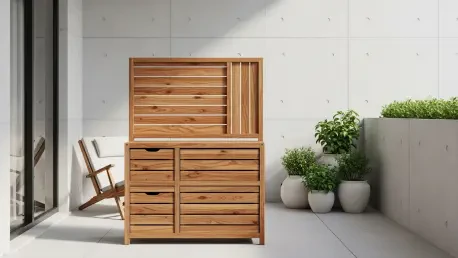
The selection of acacia wood as the primary material for this assembly is a calculated decision that prioritizes organic warmth and long-term durability in fluctuating outdoor climates. Acacia is highly regarded in contemporary industrial design for its high oil content and dense grain, which naturally repel moisture and resist the structural degradation common in softer woods. Unlike industrial metal or cold plastic alternatives that can feel sterile or disconnected from a garden setting, the wood provides a tactile quality that bridges the gap between indoor comfort and outdoor exposure. As the material weathers over time, it develops a subtle patina that allows the piece to blend seamlessly into a landscape of potted plants and greenery. This “exterior cabinetry” elevates the aesthetic value of a patio, moving away from the ephemeral look of temporary seasonal furniture toward a more permanent, architectural quality that mimics the sophistication found in high-end residential deck designs.
Strategic Zoning and the Psychology of Privacy
Transforming a restricted outdoor area requires more than just furniture; it requires the implementation of zoning to define distinct functional areas for dining, lounging, or gardening activities. The NÄMMARÖ’s slatted screen serves as a highly effective “soft barrier” that achieves visual seclusion without the oppressive qualities of a solid masonry wall or a heavy wooden fence. These vertical slats are engineered to filter incoming sunlight and facilitate consistent airflow, preventing the space from becoming a stagnant heat trap during peak summer hours. For individuals living in apartment complexes with closely positioned neighboring balconies, this psychological sense of enclosure is vital for fostering a true feeling of retreat. It creates a secluded pocket within a dense urban grid, allowing residents to enjoy the outdoors without the discomfort of being overlooked. This balance of transparency and shielding ensures that the patio remains bright and airy while maintaining the necessary boundaries for domestic privacy.
Beyond its primary roles in storage and screening, the unit provides a robust foundation for biophilic design integration, which is the practice of incorporating natural elements into the built environment. The spacing of the vertical slats is intentionally designed to serve as a trellis system for climbing flora such as star jasmine, English ivy, or fragrant honeysuckle. By encouraging vegetation to grow upward rather than outward, users can cultivate a “living wall” that contributes scent, natural shade, and an additional layer of organic privacy. This vertical gardening technique is particularly beneficial for urbanites who lack the ground space for traditional flower beds but still wish to benefit from the cooling effects of dense foliage. The transformation of a functional wooden screen into a lush, green tapestry maximizes the environmental quality of the space, effectively purifying the immediate air and softening the harsh lines of surrounding concrete structures without sacrificing valuable floor area for large pots.
Flexible Solutions for Modern Living
One of the most compelling advantages for the modern metropolitan resident is the concept of “freestanding permanence,” which offers the structural benefits of a built-in installation without the legal or financial commitment. Because these units do not require permanent attachment to the building’s facade or flooring, they are exceptionally well-suited for renters or homeowners who may need to reconfigure their outdoor layout as lifestyles evolve. While other market alternatives, such as powder-coated metal planters on industrial casters, emphasize mobility or a modern minimalist aesthetic, the acacia-based system remains a preferred choice for those seeking a balance between rustic charm and versatile utility. This flexibility allows for the easy movement of privacy barriers according to seasonal sun patterns or social requirements, providing a level of customization that fixed fencing cannot match. It represents a shift toward mobile architectural elements that adapt to the user’s needs rather than forcing the user to adapt to the limitations of the space.
The adoption of multifunctional outdoor structures effectively demonstrated that small-scale urban gardening did not require expansive acreage to feel luxurious and organized. Designers and homeowners alike recognized that the key to maximizing a patio’s potential lay in the selection of pieces that performed multiple tasks simultaneously, such as combining storage with vertical screening. Moving forward, those seeking to replicate these results should focus on materials like acacia that age gracefully and prioritize verticality to preserve floor space. Integrating climbing plants served as a final step in blurring the line between furniture and nature, creating a cooling microclimate that enhanced daily well-being. Ultimately, the transition to smarter, high-density furniture solutions proved that thoughtful industrial design could resolve the friction between privacy and limited space. Future patio improvements prioritized high-quality, freestanding units that offered the freedom to relocate or redesign without the burden of permanent renovations or structural alterations.