
The global housing landscape is witnessing a profound transformation as institutional investors shift their focus from high-density urban apartments to the sprawling landscapes of suburban family residences. In regions like Greater Geelong, this evolution is taking the form of large-scale developments specifically designed for long-term rental rather than immediate sale to individual owners. This movement, spearheaded by Essence Homes under the UniLodge Living Group, aims to introduce hundreds of affordable properties into the market to alleviate the mounting financial pressure on local households. By prioritizing community-centric locations such as Armstrong Creek and Curlewis, these projects offer a sustainable alternative to the volatile private rental sector. This strategic pivot highlights a growing recognition that middle-income earners require more than just temporary shelter; they need stable, high-quality environments where they can raise families without the constant threat of displacement or sudden rent hikes.
Bridging the Gap Through Institutional Investment
Central to this initiative is the utilization of the federal government’s ten billion dollar Housing Australia Future Fund, which provides the necessary financial backbone for scaling social and affordable housing. By leveraging these public funds, developers are able to offer rents that sit approximately twenty-five percent below the current market rates, resulting in an average weekly saving of roughly one hundred and thirty-five dollars for eligible tenants. This pricing strategy is not merely a short-term discount but a structural commitment to affordability that targets the “missing middle” of the workforce. Between 2026 and 2028, the platform aims to deliver more than one thousand residences across Victoria, creating a significant buffer against the inflation of the broader property market. This approach ensures that essential workers, who often earn too much for social housing but too little for luxury rentals, can secure a modern home without sacrificing their financial well-being or forced relocation to distant regions.
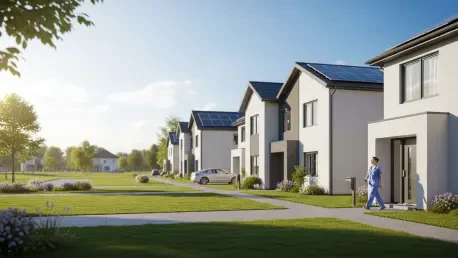
Unlike the traditional build-to-rent model that primarily focused on one-bedroom apartments in metropolitan hubs, this new wave of suburban development prioritizes spacious two, three, and four-bedroom houses. This change reflects the actual needs of suburban families who require yard space, multiple living areas, and proximity to local schools and community services. The initial rollout in Greater Geelong includes three hundred and forty properties that are designed with longevity and energy efficiency in mind, ensuring that operational costs for tenants remain manageable over time. These homes represent a move toward professionalized property management, where the landlord is a corporate entity rather than an individual investor. This shift eliminates the unpredictability associated with private landlords who might decide to sell the property or move back in, providing a level of security that has historically been reserved for homeowners. As construction concludes on the first phases, the transition toward institutionalized suburban living begins to redefine the standard for modern residential tenancy.
Promoting Tenure Security for Essential Workers
One of the most significant advantages of the suburban build-to-rent model is the provision of long-term lease agreements, which can extend up to five years. This degree of tenure security is revolutionary in a rental market where twelve-month contracts are the norm and often leave families in a state of perpetual uncertainty regarding their future housing. Tomas Johnsson, the chief executive of UniLodge Living Group, has emphasized that these projects are specifically engineered to offer protection against displacement, allowing residents to truly settle and integrate into their neighborhoods. For teachers, nurses, and emergency service personnel, this stability is crucial for maintaining professional consistency and fostering local community ties. By removing the fear of sudden eviction, the model supports the emotional and social well-being of tenants, who can plan their lives with a much longer horizon. The institutional nature of the ownership ensures that the primary objective remains high occupancy and tenant satisfaction, aligning the interests of the provider with the needs of the residents.
The integration of government subsidies with private management successfully demonstrated that housing affordability could be addressed through a structured, multi-sector approach. Stakeholders recognized that establishing strict income guidelines, such as the required range for a three-bedroom home, ensured that the benefits reached those most in need of financial relief. This project proved that suburban environments were suitable for institutional investment, provided the focus remained on family-oriented infrastructure and long-term sustainability. Looking ahead, the expansion of similar platforms into other regional hubs became a priority for urban planners seeking to decentralize housing demand. Future developments should prioritize integrating green technologies and communal spaces to further enhance the value proposition for long-term tenants. By standardizing the build-to-rent process for houses, the industry moved toward a more resilient housing ecosystem that balanced economic viability with social responsibility. Policymakers and developers learned that by focusing on the “key worker” demographic, they could stabilize local economies while providing a blueprint for affordable living in the modern age.