
The sheer magnitude of the Midtown Bus Terminal redevelopment represents a pivotal shift in how New York City manages its most critical transit arteries while under immense operational pressure. For decades, the aging structure has struggled to accommodate the hundreds of thousands of daily commuters who rely on it, but the recent selection of the Turner-STV joint venture marks the definitive start of a new era for regional mobility. This massive multi-billion-dollar undertaking is not merely a construction project; it is a masterclass in logistical precision, designed to modernize a facility that has long outlived its intended capacity. By prioritizing a resilient, modern hub, the Port Authority of New York and New Jersey is addressing the fundamental bottlenecks that have historically stifled the efficiency of the interstate transit corridor. The project underscores a significant commitment to maintaining New York’s status as a global leader in infrastructure, ensuring that the city remains accessible and functional for a workforce that is increasingly mobile and demanding of high-tech transit solutions.
Phased Execution and Operational Continuity
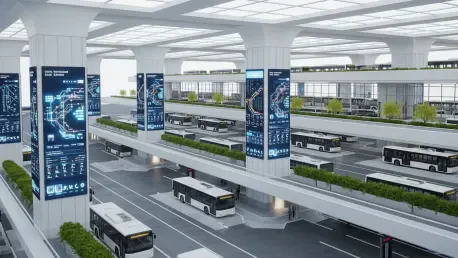
The immediate focus of the current development cycle revolves around the construction of a multi-level interim terminal that serves as the backbone for the entire Phase 1 delivery strategy. This temporary facility is vital because it allows the existing, crumbling infrastructure to be decommissioned in sections without forcing a complete shutdown of commuter services between New York and New Jersey. Navigating the dense urban grid of Manhattan requires a surgical approach to demolition and staging, where every square foot of space must be maximized to prevent traffic gridlock. The interim terminal will eventually transition into a permanent support structure, providing necessary staging areas that will reduce bus idling on local streets. This strategy effectively balances the urgent need for new construction with the reality of maintaining a 24/7 transportation hub. The complexity of these maneuvers highlights the necessity of the joint venture’s expertise in managing live-environment construction, where the primary objective is to keep the city moving while a massive transformation occurs right beneath the feet of millions.
Beyond the physical structures, the project involves a sophisticated overhaul of the ramp systems that connect the terminal directly to the Lincoln Tunnel. These ramps are the lifeblood of the facility, and their redesign is intended to streamline the flow of vehicles, significantly reducing the time buses spend navigating congested city blocks. By segregating bus traffic from local pedestrian and car lanes more effectively, the project aims to enhance safety and decrease the environmental impact of idling engines. The engineering required to replace these ramps while they remain in use is staggering, involving pre-fabricated components and overnight work schedules that minimize disruption to the morning and evening rush hours. This phase of the project demonstrates a forward-thinking approach to urban planning, where the goal is to create a seamless transition between regional highways and the heart of the city’s business district. The success of this infrastructure depends on the ability to integrate advanced traffic management technologies that can adapt to real-time changes in commuter volume and vehicle movement.
Economic Growth and Industry Evolution
This massive investment in the Midtown corridor is acting as a powerful catalyst for job creation and long-term economic stability throughout the tri-state area. By initiating a project of this scale, the Port Authority is fueling a surge in demand for specialized labor, engineering talent, and construction management services. The ripple effects of such a project extend far beyond the construction site, as the modernized terminal will eventually support a higher volume of retail and commercial activity within its walls. This creates a sustainable economic ecosystem that benefits both the public sector and private enterprises. The project also serves as a critical proof of concept for the “partnership model” in mega-project delivery, showing how public agencies and private firms can share the risks and rewards of large-scale infrastructure. As the industry observes the progress of the Turner-STV joint venture, this collaboration is likely to become a blueprint for other major metropolitan areas facing similar challenges with aging transit hubs and limited spatial resources in their central business districts.
From a technological standpoint, the redevelopment is incorporating state-of-the-art sustainability targets that align with modern environmental standards for public buildings. The inclusion of electric vehicle charging infrastructure for bus fleets and advanced air filtration systems reflects a shift toward greener urban environments. For the construction sector, this means a shift in focus toward high-complexity projects that prioritize logistics and stakeholder coordination over traditional, siloed building methods. The ability to coordinate with various municipal departments, utility providers, and local communities is now as essential as the structural engineering itself. This project signals to the global market that New York is actively future-proofing its assets, moving away from reactive maintenance toward proactive, resilient design. As more cities look to modernize their transit cores, the lessons learned from the Midtown overhaul will provide invaluable data on how to manage the intersection of heavy transit, public safety, and environmental stewardship in one of the most densely populated areas on Earth.
Future Strategies for Urban Infrastructure Management
The progression of this project indicates that the successful delivery of urban infrastructure in 2026 and beyond must prioritize flexibility and adaptive reuse. Once the primary phases of construction are completed, the focus should shift toward the integration of digital twin technology and real-time data analytics to manage terminal operations. These tools would allow the Port Authority to monitor structural health, optimize bus gate assignments, and manage passenger flow with unprecedented precision. Moving forward, planners should ensure that the facility remains modular, allowing for future technological upgrades such as autonomous shuttle integration or advanced biometric security without requiring additional major overhauls. The use of data-driven insights will be essential in maintaining the terminal’s efficiency as regional populations grow and transit patterns continue to evolve in response to changing work-from-home trends and urban migration. By treating the terminal as a living, breathing digital asset rather than a static piece of concrete, the city can ensure a much longer lifecycle for the investment.
In addition to technical upgrades, future considerations must include a robust framework for multi-modal connectivity that extends beyond just bus transit. The terminal should serve as a centralized hub that seamlessly links to subways, bike shares, and pedestrian greenways, fostering a more holistic approach to urban mobility. Stakeholders should consider implementing a unified digital ticketing and navigation system that provides commuters with real-time updates across all modes of transport. This level of integration would significantly reduce friction for travelers and encourage a shift away from private vehicle use, further alleviating congestion in Manhattan. Furthermore, as the terminal reaches full operational capacity, ongoing engagement with the local community will be vital to ensure that the facility remains a positive contributor to the neighborhood’s character and safety. The Midtown project set a high bar for complex urban redevelopment, and the final stages of its implementation offered a clear path toward a more connected and resilient metropolitan future that other global cities are now eager to replicate.