
The shift toward carbon neutrality has moved beyond mere corporate pledges and entered the realm of rigorous, data-driven operational strategy within the Canadian construction landscape. A massive collaborative effort involving industry titans like PCL, Aecon, and EllisDon, alongside the Transition Accelerator, has produced a blueprint capable of slashing jobsite emissions by three-quarters through the deployment of existing and emerging technologies. This roadmap is grounded in the analysis of over 600 active projects across North American regions, proving that sustainability and high-performance infrastructure are not mutually exclusive. Instead of relying on distant theoretical models, the industry is leveraging empirical evidence to demonstrate that substantial decarbonization is achievable without inflating project costs or delaying delivery timelines. This progress signals a fundamental shift in how large-scale buildings and infrastructure are realized in the current decade. By focusing on practical application, these contractors are setting a global precedent for accountability.
Strategic Interventions for Jobsite Electrification
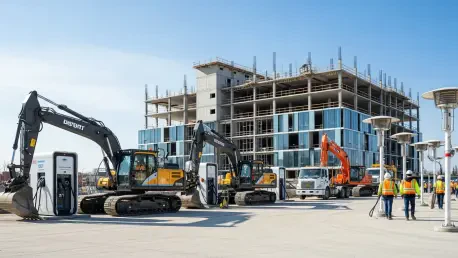
Focusing on the most immediate gains, the industry has identified vehicle and small equipment electrification as a primary lever for reducing the carbon footprint of active sites. Transitioning light-duty vehicles and hand-held tools to electric alternatives can contribute a 15% reduction in total emissions, a goal that is becoming increasingly attainable as charging infrastructure becomes more prevalent on-site. Furthermore, the modernization of temporary heating systems is proving to be a critical factor in this transition. By replacing traditional fossil-fuel-based heaters with high-efficiency electric or hybrid units, contractors are seeing an additional 10% drop in site-wide carbon output. These changes do not just serve environmental goals; they also improve air quality and reduce noise levels for workers and surrounding communities. The integration of these technologies represents a scalable solution that integrates seamlessly into existing workflows while providing a clear path for updated site standards.
The implementation of these electrification strategies required a reimagining of site logistics, particularly regarding power demand management during peak hours. Advanced contractors are now utilizing mobile battery storage systems to buffer energy loads, ensuring that electric machinery remains operational even when grid access is limited. This shift has also prompted a change in procurement practices, as firms increasingly prioritize subcontractors who maintain electric-ready fleets. As the cost of battery technology continues to decrease, the economic argument for abandoning internal combustion engines in light applications has become undeniable. This evolution is supported by a growing network of equipment rental companies that are diversifying their inventories to include high-capacity electric options. By proving the reliability of these systems in harsh climates, the Canadian construction sector is effectively de-risking the transition for the broader international market.
Powering Heavy Machinery and Grid Integration
For heavy machinery where full electrification currently remains a technical challenge, the adoption of renewable diesel has emerged as the most impactful single intervention. By substituting conventional fuel with renewable alternatives, project managers can achieve up to a 25% reduction in total jobsite emissions without requiring expensive engine modifications or new fleet acquisitions. This strategy is complemented by an aggressive push toward grid connectivity, which seeks to eliminate the reliance on diesel generators during the construction phase. Prioritizing early connections to the local power grid allows sites to tap into cleaner energy sources, potentially cutting another 15% from the project carbon tally. Additionally, the introduction of hybrid and electric excavators is rounding out the effort by tackling the heavy lifting required during the initial phases of construction. Collectively, these measures address the highest sources of pollution while maintaining the heavy-duty performance necessary for complex infrastructure.
Effective grid integration requires proactive coordination with municipal utilities well before a shovel hits the ground. This involves planning for temporary substations or high-voltage connections that can handle the massive power requirements of a modern, electrified jobsite. When the grid is not yet accessible, the use of hydrogen fuel cells or advanced biofuels acts as a bridge, ensuring that the momentum toward decarbonization is never stalled. The industry is also seeing a rise in the use of telematics to monitor fuel consumption and idling times in real-time, allowing site supervisors to make immediate adjustments that further optimize energy use. These technological advancements are not isolated; they are part of a broader digital transformation that links site efficiency with environmental impact. As the supply of renewable diesel expands and the power grid becomes greener, the cumulative effect of these interventions will only grow, paving the way for a near-zero emission construction process.
Collaborative Ecosystems and Next Steps
The transition to low-emission construction required a paradigm shift that extended well beyond the boundaries of individual jobsites and individual firm policies. Stakeholders recognized that achieving these ambitious targets depended on a synchronized effort involving equipment manufacturers, utility providers, and government bodies to remove structural barriers. Moving forward, the industry prioritized the expansion of the renewable fuel supply chain and the acceleration of grid-access permits to ensure that green technologies could be deployed at scale. Financial models were adjusted to account for the long-term operational savings of electric fleets, providing a clearer incentive for early adoption across smaller subcontractors. By fostering this collaborative environment, the sector established a new standard where sustainability was integrated into the procurement process from day one. Leaders focused on establishing transparent reporting metrics to track progress against these 75% reduction benchmarks.
Standardized training programs were launched to familiarize the workforce with the maintenance and operation of sophisticated electric machinery. This educational push ensured that the transition did not result in a loss of productivity but rather an increase in technical proficiency across the trades. Policymakers also played a vital role by aligning building codes and environmental regulations with the capabilities of modern equipment, creating a stable regulatory environment for investment. The focus shifted toward long-term lifecycle assessments of projects, considering not just the final structure but the total energy expended during its creation. This holistic view encouraged the development of localized supply chains, reducing the transport emissions associated with heavy materials. Ultimately, the industry moved toward a future where every project served as a case study for efficiency, proving that the tools for a sustainable built environment were already available and ready for widespread implementation.