
The fiscal year ending in 2025 has redefined the economic trajectory of Orange County’s commercial real estate landscape, witnessing a remarkable eleven percent rebound in total project value. Regional contractors successfully navigated a shifting economic landscape to complete approximately $1.6 billion in work, a sharp rise from the $1.4 billion recorded in the previous year. This financial surge indicated a renewed confidence among businesses and property owners who were once again ready to invest heavily in their physical footprints across the region. While revenue and project volume were on the rise—with total completed square footage reaching 17.2 million—the labor market presented a unique contradiction. Local employment within the top-ranked firms actually dipped by nearly 5%, suggesting that the industry became leaner and more efficient. This trend highlighted a strategic shift toward technological integration and better resource management as firms found ways to do more with less in the face of a persistent shortage of skilled trade workers.
Market Evolution and Institutional Growth
Leadership Performance: Howard Building Corporation and Strategic Gains
The competitive hierarchy of regional contractors saw a significant reshuffle, with Howard Building Corporation rising to the top spot as their local tenant improvement work surged by 34%. This growth was largely driven by a massive increase in completed square footage, signaling that larger-scale projects became the new norm for market leaders. Other major players like RAM Construction and Swinerton Builders maintained strong market positions by diversifying into niche sectors that offered more stability than traditional office builds.
By focusing on specialized sectors such as education and parking infrastructure, these firms mitigated the risks associated with the fluctuating corporate office market. This diversification allowed them to capture steady revenue streams while the broader economy adjusted to new post-pandemic realities. The ability to pivot toward high-demand public and private infrastructure projects became a defining characteristic of the most successful contractors in the region during this specific fiscal cycle.
Niche Diversification: Specialized Infrastructure and Educational Facilities
Contractors increasingly moved away from generic commercial spaces to focus on high-utilization environments like modern academic buildings and complex parking structures. These projects required specific expertise in structural integrity and long-term durability, areas where established local firms excelled. The shift toward these specialized projects reflected a broader regional strategy to stabilize the construction pipeline against shifts in remote work trends and corporate downsizing.
Furthermore, the rise in educational facility improvements was driven by a need to integrate advanced technology into classrooms and student housing. Firms that successfully secured these contracts leveraged their existing relationships with local municipalities and school districts to ensure a steady flow of work. This strategic focus on non-traditional construction helped the industry maintain its momentum even as the total number of specialized trade employees saw a slight decline across the county.
Sector Drivers and Modernization Trends
Growth Verticals: Defense and Specialized Life Sciences
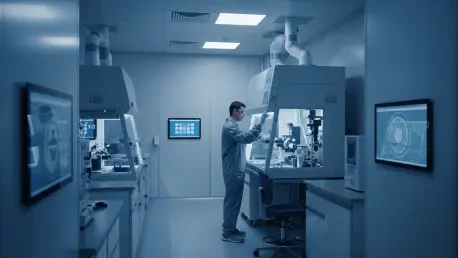
Much of the recent growth was fueled by specific high-demand sectors, particularly the defense and aerospace industries which have historically anchored the local economy. Orange County became a primary hub for specialized facility improvements, driven by major tech-defense firms that required high-security, high-tech manufacturing spaces for advanced research. Simultaneously, the healthcare and life sciences sectors remained powerhouse drivers, with local hospitals and medical providers investing heavily in modernizing their facilities.
These specialized builds required a higher level of technical expertise and precision compared to standard interior renovations. Contractors who invested in cleanroom capabilities and advanced medical-grade installations found themselves at a distinct advantage. As medical technology continues to advance from 2026 to 2028, the demand for these modernized spaces is expected to remain a cornerstone of the regional construction market, providing a buffer against more volatile sectors.
Workplace Dynamics: Retention through Renovation and Adaptive Reuse
Beyond specialized new builds, a “stay and renovate” trend took hold among financial and healthcare organizations looking to maximize their existing assets. Rather than dealing with the costs and disruptions of moving to new locations, many companies opted to upgrade their current offices with better security and advanced technology. These renovations were often designed to entice employees back to the workplace by providing modern aesthetics and high-end amenities that standard home offices simply could not replicate.
Additionally, there was an increasing focus on adaptive reuse, where existing industrial structures were quickly repurposed to meet the urgent demands of the manufacturing markets. This strategy allowed developers to bypass the lengthy timelines associated with ground-up construction while breathing new life into underutilized properties. By transforming older warehouses into creative offices or specialized logistics centers, the market effectively addressed the scarcity of available land in prime areas.
Strategic Mitigation and Future Considerations
Navigating Constraints: From Regulatory Delays to Resource Gaps
Contractors still faced a gauntlet of operational challenges, ranging from escalating material costs to persistent regulatory bottlenecks that threatened project timelines. Permitting delays continued to stretch the duration of major renovations, while a critical shortage of qualified field superintendents put constant pressure on profit margins. These headwinds required firms to maintain deep subcontractor relationships and exercise extreme caution in budget management to ensure project viability in a volatile economy.
To address these shortages, many firms prioritized internal training programs and mentorship to develop the next generation of field leadership. The focus shifted from rapid expansion to maintaining quality control and safety standards amidst a shrinking pool of veteran trade workers. This internal investment became essential for firms looking to maintain their reputations while navigating the complex permitting environment that defined the Orange County building landscape.
Technological Implementation: Adopting Advanced Intelligence Solutions
To combat operational hurdles, the industry increasingly turned to artificial intelligence and other tech-driven solutions to improve overall project efficiency. Leading firms began using AI to streamline administrative burdens like document review and meeting summaries, as well as field tasks such as language translation and drafting requests for information. This technological pivot provided a sustainable foundation for the market as landlords and tenants prioritized efficiency and quality in their 2025 builds.
Ultimately, the strategic integration of technology and the pursuit of niche markets allowed contractors to overcome the significant headwinds of the previous year. Moving forward, stakeholders prioritized deep subcontractor relationships and cautious budget management to ensure long-term project viability. The sector successfully transitioned into a more resilient phase, where data-driven decision-making and specialized expertise became the primary drivers of success in an increasingly complex and competitive landscape.