
As energy-efficient building codes become more stringent across the United States and Canada, high-performance materials like low-emissivity glass have become mandatory. This shift represents a fundamental transformation in how architects and developers view the building envelope, moving away from simple aesthetic transparency toward complex, high-performance systems. By the middle of this decade, the North American construction glass market has solidified its position as a cornerstone of the regional economy, reaching a valuation of over $17 billion. This growth is not merely a byproduct of increased construction volume but a reflection of the rising value per square foot of glass installed. As urban centers in the United States and Canada expand, the demand for sophisticated glazing that can manage thermal loads, provide structural integrity, and offer superior clarity has reached unprecedented levels. Modern skyscrapers are no longer just steel and concrete skeletons; they are breathing, light-filtering organisms that rely on advanced chemical coatings and multi-pane units to meet the expectations of 21st-century occupants. The steady compound annual growth rate of 4.7% expected through 2029 underscores a market that is maturing into a high-tech sector where engineering precision meets architectural ambition. This trajectory is fueled by a convergence of regulatory pressure, technological breakthroughs, and a renewed focus on occupant well-being.
The Evolution of Architectural Design and Urban Density
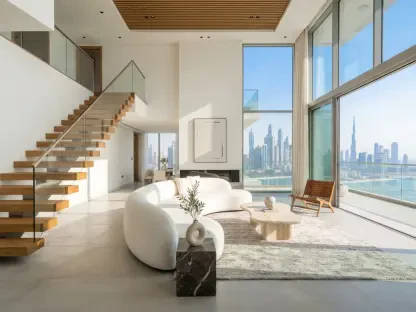
The insatiable hunger for modern housing and commercial space in major North American hubs remains a primary engine for glass demand. In cities ranging from Austin to Toronto, the architectural preference for the “glass curtain wall” aesthetic has become the default for luxury residential towers and corporate headquarters alike. This design choice serves two purposes: it creates a sleek, prestigious exterior while maximizing the ingress of natural light, which is increasingly linked to productivity and mental health. Consequently, developers are prioritizing expansive floor-to-ceiling windows and structural glass balconies to differentiate their properties in a competitive real estate market. This trend is particularly visible in mixed-use developments that blend retail, office, and living spaces into single, glass-intensive structures. These projects require massive quantities of high-strength glass that can withstand wind loads at high altitudes while remaining perfectly clear. As the population density in metropolitan areas continues to rise, the vertical expansion of cities ensures that the volume of glass needed for facade systems remains on a steep upward trajectory, reinforcing the material’s status as the most critical component of the modern urban skyline.
Beyond the construction of new landmarks, the modernization of existing infrastructure provides a secondary but equally vital growth channel. Many established North American cities are currently revitalizing aging building stocks that were constructed during eras of less efficient material standards. Rather than opting for costly demolitions, property owners are increasingly investing in extensive retrofitting projects to bring older structures up to modern energy and safety benchmarks. This process frequently involves stripping away single-pane windows or outdated glazing systems and replacing them with high-performance insulated glass units or even triple-pane solutions. This replacement cycle is driven by both economic necessity—lowering long-term operational costs—and the desire to maintain the market value of older assets. The renovation segment has become a stabilizing force for glass manufacturers, providing a consistent stream of orders even during periods when new housing starts might fluctuate. By upgrading the thermal envelope of a legacy building, owners can achieve significant reductions in carbon emissions, making high-performance glass a central tool in the broader regional effort to modernize the built environment without the environmental cost of new construction.
Stricter Environmental Mandates and Thermal Performance
The regulatory landscape in North America has undergone a significant transformation, with local and federal governments mandating rigorous thermal performance standards to curb the carbon footprint of the building sector. These requirements have essentially eliminated basic glass from the market, replacing it with advanced Low-E (low-emissivity) products that were once considered premium options. Low-E glass utilizes microscopic layers of metallic oxides to reflect infrared and ultraviolet energy while allowing visible light to pass through, effectively insulating the interior against external temperature swings. This technology is no longer an optional upgrade for developers seeking to reduce HVAC loads; it is a foundational requirement for obtaining building permits in many jurisdictions. Furthermore, the pursuit of LEED (Leadership in Energy and Environmental Design) certification has become a standard practice for commercial developers who want to attract high-tier tenants. High-performance glazing is a critical factor in earning the points necessary for these certifications, as it directly influences a building’s energy modeling and interior environmental quality. As these green building standards continue to evolve and become more demanding, the market for high-value, coated glass products is expected to expand at a rate that significantly outpaces traditional flat glass alternatives.
Building on this regulatory momentum, the push toward net-zero construction initiatives is creating a permanent shift in procurement habits across the continent. Governments are setting ambitious goals to achieve carbon neutrality in new builds by the end of the decade, which places a massive responsibility on the glazing industry to innovate. To meet these targets, builders are increasingly turning to triple-pane units and vacuum-insulated glass, which offer thermal resistance values that were previously thought impossible for transparent materials. These advanced systems allow for greater architectural freedom, as they permit the use of large glass surfaces without compromising the overall insulation of the building. Moreover, the integration of bird-friendly glass requirements in various municipalities has introduced another layer of specialization into the market. These regulations require glass to have specific patterns or coatings that make it visible to avian life, further driving the demand for custom-manufactured, high-value glass products. The convergence of these environmental and ecological mandates ensures that the construction glass industry is no longer just a commodity market but a specialized engineering field dedicated to solving complex sustainability challenges through material science.
Advancements in Intelligent Glass Technology
Technology is redefining the role of glass, transforming it from a static barrier into an active participant in a building’s energy management system. Smart glass technologies, particularly electrochromic and thermochromic variations, have transitioned from niche experimental applications to mainstream high-end projects. These materials have the unique ability to change their tint or opacity in response to electrical signals or ambient sunlight, allowing a building to dynamically manage solar heat gain and glare throughout the day. By automating the shading process, smart glass reduces the need for mechanical blinds and significantly lowers the energy consumed by air conditioning systems. In the context of the modern workplace, this technology also enhances occupant comfort by maintaining views of the outdoors while preventing the discomfort of direct sunlight. As the cost of these intelligent systems begins to decrease due to improved manufacturing efficiencies, their adoption is spreading from flagship corporate headquarters to educational institutions and healthcare facilities. The ability to control light and heat at the molecular level within the glass itself represents a quantum leap in architectural technology, positioning smart glazing as a central component of the next generation of high-performance buildings.
Beyond energy management, there is an increasing emphasis on the safety and security features of modern glazing, which has led to a surge in demand for specialized tempered and laminated products. In an era where public infrastructure must be resilient against both natural disasters and security threats, architects are specifying glass that provides high impact resistance, acoustic dampening, and fire protection. These specialized units are becoming essential for transportation hubs, government offices, and large-scale public venues where safety is as important as transparency. Additionally, the industry is witnessing the emergence of building-integrated photovoltaics (BIPV), where solar cells are embedded directly into the facade glass. This innovation allows the building envelope to serve as a power generator, turning every window into a renewable energy source. While BIPV is still in its scaling phase, its potential to turn passive surfaces into active energy assets is a game-changer for the industry. The combination of structural strength, enhanced security, and energy generation capabilities proves that modern glass is a multifunctional platform that addresses a wide range of engineering requirements beyond simple visibility. This diversification of functionality ensures that the market remains resilient as it evolves to meet the complex needs of modern society.
Commercial and Residential Market Dynamics
The manufacturing backbone of the North American market remains the float glass process, which accounts for nearly the entire supply of flat glass used in construction today. This highly efficient method produces large volumes of uniform, high-quality glass by floating molten material on a bed of liquid tin, ensuring the flatness required for modern architectural applications. Within this manufacturing framework, the commercial segment has emerged as the fastest-growing area, with an expected expansion rate of over five percent through 2029. This growth is driven by the intensive use of glass in massive infrastructure projects such as hospitals, airports, and luxury office complexes. These commercial ventures typically demand much higher specifications than residential projects, requiring glass that can handle significant structural loads while providing superior aesthetic finishes. The complexity of these large-scale curtain walls and storefronts means that commercial glass often carries a higher profit margin for manufacturers, incentivizing further investment in high-end production lines. As long as urban development continues to favor tall, transparent structures, the commercial sector will remain the primary driver of value in the construction glass industry.
In contrast to the concentrated nature of commercial projects, the residential sector provides a broad and consistent foundation for the market, sustained by a combination of new housing starts and a robust remodeling industry. Homeowners across North America are increasingly aware of the impact that windows have on their monthly energy bills, leading to a steady shift toward high-efficiency insulated glass units. This trend is particularly evident in suburban developments where aging double-pane windows are being replaced with newer models featuring argon gas fills and advanced Low-E coatings. The residential market is also being influenced by architectural trends that favor larger window openings and sliding glass walls, which blur the line between indoor and outdoor living spaces. These expansive glazing solutions require stronger, more energy-efficient glass to maintain the home’s thermal integrity, further driving the demand for premium residential products. Even during periods of economic uncertainty, the residential segment remains resilient as homeowners prioritize energy-saving upgrades that offer a tangible return on investment. This consistent demand ensures that glass manufacturers have a reliable market for high-volume residential products while they continue to innovate in the more specialized commercial and industrial arenas.
Regional Leadership and Industrial Infrastructure
The United States serves as the primary engine of the North American construction glass market, with its valuation reflecting a status as a global leader in architectural innovation and infrastructure development. Driven by a surge in construction across the Sun Belt and major coastal cities, the U.S. market consumes the vast majority of the region’s glass production. It also acts as the central hub for the research and development of new glazing technologies, with major manufacturers investing heavily in domestic facilities to meet the growing demand for specialized products. Meanwhile, Canada’s market is characterized by a specific focus on high-performance insulation necessitated by its diverse and often extreme climate. Canadian builders have become some of the earliest and most consistent adopters of triple-glazing technology, which is essential for maintaining indoor comfort during harsh winters. The concentration of high-density residential growth in cities like Vancouver and Toronto has created a steady demand for high-specification glass that can meet both thermal requirements and the structural demands of tall buildings. Together, the U.S. and Canadian markets form a highly integrated regional economy where standards and innovations are shared to address the unique challenges of the North American landscape.
Mexico represents an increasingly vital and dynamic component of the regional glass ecosystem, serving as both a growing consumer market and a critical manufacturing hub. The expansion of Mexico’s industrial and commercial sectors, coupled with a rising demand for modern residential housing, has fueled a steady increase in domestic glass consumption. However, its most significant role lies in its strategic position as a production center for the entire North American market. Numerous global glass manufacturers have established state-of-the-art facilities in Mexico to take advantage of its skilled workforce and proximity to major markets in the United States. This industrial integration allows for a more resilient supply chain, as production can be balanced across the region to meet fluctuating demand. Furthermore, Mexican manufacturers are increasingly adopting the same high-performance standards seen in the north, producing advanced coated and tempered glass for both domestic use and export. The synergy between these three nations ensures that the North American market remains competitive on a global scale, with a robust infrastructure capable of producing the massive volumes of high-tech glass required for modern construction. This regional cooperation is essential for managing the logistics of glass, which requires precise regional inventory and specialized transport due to its weight and fragility.
Strategic Innovations: The Future of High-Performance Glazing
The evolution of the North American construction glass market was defined by a transition from a commodity-based industry to a technology-driven sector. As manufacturers and architects worked together to meet the challenges of the late 2020s, sustainability ceased to be an optional design choice and became the default standard for all new construction. This period saw the wide-scale adoption of smart glazing and high-efficiency coatings, which provided the necessary tools for the building industry to align with global environmental goals. The success of these technologies demonstrated that high-performance glass was the most effective solution for reducing the carbon footprint of the built environment without sacrificing the aesthetic benefits of natural light. Stakeholders who embraced this shift early found themselves at the forefront of a more resilient and high-value market, while those who lagged behind faced the reality of increasingly stringent regulatory barriers. The industry then moved toward prioritizing the circular economy, exploring new methods for recycling architectural glass and reducing the energy intensity of the float glass process itself, ensuring that the entire lifecycle of the material met modern ecological standards.
The path forward for the sector established a commitment to continuous innovation in material science and manufacturing precision. By focusing on the development of even more advanced materials like vacuum-insulated glazing and carbon-neutral manufacturing, the sector secured its long-term viability in an era of heightened environmental consciousness. These advancements allowed for the creation of ultra-thin, lightweight glass units that provided the same thermal resistance as heavy masonry walls, opening new possibilities for lightweight and modular construction. Furthermore, the integration of digital tools and building information modeling enabled architects to simulate the performance of complex glazing systems with pinpoint accuracy before a single sheet of glass was ever produced. This reduction in waste and increase in design efficiency became the hallmark of the industry’s progress. As North America maintained its leadership in the global architectural glass landscape, the focus remained on creating built environments that were as efficient as they were beautiful. The collaboration between engineers, designers, and regulators ultimately proved that glass would remain the most versatile and essential material for the future of urban living, providing a sustainable foundation for the generations to come.