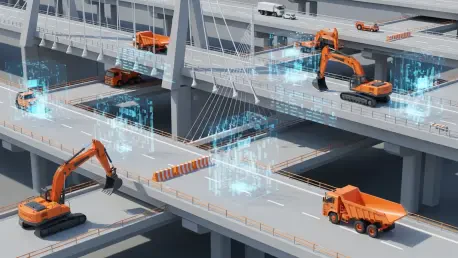

The North American construction landscape has reached a pivotal junction where the integration of predictive analytics and massive capital investments is redefining how developers approach both risk and growth. In 2026, the sector is no longer merely reacting to economic shifts but is actively shaping the built environment through a strategic blend of technological democratization and structural preservation. While some urban centers experience a cooling in traditional building permits, the industry has compensated by pivoting toward high-value infrastructure projects and complex adaptive reuse. This transformation is not just about moving dirt or pouring concrete; it is a fundamental reimagining of the construction lifecycle, prioritizing worker safety and long-term sustainability over short-term gains. As firms navigate these new realities, the focus has shifted toward building smarter, safer, and more resilient communities that respect their historical roots while embracing a digital future.
Advancing Safety Through Data and Collaboration
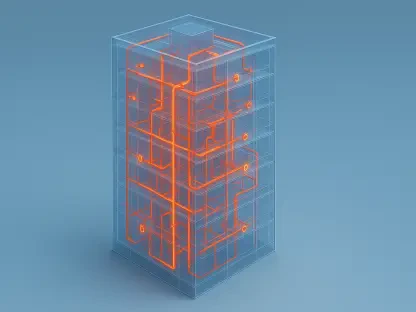
A profound shift in industry culture is manifesting through the democratization of high-end safety technology, which was once guarded as a proprietary competitive advantage. Turner Construction recently led this movement by releasing its internal AI-driven jobsite safety application to the broader market without cost, signaling that human life is a shared priority across the sector. This software utilizes predictive modeling to identify high-risk conditions before they result in accidents, allowing even smaller subcontractors to implement safety standards that were previously financially inaccessible. By removing the economic barriers to sophisticated risk management, the industry is creating a unified front against jobsite hazards. This collaborative approach suggests that the future of construction excellence is built on transparency and the collective improvement of safety protocols. As more firms adopt these open-source tools, the baseline for operational safety is rising, forcing a total recalibration of risk assessment and insurance modeling for modern projects.
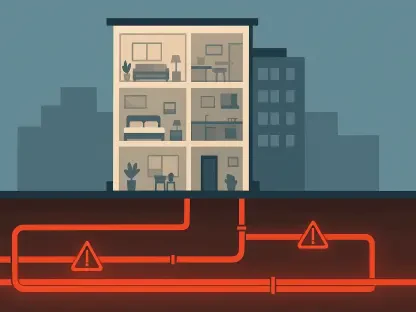
Despite the rapid adoption of artificial intelligence and digital monitoring, the physical reality of construction remains fraught with challenges, as evidenced by recent data from major urban hubs. In New York City, the Department of Buildings recently published its annual safety report, revealing a paradoxical trend where total jobsite incidents have decreased while worker fatalities have unfortunately climbed. While the long-term trajectory since the mid-2010s shows a significant decline in overall injuries, the increase in fatal accidents during the current year serves as a stark reminder that technology alone cannot replace rigorous onsite supervision. Experts suggest that the drop in total incidents might be partially linked to a five-year decline in new building permits, which reduces the absolute number of active sites. However, the rise in severity points to a critical need for deeper educational outreach and more hands-on training to ensure that the human element remains as sharp and well-protected as the digital systems overseeing them.
Strengthening Public and Institutional Infrastructure
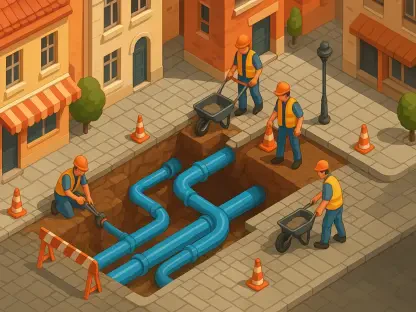
While the residential and commercial office markets face fluctuations, the industrial and public sectors are seeing a massive surge in activity driven by state-level investments and professional sports expansions. New York State recently allocated $78 million for comprehensive Thruway upgrades, focusing on critical corridors like I-90 and I-87 to ensure the longevity of the region’s logistical backbone. Simultaneously, the sports construction market has hit a new milestone with the groundbreaking of a $2.4 billion NFL stadium in Cleveland, a joint venture that highlights the scale of modern athletic facilities. These projects are not just massive in physical size; they represent a significant concentration of capital that stabilizes the workforce for large-scale contractors. The complexity of these builds requires a sophisticated supply chain and a specialized labor force, reinforcing the idea that infrastructure remains the most reliable engine for industry growth. This sustained demand for high-capacity public works provides a necessary buffer against broader economic volatility.
The educational sector has emerged as another primary driver of steady construction activity, particularly as universities race to modernize their research and STEM facilities. In Texas, the expansion of the Texas A&M University campus serves as a prime example, with a $133.4 million investment in a state-of-the-art Meat Science and Technology building. This facility is designed to be a multi-functional hub that blends advanced laboratories with retail processing, reflecting a trend toward highly specialized institutional buildings. Long-term partnerships between universities and builders, such as the decade-long relationship between Skanska and Texas A&M, demonstrate the importance of institutional stability in the construction pipeline. These projects often involve replacing aging 20th-century structures with sustainable, technology-heavy environments that can support the next generation of scientific inquiry. By focusing on the intersection of education and advanced technology, builders are securing long-term contracts that are less susceptible to the boom-and-bust cycles typical of the private real estate market.
Reimagining Urban Spaces: The Rise of Adaptive Reuse
The current trend in urban development is moving away from the “raze and rebuild” mentality toward a more nuanced and technically demanding strategy of adaptive reuse. A prominent example is the ongoing transformation of a century-old church at 96th Street and Central Park West into the new home for the Children’s Museum of Manhattan. This project involves a complex structural overhaul that converts a traditional religious space into a seven-story interactive learning lab, effectively doubling the museum’s capacity without expanding its physical footprint. Such projects require a deep understanding of historical preservation combined with the ability to install modern mechanical and electrical systems within existing masonry shells. The technical challenges are immense, from reinforcing aging foundations to integrating modern fire safety standards into historic floorplans. However, the resulting spaces offer a unique aesthetic and cultural value that new construction cannot replicate. This shift reflects a broader commitment to sustainable urban growth that honors architectural heritage.
The industry successfully navigated the complexities of 2026 by embracing a more collaborative and data-centric approach to both project management and site safety. Stakeholders recognized that long-term success required more than just financial investment; it demanded a commitment to sharing safety innovations and prioritizing the revitalization of existing urban infrastructure. By moving away from siloed proprietary technologies and toward open safety standards, firms created a more resilient environment for their workers. Moving forward, developers and contractors should prioritize the integration of predictive analytics into their daily workflows while maintaining a flexible approach to urban planning that includes adaptive reuse. Investing in specialized sectors like STEM education and transportation infrastructure proved to be a vital hedge against market instability. The key takeaway for the coming years was that the most successful projects were those that balanced technological efficiency with a deep respect for the community’s social and historical fabric. Strategic partnerships and a focus on multifunctional facility design emerged as the definitive path for sustainable growth.