
The evolution of residential security has reached a significant milestone where traditional lock and key systems are no longer the solitary sentinels of the modern front door. While the global market for smart home technology has expanded rapidly with the proliferation of video doorbells and interconnected security cameras, the adoption of smart locks has remained somewhat fragmented across different geographic regions. In many territories, homeowners have hesitated to replace time-tested mechanical locks due to concerns regarding both physical vulnerability and the perceived complexity of electronic installation. However, a new generation of hardware is bridging the gap between old-world security and new-age convenience, offering solutions that do not require compromising on the fundamental strength of the door’s hardware. The Ultion Nuki represents a sophisticated partnership that addresses these anxieties by combining a high-security mechanical cylinder with a feature-rich electronic interface. This integrated approach ensures that the primary point of entry remains protected by physical reinforcements while granting the homeowner the flexibility of digital access control. By moving beyond the simple “retrofit” concept, this package provides a holistic upgrade that feels like a native component of the home rather than a clunky after-thought.
1. A Comprehensive Overview: The Ultion Nuki Hardware Integration
The core philosophy of the Ultion Nuki system is built upon the marriage of two distinct engineering philosophies: the mechanical prowess of British locksmithing and the digital innovation of Austrian software. At the heart of this package is the Ultion 3 Star Plus cylinder, which is widely recognized for its exceptional resistance to common forced entry methods. This cylinder is reinforced with molybdenum, a material specifically chosen for its extreme hardness and durability, providing a level of physical defense that surpasses standard brass cylinders. The hardware is meticulously designed to combat drilling, bumping, and picking, featuring a “Lock Down Mode” that triggers a hidden firing pin to secure the internal mechanism if the lock is attacked from the outside. Such a robust foundation is essential in a market where consumers are often wary of smart locks that prioritize connectivity over the basic function of keeping intruders out. This hardware is even backed by a significant financial security guarantee, reflecting the manufacturer’s confidence in the physical integrity of the product.
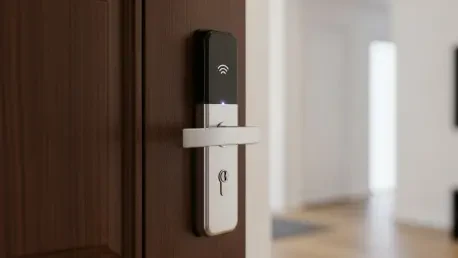
Beyond the physical cylinder, the integration of Nuki’s smart technology transforms the mechanical lock into a centerpiece of a modern automated home. Unlike many competitors that require a separate proprietary hub to bridge the gap between the lock and the internet, this unit integrates the necessary communication hardware directly into the handle assembly. This design choice results in a more streamlined aesthetic and reduces the clutter typically associated with smart home ecosystems. The exterior maintains the appearance of a premium, traditional handle, which is often a requirement for homeowners who prefer to keep their security upgrades discreet. On the interior, the smart unit is surprisingly compact, avoiding the oversized plastic enclosures that can sometimes dominate the look of a door. By providing a complete handle and cylinder replacement package, the system ensures that every component is perfectly aligned, which is a critical factor in preventing the motor from jamming due to the friction of poorly fitted third-party components.
2. Implementation and Setup: Navigating Physical and Digital Installation
The transition from a standard lock to a smart system often intimidates users, yet the manufacturer has optimized the process to be as straightforward as possible for those with basic DIY skills. The first phase of the implementation requires the complete removal of the existing door handle and lock cylinder. This is a critical step because the Ultion Nuki is designed to work as a unified piece of hardware rather than a simple overlay. The installation begins by sliding out the old cylinder and replacing it with the high-security Ultion variant, followed by the attachment of the new handle housing. Because front doors vary significantly in thickness and spindle depth, the package often includes various spacers and screw lengths to accommodate these differences. Achieving a flush fit is paramount to ensuring the security of the door, as any gaps could be exploited by tools or weather elements. Once the physical hardware is securely fastened, the foundation is set for the electronic components to be introduced.
The second phase of the setup involves the integration of the electronic drive unit and its subsequent digital calibration. The smart lock module is designed to snap directly into the back of the interior handle housing, a process that requires no wiring or specialized tools. After the physical connection is made, the heavy lifting is handled by the mobile application, which guides the user through the alignment process. The smartphone app uses Bluetooth to discover the lock and then initiates a motor calibration sequence. During this phase, the motor extends and retracts the bolt several times to determine the exact limits of the locking mechanism. This allows the software to understand the tension of the door’s weather seals and the depth of the frame strike plate. Proper calibration ensures that the motor operates at peak efficiency without straining the internal gears, which is vital for the long-term health of the battery. Once the app confirms that the lock is moving freely, the system is ready to be linked to the wider network for remote management.
3. Seamless Integration: Connecting to the Modern Smart Home
Digital connectivity is the primary driver behind the utility of the Ultion Nuki, and the system leverages the latest standards to ensure compatibility across a wide range of platforms. The lock supports Wi-Fi, Bluetooth, and Matter over Thread, providing multiple pathways for communication. For users who have invested in the Matter standard from 2026 to 2028, the integration process is remarkably efficient. To begin, the user must navigate to the app settings to activate Matter connectivity, which prepares the lock to broadcast its credentials to a local controller. Matter serves as a universal language, allowing the lock to bypass brand-specific silos and communicate directly with devices from different manufacturers. This is particularly beneficial for those who utilize Apple HomeKit, Amazon Alexa, or Google Home, as it simplifies the process of adding the device to a unified dashboard. By choosing the Matter over Thread pathway, users can also enjoy faster response times and improved battery life compared to traditional Wi-Fi connections.
Once the device is recognized within the chosen smart home ecosystem, the user must finalize the authorization to enable advanced features like voice commands and automated routines. This often involves logging into a dedicated web account provided by the manufacturer to link the cloud services. This multi-layered approach to authorization is a deliberate security measure intended to prevent unauthorized third-party access to the lock’s core functions. After the link is established, the homeowner can create complex automation rules, such as having the porch lights turn on automatically when the door is unlocked after sunset. Furthermore, the ability to check the status of the lock remotely provides peace of mind for those who frequently worry if they remembered to secure the door before leaving for work. The integration also allows for real-time notifications, alerting the homeowner every time the door is accessed, which provides an audit trail that is invaluable for monitoring the activity of service providers or house guests.
4. Access Management: Exploring Diverse Entry Methods
One of the most compelling aspects of this smart lock package is the sheer variety of ways it allows users to interact with their door. For those who prioritize speed and convenience, the optional Keypad 2 offers a biometric solution that can store up to 20 unique fingerprints. This eliminates the need to carry a phone or a physical key, allowing residents to enter their homes with a simple touch. The keypad is also capable of storing PIN codes, providing a secondary method of entry if biometric scanning is not preferred. Interestingly, the keypad design intentionally excludes a “0” button, a quirk that users must adapt to when setting their numeric combinations. This biometric and PIN-based access is ideal for large families or households where children might not always have a smartphone available. The keypad is weather-resistant and communicates wirelessly with the lock, meaning it can be mounted in the most convenient location on the exterior of the house.
For managing temporary access, the system provides a robust digital invitation framework that is perfect for the modern rental or service-based economy. The master user can generate invitation codes through the mobile app and send them to guests, contractors, or cleaners. These codes can be programmed with specific expiration dates and times, ensuring that access is only granted when it is needed. Once the scheduled time has passed, the digital key is automatically revoked without any further action required from the homeowner. In addition to these manual methods, the system features a geofencing capability that can detect when the user’s smartphone is approaching the door. This “Auto Unlock” feature uses a combination of GPS and Bluetooth to prime the lock as the user nears the house and then retracts the bolt exactly when they reach the doorstep. Crucially, unlike many other smart locks on the market, the Ultion Nuki retains a physical key slot on the exterior. This serves as an essential fail-safe, ensuring that the homeowner can always gain entry using a traditional metal key if the electronics were to fail or the battery were to be completely depleted.
5. Performance Customization: Tailoring the Motor Response
The mechanical operation of a smart lock can be a source of noise and frustration if the motor is not tuned to the specific needs of the environment. The Ultion Nuki addresses this by offering three distinct operational modes that allow the user to prioritize either speed or silence. The “Gentle” mode is the slowest setting, taking approximately three seconds to fully engage or disengage the locking mechanism. This mode is designed for those who value a quiet operation, perhaps to avoid waking family members during late-night arrivals. By slowing down the motor, the system reduces the mechanical whine often associated with high-torque gearboxes. In contrast, the “Standard” mode offers a balanced performance, completing the cycle in about two seconds. This is the default setting for most users, providing a responsive experience without excessive noise or wear on the internal components.
For situations where speed is the absolute priority, the system includes an “Insane” mode, which pushes the motor to its maximum velocity. In this setting, the lock can retract the bolt in as little as 1.5 seconds, which is remarkably fast for a motorized lock. However, this speed comes at the cost of significantly increased noise levels and a higher drain on the battery pack. The ability to toggle between these modes through the mobile app allows the homeowner to experiment and find the perfect middle ground for their specific door. It is important to note that the physical condition of the door and frame significantly impacts the performance of these modes. A door that requires a significant pull or push to align the bolt will place more stress on the motor, potentially neutralizing the benefits of the faster settings. Therefore, ensuring that the door is correctly hung and that the strike plate is perfectly positioned is a prerequisite for achieving the best results from the customizable motor performance.
6. Power Management: Sustaining the Life of the System
Reliability in a smart lock is intrinsically linked to how effectively it manages its power resources. The Ultion Nuki utilizes a dedicated rechargeable battery pack that fits into the bottom of the internal unit, providing a more sustainable solution than disposable alkaline batteries. The longevity of a single charge is heavily influenced by the chosen connectivity protocol. When the lock is connected via standard Wi-Fi, the battery typically lasts between four and six months under normal usage conditions. This is because Wi-Fi is a relatively power-hungry protocol that requires the lock to maintain a constant connection to the router. However, for users who utilize Matter over Thread, the battery life can be extended significantly, often reaching a full year of operation. Thread is a low-power mesh networking protocol designed specifically for smart home devices, allowing the lock to stay connected while consuming a fraction of the energy required by Wi-Fi.
The charging process itself is designed with convenience in mind, though it does utilize a proprietary hardware solution. Instead of a standard USB-C port on the battery pack, the unit features a magnetic charging connector. This allows the user to attach a power bank to the bottom of the lock using a magnetic cable, charging the unit while it remains fully functional and mounted on the door. This eliminates the need to remove the battery pack and leave the lock inoperable during the charging cycle. While the use of a brand-specific magnetic cable might be seen as a drawback for some who prefer standardized connectors, it does offer a “breakaway” safety feature that prevents damage to the port if someone were to walk into the cable while it is plugged in. The mobile app provides a clear indication of the remaining battery percentage and sends proactive notifications when the levels drop below a certain threshold, ensuring that the user is never caught off guard by a dead lock.
7. Accessory Ecosystem: Expanding the Scope of Security
While the core lock and handle package provides a complete solution, the Ultion Nuki ecosystem includes several optional add-ons that can enhance the overall functionality and security of the installation. The Keypad 2 is perhaps the most significant of these accessories, as it adds the aforementioned biometric and PIN entry capabilities. However, users should be aware that the total cost of the system can escalate quickly as these accessories are added to the basket. Another useful addition is the Bluetooth Fob, which is a small, single-button remote that can be attached to a keychain. This fob is particularly useful for individuals who do not wish to use a smartphone or for children who need a simple way to lock and unlock the door. The fob can be programmed to perform different actions based on a single, double, or triple press, providing a tactile and straightforward interface for the smart system.
In addition to entry accessories, the system can be augmented with a door contact sensor. This small, unobtrusive device is mounted on the door frame and monitors whether the door is physically open or closed. While the smart lock itself knows the position of the bolt, it cannot inherently know if the door is hanging wide open. By integrating the contact sensor, the app can provide a comprehensive status report, warning the user if they have left the door ajar even if the lock is technically in the “locked” position. This adds a critical layer of awareness that is often missing from basic smart lock setups. All of these accessories are designed to work seamlessly within the Nuki app, creating a unified security environment. By selecting the specific components that match their lifestyle, homeowners can build a bespoke security solution that addresses their unique concerns, though they must weigh the added convenience against the higher initial investment required for a fully kitted-out system.
8. Strategic Evaluations: Final Considerations for the Homeowner
The decision to adopt the Ultion Nuki system was often based on the desire for a no-compromise security solution that maintained the aesthetic integrity of the home. Throughout the evaluation of the hardware, it became clear that the compact and stylish design of the interior unit was a significant advantage over bulkier competitors. The fact that the system functioned without the need for an external hub simplified the network architecture and made the initial setup much less daunting for those who were not technically inclined. Furthermore, the retention of a physical key proved to be a decisive factor for many users, providing a sense of security that purely electronic locks could not match. The compatibility with major smart home platforms ensured that the lock could grow with the user’s ecosystem, adapting to new routines and technologies as they were introduced into the household environment.
However, the path to a fully automated front door was not without its hurdles, and potential buyers had to consider the total cost of ownership. While the base package was competitively priced for the level of security offered, the addition of keypads, fobs, and sensors quickly moved the system into a premium price bracket. The installation, while designed for the DIY market, occasionally required extra effort on older doors where alignment issues were present. Additionally, the reliance on a proprietary magnetic charging cable meant that users had to be careful not to lose the specific cord, as a standard replacement would not suffice. Despite these considerations, the system successfully provided a robust and versatile security platform. Homeowners looking to upgrade their security should have prioritized a professional check of their door’s alignment before beginning the installation to ensure the motor operated without resistance. Moving forward, the industry likely shifted toward more standardized charging solutions, but for the present, the Ultion Nuki stood as a pinnacle of integrated smart home security.