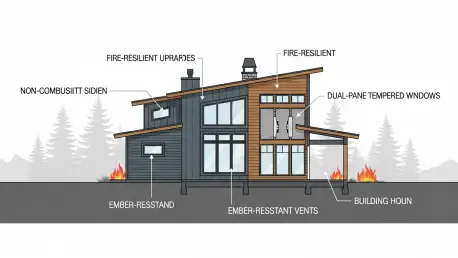

Residents throughout the stunning yet precarious landscapes of the Tahoe-Truckee Basin are discovering that traditional clearing of brush and trees is no longer the sole defense against the increasingly volatile wildfire seasons of 2026. While the removal of combustible vegetation remains a fundamental pillar of rural safety, fire science experts now place significant emphasis on home hardening, which involves modifying the physical structure to resist the relentless bombardment of wind-blown embers. These tiny, glowing fragments can be lofted miles ahead of an active fire front, finding their way into attic vents, under decks, or behind siding to ignite a home from the inside out before the main flames even arrive. As the regional climate continues to present more frequent high-heat days and unpredictable wind events, the necessity of these structural upgrades has moved from a luxury to a requirement. However, a critical shortage of specialized contractors has created a significant bottleneck in the basin.
Professional Constraints in the Local Labor Market
The current labor shortage is exacerbated by the fact that home hardening is a multidisciplinary field that requires a deeper level of expertise than typical general contracting or simple handyman work. To effectively harden a property, a professional must possess a comprehensive understanding of how different building components interact, including specialized non-combustible siding, ember-resistant roofing materials, and intricate venting systems designed to block heat while allowing airflow. Many local construction firms are already booked months in advance for standard residential projects, and the steep learning curve required to master the specific codes for the wildland-urban interface prevents new players from entering this niche. Consequently, homeowners often find themselves on long waiting lists or struggling to find anyone who can offer a comprehensive, one-stop-shop service. This gap in the market leaves the existing housing stock vulnerable to ignition during a fire event.
Furthermore, the specialized nature of these retrofits means that a simple repair often turns into a complex engineering challenge, particularly when dealing with the unique architectural styles found in the Sierra Nevada. Contractors must be able to assess the specific vulnerabilities of a home, such as the gap between a deck and the main structure or the orientation of windows relative to prevailing winds and topography. Without a dedicated workforce that understands these nuances, there is a risk that retrofits will be performed incorrectly, providing residents with a false sense of security that fails under the pressure of a real emergency. The lack of a standardized training pipeline has historically made it difficult for workers to transition from traditional carpentry into fire-resistant construction, leaving the region with a pool of labor that is willing but often under-equipped for the task. Bridging this expertise gap is now a top priority for local economic and safety boards.
Regulatory Evolution and Insurance Industry Pressures
Insurance providers have emerged as a primary catalyst for the surge in demand for home hardening services, as many carriers now mandate these structural improvements as a condition for policy renewal. In the high-risk zones of the Tahoe-Truckee area, homeowners frequently report that their premiums have skyrocketed or their coverage has been canceled unless they can provide proof of specific fire-safety retrofits. This market pressure has created an urgent, non-negotiable need for licensed professionals who can sign off on completed work to satisfy underwriting requirements. Unfortunately, because the demand was spurred so rapidly by shifts in the insurance landscape, the local supply of qualified labor was never given the lead time to scale accordingly. This misalignment between private sector mandates and workforce availability has left many property owners in a state of financial and physical limbo, waiting for a qualified contractor to arrive before their insurance grace period expires.
In addition to insurance pressures, the regulatory landscape has become more complex as California continues to refine its building standards for the wildland-urban interface. A vast majority of the residential structures in the Tahoe Basin were constructed prior to the landmark 2008 building codes, which first established rigorous requirements for fire-resistant materials in mountainous regions. Modernizing these older buildings requires a thorough understanding of current Chapter 7A requirements, which are often updated to reflect new findings from post-fire forensic studies. Contractors must stay current with these evolving mandates to ensure that any replacement windows, siding, or deck materials meet the stringent testing criteria for radiant heat and flame spread. The administrative burden of keeping up with these changing laws, combined with the technical demands of the work itself, serves as a significant deterrent for many smaller firms that might otherwise contribute to the local hardening effort.
Educational Initiatives and Simplified Permitting Processes
To address the lack of qualified professionals, state and local officials are increasingly focused on developing a standardized home hardening certification program through the Office of the State Fire Marshal. This initiative aims to provide a clear, recognized credential for contractors, allowing them to market their specialized skills while giving homeowners a reliable way to vet potential hires. By creating a formal training curriculum that covers everything from gutter guards to non-combustible vent screens, the state hopes to attract a new generation of workers into the field of resilient construction. These programs are being designed to bridge the gap between theoretical fire science and the practical application of building materials on a job site. Such professional development is essential for building a workforce that can handle the massive volume of retrofits needed across the region, turning a fragmented industry into a cohesive force for community safety and wildfire mitigation.
Building departments within the Tahoe-Truckee area are also taking proactive steps to lower the barriers for residents who are ready to begin their safety upgrades by streamlining the permitting process. In many jurisdictions, small-scale retrofits like window replacements or siding repairs used to involve lengthy review periods that discouraged homeowners and contractors alike from pursuing the work. However, modern administrative reforms have enabled several local agencies to offer expedited or even one-day permits for pre-approved fire-safety materials. By digitizing the application process and providing clear checklists of approved products, these departments are significantly reducing the overhead and time commitment associated with home hardening projects. This reduction in red tape makes it much easier for contractors to schedule jobs and move quickly from one property to the next, maximizing the productivity of the existing workforce while they wait for more specialized laborers to enter the local market.
Tactical Priorities for Long-Term Regional Safety
The ultimate benefit of widespread home hardening extends far beyond the protection of a single house, as it fundamentally alters the risk profile for the entire neighborhood and its emergency responders. When a high percentage of homes in a community are hardened, the overall intensity of a fire can be reduced, as there are fewer structural fuel sources to sustain and amplify the flames. This creates a much safer environment for fire crews, who are often forced to abandon homes that are deemed indefensible due to excessive combustible materials or structural vulnerabilities. By making a property easier to defend, homeowners are directly supporting the tactical efforts of local fire departments, allowing them to stay on the ground longer and protect more of the surrounding forest. This collective resilience transforms the Tahoe-Truckee region from a collection of vulnerable assets into a unified landscape capable of withstanding the inevitable challenges of the modern wildfire environment in California.
Homeowners and local officials realized that the transition to a fire-resilient landscape required a shift in perspective that treated the home as a vital component of the natural environment. While the shortage of specialized contractors presented a significant hurdle, the community moved forward by prioritizing the most critical vulnerabilities first. Actionable steps included the immediate replacement of plastic vents with ember-resistant metal alternatives and the removal of all combustible mulches within five feet of the foundation. These simple yet effective measures established a baseline of safety that bought time for more extensive structural renovations as the workforce expanded. Future success depended on continued investment in vocational training programs and the persistent demand for higher building standards across all neighborhoods. By integrating these practices into the local culture, the basin was able to foster a more sustainable relationship with fire, ensuring that the beauty of the Sierra remained preserved for the generations to come.