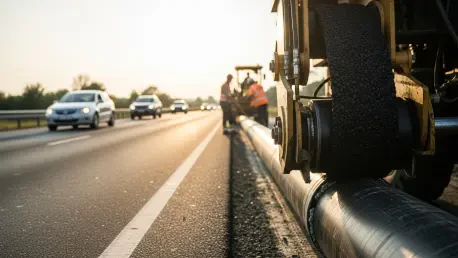

Navigating the complexities of public works budgets requires more than just careful accounting; it demands a fundamental shift in how local governments approach aging infrastructure maintenance and capital improvement programs. Sumter County recently demonstrated this paradigm shift by completing a critical culvert repair project that ultimately resulted in a massive expenditure reduction of approximately three hundred and forty thousand dollars. This significant fiscal achievement underscores the importance of exploring innovative technical solutions rather than defaulting to traditional, more expensive full-scale replacement methods. By prioritizing efficiency and resourcefulness, the county was able to address deteriorating drainage systems without burdening the local tax base with unnecessary debt or service cuts. The project serves as a clear blueprint for how modern municipalities can reconcile the growing need for infrastructure updates with the reality of finite public funds in an era where construction costs continue to rise steadily across the region.
Innovative Engineering Tactics: Advancing Drainage Solutions
The core of these substantial savings stems from the implementation of advanced trenchless technology, specifically the use of high-density polyethylene liners inserted into existing structures. Instead of opting for a complete excavation of the roadway, which would have necessitated extensive labor, heavy machinery, and significant site restoration, engineers selected a slip-lining technique that rehabilitated the current culvert from within. This method not only minimized the volume of raw materials required for the job but also drastically reduced the project timeline from several months to just a few weeks. By avoiding the massive disruption of a full dig-and-replace operation, the county successfully bypassed the high costs associated with utility relocation and pavement reconstruction. These logistical efficiencies translated directly into bottom-line savings, proving that modern engineering materials can extend the lifespan of civil assets for decades at a fraction of the price of conventional replacement strategies that often dominate public work planning.
Beyond the immediate financial benefits, the decision to utilize specialized lining technology provided significant indirect savings by mitigating local traffic disruptions and protecting the surrounding environment. Traditional culvert replacement often requires closing major arterial roads, forcing commuters onto long detours that increase fuel consumption and wear on secondary road networks. In this instance, the streamlined workflow allowed for continuous traffic flow or only minor delays, preserving the economic productivity of the local area during the construction phase. Furthermore, the reduced footprint of the site meant that natural water flow and nearby vegetation remained largely undisturbed, eliminating the need for expensive environmental mitigation efforts or post-construction landscaping. This holistic approach to project management reflects a sophisticated understanding of how operational choices impact community stability and environmental health. By integrating these considerations into the early planning phases, the public works department established a high standard for future regional development projects.
Strategic Planning Protocols: Ensuring Municipal Asset Longevity
The successful execution of this project provided a definitive model for future infrastructure investments, demonstrating that proactive maintenance and technological adoption are essential tools for modern governance. The county established a rigorous evaluation protocol that prioritized structural integrity and cost-efficiency, ensuring that every dollar spent contributed to long-term resilience. Looking ahead, other jurisdictions could adopt similar data-driven assessments to identify candidates for rehabilitation rather than replacement, potentially saving millions across statewide networks over the next several years. The project moved the needle on how local administrators viewed the life cycle of public assets, emphasizing that early intervention prevents the catastrophic failures that lead to emergency, high-cost repairs. Ultimately, the fiscal discipline exercised during this operation allowed for the reallocation of funds toward other pressing community needs, such as public safety enhancements and park developments. This strategic success proved that fiscal responsibility and high-quality infrastructure are not mutually exclusive but are instead the twin pillars of effective local administration in 2026.