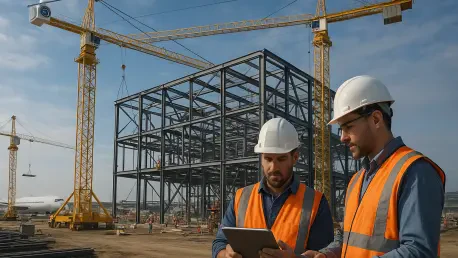

The $40 million ‘100 Mag’ AI studio at Suffolk’s headquarters serves as the innovation hub for tools being deployed at the Southwest Florida International Airport. This $1.1 billion project in Fort Myers is transforming from a traditional construction site into a sophisticated laboratory where data science meets physical labor. While massive cranes and sprawling concrete walls still dominate the skyline, the real revolution is happening within the digital pulse of the site.
Suffolk Construction is using this expansion—which includes the 14-gate Concourse E and a centralized TSA security checkpoint—to prove that high-stakes infrastructure can overcome chronic industry hurdles. By addressing the rising costs of materials and the persistent labor shortages through embedded technology, the project is setting a new benchmark for aviation development. Expected to reach completion in late 2027, the facility represents a live demonstration of how real-time data analysis can optimize modern building.
Strategic Evolution of Construction Technology
The construction industry has long been viewed as a bastion of traditional methods, where physical blueprints and manual labor defined the pace of progress. However, the shift toward a data-centric paradigm is now mandatory for firms seeking to remain competitive in a landscape of thinning margins and complex regulatory requirements. This evolution is not merely about adopting new software but about fundamentally rethinking the relationship between the digital and physical worlds.
As projects grow in scale and complexity, the limitations of human-only management become more apparent, creating a void that only advanced analytics can fill. By integrating these tools into the foundational stages of a build, companies are finding that they can predict outcomes with a level of certainty that was once thought impossible. This cultural transformation within the building sector is paving the way for a more resilient and responsive infrastructure system that can adapt to the shifting needs of society.
A Decade of Investment: The AI-Enabled Ecosystem
The “Jobsite of the Future” initiative is not a sudden response to the recent surge in digital popularity but rather the fruit of a deliberate ten-year, $100 million investment strategy. Suffolk’s leadership identified an industry-wide stagnation in productivity over a decade ago and began building the data infrastructure necessary to support future innovations. This long-term commitment has successfully transitioned sophisticated digital tools from the isolated environment of corporate offices directly into the hands of crews on the active construction field.
By establishing this robust digital foundation, the company has created an ecosystem where artificial intelligence functions as a collaborative teammate rather than a static software package. This approach ensures that every technological deployment is grounded in practical application, allowing the system to learn from the complex realities of a billion-dollar airport expansion. Such an integrated environment allows for a level of transparency and coordination that was previously impossible across various project tiers.
The New Breed: Site Management Professionals
At the heart of this technological shift is the introduction of the Site AI Manager, a role currently filled at the Fort Myers project by professionals with high-level backgrounds in organizations like NASA and the U.S. Army Corps of Engineers. These embedded experts work side-by-side with traditional project teams to identify specific workflows where data science can add immediate value. Their primary mission is to automate repetitive, time-consuming administrative tasks such as manual data entry and complex schedule updates.
By offloading these “meaningless tasks” to AI, veteran builders and project managers are granted the cognitive space to focus on high-level risk mitigation and the intricate technical execution required for the airport’s sophisticated design. This synergy between human intuition and machine processing creates a more resilient workforce that is capable of navigating the unpredictable nature of large-scale infrastructure projects. This structure ensures that expert human oversight remains the primary driver of quality while technology handles the data.
Technical Applications and Performance Benchmarks
Implementing artificial intelligence on a project as significant as the $1.1 billion airport expansion requires more than just high-level strategy; it necessitates a suite of practical, site-specific tools. These innovations are designed to address the unique challenges of aviation construction, where security protocols and operational continuity are paramount. By focusing on design coordination and process optimization, Suffolk has created a framework that maximizes efficiency without compromising rigorous standards.
These technical applications represent a significant departure from standard practices, as they utilize real-time data to inform daily decision-making on the ground. The result is a more synchronized operation where every movement on the jobsite is backed by data-driven insights. This precision allows the project to move forward with a reduced risk profile, ensuring that the ambitious expansion remains on track despite the inherent volatility of the global construction market. This methodology serves as a model for future infrastructure.
Digital Innovations: Design and Scheduling Efficiency
One of the most transformative tools currently in use at the Southwest Florida International Airport is voice-enabled scheduling, which has revolutionized how timelines are managed. Historically, updating a complex construction schedule could take several days of manual data entry, but AI-powered systems have slashed this timeframe to just a few hours. This allows the team to remain agile, adjusting to site conditions or material delivery shifts in near real-time, ensuring that the project does not fall behind.
Complementing this is the use of AI-assisted design reviews, which analyze digital blueprints to identify potential structural conflicts long before a single piece of rebar is placed. By catching coordination gaps in the virtual stage, the project avoids the massive costs and delays associated with downstream rework. These predictive capabilities ensure that the project’s momentum remains consistent, allowing the construction team to maintain a steady pace toward completion. This proactive approach significantly minimizes the financial waste often seen in regional aviation projects.
Site Intelligence: Safety and Supply Chain Tracking
The integration of advanced computer vision technology has fundamentally changed how jobsite conditions are documented and monitored. Instead of relying on time-consuming manual inspections that are prone to human error, the site uses high-precision imaging to maintain a constant, digital record of the expansion’s progress. This level of site intelligence is coupled with AI-driven operational playbooks that ensure every team member follows standardized, compliant processes. This ensures safety standards are met without slowing the construction pace.
Furthermore, these technological systems provide visibility into the global supply chain, which is critical during a period of fluctuating material costs. By tracking procurement and delivery schedules in real-time, the project management team can anticipate potential delays and adjust on-site operations to mitigate any negative impact on the overall timeline. This proactive management style reduces the “wait time” typically found on jobsites, significantly boosting efficiency and ensuring that resources are allocated where they are most needed.
Financial Growth and the Future of Infrastructure
The financial and operational implications of this technological integration extend far beyond the immediate success of the airport project. By demonstrating that AI can drive significant improvements in productivity and safety, Suffolk is positioning itself as a leader in a new era of industrial growth. The ability to minimize cost overruns and adhere to strict timelines has created a ripple effect throughout the company’s portfolio, leading to increased client confidence and a stronger competitive edge.
As the company continues to refine its “Jobsite of the Future” program, the focus remains on leveraging technology to create value for all stakeholders involved. This approach is not only about improving the bottom line but also about enhancing the overall quality and safety of the built environment. The data gathered from the Fort Myers site will serve as a blueprint for future endeavors, ensuring that every subsequent project benefits from the technical insights and lessons learned during this massive expansion.
Measurable Impact: Productivity and Safety Gains
The success of Suffolk’s data-centric approach is clearly reflected in the performance benchmarks achieved during the airport expansion. Safety incidents have been cut in half since the implementation of these AI-driven oversight tools, showcasing that a high-tech jobsite is also a significantly safer one. Moreover, the project has seen an 80% improvement in schedule variance, a metric that indicates how closely a project adheres to its original timeline. This level of precision is virtually unprecedented in a development project of this magnitude.
By leveraging predictive analytics to minimize cost overruns, Suffolk is providing a level of financial certainty that is rare in major infrastructure. These tangible efficiencies have directly fueled the company’s economic trajectory, placing them on a clear path to reach the $10 billion revenue milestone within the current operating cycle. This growth demonstrates that the investment in AI is a viable business model that addresses productivity challenges that have historically hampered the sector, proving that data is as valuable as physical materials.
Scaling the Model: Redefining Human-Tech Synergy
As the Southwest Florida International Airport project moved toward its final phases, the “Jobsite of the Future” model was successfully scaled to major developments in other regions, including projects in Las Vegas and New Haven. This expansion highlighted a broader industry trend where software engineering became as fundamental to the building process as heavy machinery. By refining these digital tools at the dedicated AI studio in Boston, Suffolk established a new standard for how data-driven insights redefined large-scale infrastructure for the modern construction workforce.
Ultimately, the fusion of AI and physical labor ensured that this generation of American infrastructure was built with unprecedented precision. Moving forward, stakeholders in the industry should look to integrate these predictive systems early in the design phase to maximize the safety and sustainability of future urban projects. Stakeholders who adopted these strategies early found themselves better positioned to handle the economic fluctuations and labor challenges seen throughout the year, marking a permanent shift in construction.