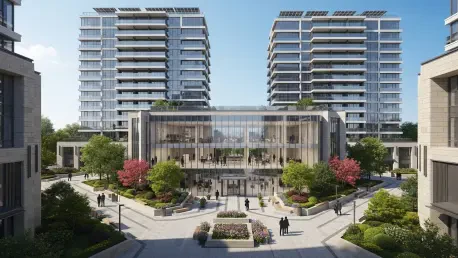

The tireless teachers, nurses, and emergency responders who constitute the lifeblood of London often find themselves performing an impossible balancing act between their professional duties and the staggering costs of urban living. This housing paradox is finally being addressed in the SE1 district, where a landmark decision has cleared the way for a major residential development at the corner of Abbey Street and Druid Street. By transforming a strategic plot of land into a dedicated hub for essential personnel, Southwark Council is moving beyond traditional “affordable housing” rhetoric to provide a concrete solution for the city’s most vital workforce.
This initiative serves as more than just a local planning victory; it represents a fundamental change in how the city values its labor. The move toward specialized housing ensures that those who protect the community can also afford to live within it. This development establishes a precedent where the proximity of key workers to their place of employment is recognized as a vital component of urban infrastructure. By prioritizing residency for the public sector, the borough is actively dismantling the barriers that have long forced essential staff to the distant outskirts of the capital.
Bridging the Gap: Essential Service and Local Residency
The project centers on the transformation of a strategic urban site into a residential anchor for the individuals who maintain the city’s essential services. Situated near the vibrant London Bridge area, the development addresses the geographic disconnect that often separates key workers from the neighborhoods they serve. This shift from high-level policy discussion to physical construction signifies a commitment to reclaiming urban space for the public good rather than solely for high-end market growth.
By establishing a local residence for nurses and firefighters, the project alleviates the pressure on regional transit networks and enhances the quality of life for the residents. This localized approach allows the workforce to become a permanent part of the social fabric, rather than transient visitors. Moreover, the focus on the SE1 district ensures that the most central areas of the city remain accessible to the people who facilitate its daily operations, thereby fostering a more balanced and equitable urban environment.
Why Key Worker Housing Is the New Priority: Urban Stability
The London housing market has reached a tipping point where essential staff are often forced into grueling commutes, leading to burnout and high turnover rates in public sectors. This project matters because it serves as a pilot for the “Key Worker Living Rent” policy, a targeted financial framework designed specifically for households earning between £26,000 and £75,000. By stabilizing the living situations of NHS staff and police officers, the borough is not just building apartments; it is securing the long-term reliability of its own infrastructure.
Furthermore, this financial model creates a sustainable pathway for households that previously fell into the “squeezed middle” of the housing market. These individuals often earn too much for traditional social housing but too little for market-rate rentals. The implementation of wage-linked rent ensures that essential personnel can build a future in the city without the constant threat of economic displacement. This stability directly translates to more resilient public services, as staff retention in local schools and hospitals is closely linked to housing security.
Inside the SE1 Development: Architecture, Accessibility, and the Community Hub
The project, a collaboration between Southwark Council and developer Bouygues UK, features a striking high-rise design by the architectural firm PRP that is set to become a local landmark. Beyond the 152 residential units, the development integrates a double-height, flexible community center designed to host everything from public meetings to private events. To ensure the site remains a functional part of the urban landscape, the plan includes the restoration of Neckinger Street and significant public realm improvements, creating a seamless connection with the existing neighborhood.
The architectural vision prioritizes both density and human-centric design, ensuring that the tall structure contributes positively to the skyline while remaining accessible at the street level. The inclusion of the community hub acts as a social catalyst, providing a space where new residents and long-standing locals can interact. This focus on shared infrastructure demonstrates that modern developments can successfully blend private residential needs with broader public benefits, revitalizing the surrounding area through thoughtful landscaping and improved permeability.
Supporting the Backbone of the City: Strategic Partnerships
Stakeholders emphasize that this initiative is the result of an agile partnership model that prioritizes community needs over maximum profit margins. By leveraging the expertise of Bouygues UK—currently also working on the Tustin Estate regeneration—the council is utilizing a proven framework for high-density, high-quality urban living. Placing workers near major transit hubs like London Bridge does more than just shorten commutes; it integrates essential personnel into the community, ensuring that the people who maintain the city’s safety and health are no longer treated as transient outsiders.
This collaborative execution allows the project to benefit from shared resources and technical proficiency, reducing the risks typically associated with large-scale affordable housing schemes. The alignment between the developer’s technical capabilities and the council’s social objectives ensures that the quality of construction remains high while keeping costs manageable for the target demographic. This synergy serves as a model for how public and private entities can work together to solve the most pressing challenges of the modern metropolis.
The Blueprint for Sustainable Urban Growth: A Five-Year Roadmap
This development sets a new standard for ecological responsibility through a strictly car-free design and the heavy integration of solar energy to power building operations. For other boroughs looking to replicate this success, the Southwark model offers a clear strategy: combine the Greater London Authority’s rent policies with advanced engineering to minimize energy waste. With construction having commenced in 2025 and a final completion date targeted for 2030, the project provides a realistic timeline for delivering high-standard, sustainable housing that meets the rigorous demands of the modern era.
The implementation of the Southwark pilot established a standard for how municipal authorities negotiated the complex intersection of land value and public service. Legislators recognized that housing security acted as a prerequisite for high-functioning public services. To ensure continued success, the council established a dedicated management committee to oversee the long-term maintenance of the sustainable systems. Future planners looked toward these results to justify broader applications of the Key Worker Living Rent across the metropolitan landscape. This shift provided a necessary template for balancing high-density developments with the human needs of the municipal labor force.