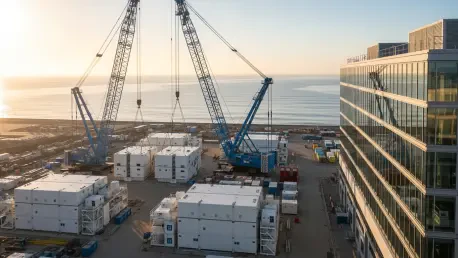

The rapid acceleration of generative artificial intelligence and high-performance computing has forced a fundamental recalculation of the energy requirements needed to sustain the American technological edge. While software developments continue to break records, the physical infrastructure supporting these advancements has reached a critical tipping point that demands immediate and massive investment in carbon-free baseload power. To address this, the United States is currently undertaking a comprehensive revitalization of its nuclear sector, effectively ending a forty-year period of industrial stagnation. At the heart of this movement is a deep integration with South Korean industrial giants, who have emerged as the primary manufacturing engine for the latest American reactor designs. This strategic partnership enables the U.S. to bypass domestic manufacturing bottlenecks, utilizing South Korea’s world-class engineering to build power plants capable of fueling the AI economy. This collaboration ensures that nuclear projects meet the burgeoning power demands of modern data centers.
Industrial Pillars: The Backbone of Nuclear Construction
Strategic Collaboration: Hyundai and Global Infrastructure
Hyundai Engineering & Construction has solidified its position as a central pillar in the American energy transition by evolving from a traditional contractor into a top-tier strategic partner for primary reactor designers. By working closely with firms like Westinghouse, the South Korean conglomerate integrates its advanced modular construction techniques directly into the blueprint of new American facilities. This integration is vital because it addresses the historical problem of project delays and cost overruns that plagued the industry in previous decades. Hyundai’s ability to manage complex engineering tasks and mobilize highly skilled labor forces provides the stability necessary to move forward with massive infrastructure projects. As the demand for reliable energy grows, this collaboration ensures that large-scale reactors are built with a level of efficiency that was previously unattainable within the domestic U.S. market alone, setting a new global standard for how nuclear energy projects are managed and delivered.
The deployment of Project Matador in Texas serves as a definitive case study for how this partnership is tailored to the needs of the modern technological era. This initiative focuses on developing specialized power grids, often referred to as HyperGrids, which are designed specifically to provide dedicated electricity to massive AI computing clusters. Hyundai’s early-stage involvement in the design and construction phases of these grids allows for a seamless transition from conceptual engineering to physical implementation. By securing these roles, the company is effectively setting the pace for future nuclear project management, prioritizing speed and scalability to match the rapid expansion of the tech industry. This approach moves away from the old model of general-purpose utility plants toward specialized, high-capacity energy hubs that can support the intensive processing requirements of artificial intelligence. The success of Project Matador is expected to serve as a template for additional private energy developments.
Manufacturing Might: Doosan and the Component Supply Chain
On the manufacturing front, Doosan Enerbility occupies a unique and irreplaceable position as the only facility in the world with the capacity to forge the massive reactor vessels and steam generators required for the latest nuclear designs. While the United States leads in the theoretical engineering of these components, the specialized heavy industrial infrastructure needed to produce them has largely been maintained and modernized in South Korea. Doosan has invested heavily in upgrading its production lines to support the high-speed manufacturing of modular parts, which allows for multiple components to be forged simultaneously. This capability is essential for meeting the ambitious goal of breaking ground on ten large-scale reactors by 2030, a timeline that would be impossible without a streamlined component supply chain. By functioning as the primary manufacturing hub for American reactors, Doosan ensures that critical hardware is available exactly when needed, eliminating expensive delays.
The transition toward a foundry model allowed Doosan to apply the same principles of efficiency seen in the semiconductor industry to the realm of heavy nuclear equipment. By standardizing the production of reactor components, the company has significantly shortened the manufacturing cycle for primary cooling systems and pressure vessels. This reduction in lead time is a game-changer for energy developers who must navigate strict regulatory environments and tight financial windows. Furthermore, the industrial prowess exhibited by South Korean manufacturers provides a level of quality assurance that minimizes the risk of component failure or the need for expensive post-installation repairs. As the U.S. grid continues to integrate these high-capacity reactors, the reliability of the hardware produced by Doosan remains the foundation upon which the entire nuclear renaissance is built. This industrial synergy not only accelerates the construction process but also enhances the overall safety and longevity of the reactors.
Economic Engines: Financing and Modular Technology
Small Modular Reactors: Scalability and Tech Integration
Small Modular Reactors, or SMRs, have emerged as the next significant frontier in the nuclear energy landscape, offering a level of flexibility and scalability that traditional large-scale plants cannot match. These reactors are designed to be built in a factory setting and then transported to their final location, a process that relies heavily on the modular manufacturing expertise provided by Korean industrial partners. American innovators such as TerraPower and NuScale have found that collaborating with Korean manufacturers is the most viable path to bringing their blueprints to life. These partnerships focus on refining the production processes to ensure that each modular unit is identical, which simplifies the regulatory approval process and reduces the overall cost per megawatt. By moving nuclear construction from the field into a controlled factory environment, the industry is able to achieve higher levels of precision. This shift is attractive to tech companies looking for localized power solutions.
The economic incentives driving the SMR movement are reinforced by substantial government intervention, including billions of dollars in loans provided by the Department of Energy to bridge the gap between innovation and commercialization. These financial resources act as a catalyst, encouraging private investors and South Korean firms to commit to long-term projects that might otherwise be seen as too capital-intensive. This financial backbone creates a self-sustaining loop where public funding de-risks early-stage development, leading to increased private participation and industrial growth. As these modular reactors become more common, the cost of deployment is expected to drop further, making nuclear energy a competitive alternative to traditional fossil fuels and intermittent renewable sources. The integration of SMRs into the American energy mix provides a versatile tool for grid stabilization, allowing for energy production to be decentralized and located closer to the points of highest consumption.
Global Leadership: Geopolitical Shifts and Actionable Progress
Strengthening the nuclear partnership with South Korea is also a critical move within the broader geopolitical arena, as the United States seeks to maintain its leadership in both technology and energy security. Currently, the global nuclear market faces significant competition from nations like China, which has aggressively expanded its domestic reactor fleet and is looking to export its technology to other markets. By establishing a robust and reliable Western-led supply chain, the U.S. and South Korea are positioning themselves as the preferred partners for nations seeking safe and transparent nuclear energy solutions. Protecting the future of the artificial intelligence sector requires a secure energy foundation that is not dependent on geopolitical rivals for critical hardware or fuel. This alliance ensures that the core components of the American energy grid are produced by a trusted strategic partner, mitigating the risks associated with supply chain disruptions.
The transition toward private, AI-centric power grids marked a definitive shift in the evolution of the nuclear industry, moving away from the slow-moving, government-run utilities of the past. Stakeholders recognized that the traditional model was insufficient for the rapid pace of the 2020s, leading to the adoption of the 11-gigawatt HyperGrid as a primary blueprint for future development. By prioritizing speed and manufacturing efficiency, the industry established a new framework where energy production was directly tied to technological demand. This evolution was supported by clear actionable steps, such as the standardization of modular parts and the implementation of fast-track financial models. Looking forward, the focus remained on expanding the skilled workforce and further integrating AI-driven monitoring systems into reactor operations to maximize safety and output. The collaboration successfully demonstrated that combining design leadership with specialized foundry manufacturing provided the only viable path to energy independence.