Commissioner Burt Pinnock suggested that a new task force is necessary to address the market forces that naturally push low-income residents out of desirable neighborhoods. This sentiment followed a pivotal recommendation by the Richmond Planning Commission to approve a Special Use Permit for the redevelopment of 5706 York Road. The project, led by Center Creek Homes, involves the demolition of an existing mid-century apartment complex located in the affluent Libbie and Grove neighborhood. Currently, this site provides some of the only remaining affordable housing in the city’s 1st District, where two-bedroom units rent for roughly $950 per month. However, the 18-unit building is largely vacant and increasingly difficult to maintain under its current financial model. The commission’s choice to support luxury townhomes over the preservation of existing units highlights a recurring urban dilemmhow to balance the need for modernization and tax growth with the protection of residents who are being priced out of their communities.
The Economic Reality: Why Private Developers Pivot to Luxury
The owners of the existing York Road property, Paul M. Dickinson and his business partner, reached a crossroads where the current rental model became entirely unsustainable due to mounting economic pressures. Inheriting the property from their fathers, the owners, now in their 80s, faced a city tax assessment exceeding $2.5 million, which generated an annual real estate tax bill of roughly $30,600. This tax burden alone consumed nearly two months of total potential rental income, leaving little room for the capital intensive repairs required for a building dating back to the 1960s. Center Creek Homes, led by CEO Dan Magder, presented data showing that any attempt to renovate the structure would necessitate rent hikes to market levels just to cover the cost of upgrading aging infrastructure. Without the ability to maintain the low-cost status quo, the owners felt that selling the property for redevelopment was the only viable path forward to settle their estates.
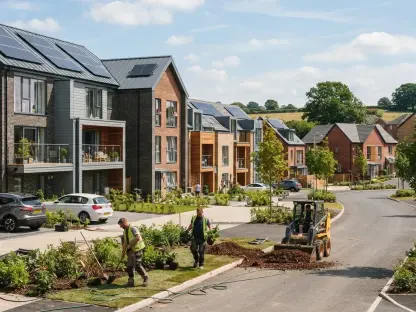
The developer’s final proposal for eight luxury townhomes, priced at over $1 million each, emerged as the only financially feasible scenario after multiple alternative models were explored. During the planning sessions, it became evident that mid-sized projects like this one often fall into a precarious subsidy trap that prevents the creation of affordable housing. The site is too small to qualify for state-level low-income housing tax credits, yet it remains too large to receive significant assistance from the Richmond Affordable Housing Trust Fund. While the inclusion of Accessory Dwelling Units was initially floated as a way to provide some lower-cost options, the developer admitted that these additions would likely not serve truly low-income residents in a high-value district. Consequently, the commission viewed the massive increase in projected tax revenue, which is expected to rise to $80,000 annually, as a necessary fiscal gain to support broader city services.
Community Perspectives: Navigating Zoning and Social Values
Public opposition to the project centered on the loss of what critics called the neighborhood’s essential shopping and social fabric. Local architect Bo Fairlamb and Commissioner Rebecca Rowe argued that the city should not be a party to the deliberate removal of affordable housing, especially in a district that lacks diverse price points. Fairlamb suggested that the existing urban business zoning should have been leveraged to create a more integrated development featuring ground-floor retail and upper-level apartments, rather than exclusive residential units. Commissioner Rowe, who provided the lone dissenting vote, expressed concern that the city was prioritizing unneeded million-dollar homes over the basic housing needs of its workforce. She noted that the current residents are being displaced by a project that caters exclusively to the wealthy, further entrenching the neighborhood’s exclusivity. This debate underscored a deep skepticism toward the idea that luxury development can coexist.
In contrast, proponents of the redevelopment, including Planning Commission Chair Rodney Poole and Vice Chair Elizabeth Greenfield, emphasized the pragmatism required in modern urban planning. They argued that the affordable nature of the York Road apartments was already a temporary phenomenon that would vanish regardless of the commission’s specific decision on the townhomes. If the permit were denied, the current owners would still be compelled to sell the property to a different buyer who would likely renovate the existing shell and raise rents to market rates to offset the purchase price. By approving the townhome project, the commission felt it was choosing a high-quality, high-yield development that brings tangible infrastructure improvements rather than delaying an inevitable market correction. This perspective suggests that preservation efforts are often futile when the underlying land value and tax assessments have already moved beyond the reach of low-income housing models.
Policy Solutions: Building a Framework for Housing Accessibility
The current 2026 housing climate in Richmond reflects a systemic failure to provide mid-sized developers with the financial tools necessary for cross-subsidization. Without significant government intervention, market forces naturally dictate that high-value land in the 1st District will transition toward luxury residential use. Commissioner Burt Pinnock’s task force proposal aimed to examine why current subsidy models favor only very large or very small developments, leaving a critical gap for projects like the one on York Road. From 2026 to 2028, the city intended to focus on creating new incentives that make it profitable for private entities to include mixed-income units within high-end developments. This recognized lack of tools means that without a fundamental rethink of policy, the socio-economic diversity of Richmond’s most desirable neighborhoods will continue to erode. Addressing these policy gaps was essential for creating a landscape where private profit aligns with public good.
The City Council was urged to adopt a more aggressive stance on preservation through a series of actionable legislative steps. Planners recommended the immediate implementation of a density bonus program for any developer willing to set aside 10% of units for residents earning below the area median income. Furthermore, the decision at York Road underscored the necessity for a city-backed revolving loan fund designed to help small-scale landlords modernize their properties without passing costs to tenants. By the time the Planning Commission concluded its 2026 session, the focus had shifted from a single neighborhood dispute toward a broader strategy for inclusive urban growth. These recommendations sought to provide Richmond with a sustainable path forward where economic prosperity and social equity were no longer seen as mutually exclusive goals. The council’s subsequent debate over the townhome project served as a catalyst for a series of zoning reforms intended to protect housing units.