
The city of Pittsburgh has effectively shed its historic reputation as a smoke-shrouded industrial center to emerge as a global beacon of urban sustainability, a transformation punctuated by the recent realization that it has already surpassed major carbon reduction benchmarks originally set for the next decade. This achievement is not merely a localized victory but a significant indicator of how coordinated civic action can yield tangible environmental and economic results in a relatively short timeframe. By the start of 2026, the data from the Pittsburgh 2030 District initiative has confirmed that the collective efforts of property owners, developers, and municipal leaders have catalyzed a shift in the urban landscape that many experts once thought would take several more years to manifest. This progress is rooted in the “2030 Challenge,” a framework managed by the Green Building Alliance that encourages participants to drastically reduce the environmental footprint of their structures through voluntary but rigorous performance standards.
The momentum generated by this initiative has fundamentally altered the trajectory of the city’s development, proving that high-performance architecture is a viable and profitable path forward. By hitting these milestones ahead of schedule, Pittsburgh has provided a replicable model for other mid-sized industrial cities grappling with the transition to a low-carbon economy. The success of the program is not just reflected in the raw data of emission levels but also in the changing culture of property management, where sustainability has moved from a secondary concern to a primary driver of operational decision-making. As the city enters the second half of the decade, the focus has shifted from wondering if these goals are attainable to determining how much further they can be pushed before the final 2030 deadline arrives.
Measuring the Momentum of Urban Sustainability
Key Metrics: Financial Returns and Environmental Impact
The quantitative success of the Pittsburgh 2030 District is most clearly visible in the massive reduction of carbon emissions, which has reached a collective level of 56.1% below the baseline. This figure is particularly striking because it places the district well within the ultimate target range of 50-65% a full five years before the 2030 deadline. While the reduction in energy consumption stands at a respectable 27.3%, the more significant drop in carbon emissions suggests that the city is benefiting from a combination of internal efficiency and external shifts in the power grid. This dual-track progress means that buildings are not only using less energy but are also utilizing energy that is inherently cleaner than it was just a few years ago. The implications for the local environment are profound, as decreased emissions contribute to better regional air quality and a reduction in the urban heat island effect, which has become an increasingly pressing concern for city planners.
Beyond the clear environmental benefits, the financial performance of these green initiatives has provided a compelling argument for widespread adoption across the private sector. The 2025 progress report identified nearly $50 million in total savings, with $42.8 million attributed to avoided energy costs and an additional $7.1 million saved through smarter water consumption. These figures represent capital that remains within the local economy, allowing businesses and institutions to reinvest in their operations, personnel, and infrastructure rather than sending it to utility providers. This financial windfall refutes the long-standing myth that sustainability is a luxury or a cost center. Instead, the data from the Pittsburgh 2030 District demonstrates that environmental stewardship is an essential component of modern economic resilience, providing a high return on investment that protects property owners against the volatility of traditional energy markets.
The Strategic Scope: Building the 2030 Challenge
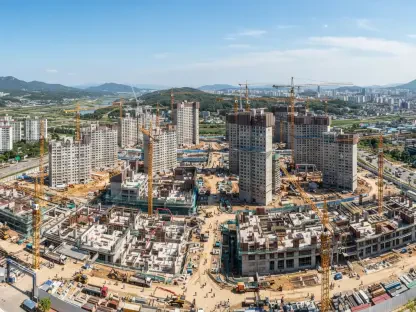
The strategic framework of the 2030 Challenge is designed to address the unique complexities of both historic preservation and modern expansion. For the hundreds of existing structures within the district, the focus remains on deep retrofits and operational optimizations that can shave off significant percentages of waste without requiring total demolition. This is a critical component of the city’s strategy, as the “embodied carbon” found in older buildings represents a massive environmental investment that is best preserved through modernization rather than replacement. Conversely, new construction projects entering the district are held to a much more stringent standard, with an immediate expectation of net-zero carbon performance. This ensures that as the city continues to grow and attract new investment, its total “carbon debt” does not increase, effectively decoupling urban growth from environmental degradation and setting a new standard for urban development.
The sheer scale of this movement is perhaps its most impressive feature, as it currently encompasses a massive coalition of 75 property partners managing more than 540 buildings. These structures represent a combined footprint of over 86 million square feet, a significant portion of the city’s total built environment that includes everything from corporate skyscrapers and luxury hotels to hospitals and public schools. The inclusion of major medical centers and nearly all of the region’s higher education institutions has created a unique “network effect.” In this environment, a university’s facilities team might share insights on HVAC optimization with a nearby hospital, or a corporate tower manager might learn about advanced water-saving techniques from a public school district. This cross-sector collaboration accelerates the learning curve for everyone involved, turning the entire city into a living laboratory for sustainable urban management and high-performance design.
Innovative Tactics for Greening the Built Environment
Dual Drivers: Decarbonization Through Grid and Operations
The dramatic reduction in Pittsburgh’s carbon footprint is the result of a two-pronged evolution that balances regional infrastructure shifts with localized building management. On one side of the equation is the “cleaning” of the Western Pennsylvania electrical grid, which has seen a steady transition away from coal-fired power plants in favor of natural gas and renewable sources like wind and solar. As the carbon intensity of the grid decreases, every building connected to it sees a “passive” reduction in its emissions profile, even if no physical changes are made to the structure itself. This trend has provided a significant tailwind for the 2030 District, allowing property owners to meet and exceed their goals more rapidly than they could have through efficiency alone. It highlights the importance of macro-level energy policy in supporting micro-level sustainability efforts, showing how state and regional transitions can empower local actors to achieve ambitious targets.
However, passive reductions only tell half the story, as building owners have taken an increasingly active role in “greening” their daily operations. This includes sophisticated strategies such as peak-load shedding, where buildings reduce energy use during high-demand periods, and the implementation of advanced building automation systems that use sensors to adjust lighting and climate control based on actual occupancy. Furthermore, many partners in the district have moved beyond simple conservation to become active participants in the renewable energy market, purchasing renewable energy credits or installing on-site generation technology like rooftop solar arrays. These proactive decisions ensure that the buildings are not just subject to the whims of the grid but are resilient, independent assets capable of maintaining high performance even during energy shortages. This shift toward active energy management has turned facilities managers into key strategic players in the city’s quest for carbon neutrality.
Success Stories: Case Studies in High Performance
Specific examples from across the city illustrate how these high-level goals are translated into practical reality, with the Union Trust Building serving as a prime example of historic efficiency. This landmark structure has achieved a 60% reduction in carbon emissions, a feat that directly challenges the assumption that only new, purpose-built “green” buildings can achieve top-tier performance levels. By focusing on maintaining and optimizing historic equipment while selectively integrating modern technologies, the owners of the Union Trust Building have demonstrated that the city’s architectural heritage is an asset to sustainability rather than a hindrance. This approach preserves the aesthetic character of the city while meeting the rigorous environmental demands of the modern era, proving that with the right management, a century-old building can compete with any modern glass tower in terms of efficiency and occupant comfort.
On the public side, the city has led by example through projects like the renovation of Fire Station 8 and the ongoing modernization of the Pittsburgh International Airport. Fire Station 8 was transformed from an aging municipal facility into a high-performance building that supports public safety while adhering to net-zero carbon standards. This project serves as a blueprint for how municipal governments can modernize their legacy infrastructure to reduce long-term operational costs and environmental impact. Similarly, the Terminal Modernization Program at the airport represents one of the largest and most ambitious construction projects in the region’s history. By incorporating healthy materials and innovative designs that prioritize natural light and air quality, the airport is ensuring that the region’s primary gateway reflects its commitment to resiliency and environmental health. These case studies show that the path to a sustainable future is not restricted to one sector but is being blazed simultaneously by private developers, municipal departments, and large-scale infrastructure projects.
Leading the Way on a Local and Global Scale
Civic Governance: Toolkits for a People-Centered Future
The success of the 2030 District is underpinned by a governance model that prioritizes people-centered design and inter-departmental cooperation. Local leadership has successfully integrated the goals of the 2030 Challenge into the core functions of city planning, public works, and public safety. This unified front ensures that sustainability is not treated as an optional “add-on” but as a fundamental requirement for all city operations. By focusing on practical outcomes like cleaner indoor air and more efficient public services, the city has made the benefits of carbon reduction tangible for everyday residents and workers. This approach has fostered a sense of public trust and participation, as people can see the direct link between green building policies and their own quality of life. The coordination between the Division of Sustainability and Resilience and other city departments has streamlined the implementation of complex projects, reducing the bureaucratic friction that often hampers large-scale environmental initiatives.
To ensure that these benefits are accessible to all, the Green Building Alliance has developed a comprehensive toolkit of actionable strategies that can be implemented by property owners of all sizes. These toolkits provide a roadmap for everything from simple lighting upgrades and the installation of low-flow water fixtures to more complex projects like building envelope improvements. For example, replacing single-pane windows with high-efficiency alternatives can drastically reduce thermal loss, while the use of rain barrels for water management can decrease the strain on municipal sewage systems. By prioritizing locally produced materials and those with low embodied carbon, property owners can support the regional economy while making meaningful progress toward their sustainability goals. These practical resources have democratized the process of greening the built environment, allowing smaller landlords and business owners to contribute to the city’s collective success alongside the owners of massive corporate towers.
Global Impact: The Path Toward a Zero-Carbon Horizon
The achievements of Pittsburgh have not gone unnoticed, as the city’s designation as a United Nations International Center of Excellence on High Performance Buildings has placed it in an elite group of global urban leaders. This recognition is a testament to the city’s ability to turn the challenges of its industrial past into the opportunities of a sustainable future. By serving as a living laboratory for the UN, Pittsburgh is helping to set the international standard for how cities can combat climate change through smarter building practices and collaborative governance. The data collected from the 2030 District is shared with other urban centers around the world, providing a proven framework for decarbonization that can be adapted to different regional contexts. This global role has bolstered the city’s reputation as a center for innovation and high-performance technology, attracting talent and investment from around the world and reinforcing the economic benefits of its green transition.
As the city enters the final years of the decade, the focus has shifted toward closing the performance gap for the remaining partners and pushing for even more ambitious targets. The success seen between 2026 and 2030 was a direct result of the groundwork laid in the previous years, but the remaining challenges will require even greater levels of innovation and commitment. Looking back at the progress made, it was clear that the combination of data-driven decision-making and a strong sense of civic duty was the key to surpassing the 2025 milestones. Future considerations must include the scaling of net-zero technologies across all sectors and the continued evolution of the regional energy grid to support a truly carbon-neutral city. By maintaining this momentum, Pittsburgh positioned itself not just as a city that met its goals, but as one that redefined what was possible for the modern urban environment, ensuring a resilient and prosperous future for generations to come.