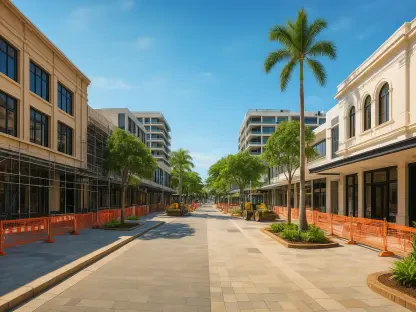

The transformation of Philadelphia’s industrial skyline reached a significant milestone this week as heavy machinery began sculpting the foundation for a facility where nuclear physics and modern medicine converge. Backed by Bill Gates’ TerraPower, the new Bellwether Laboratory represents a $450 million investment designed to revolutionize how advanced malignancies are treated. This site is far more than a standard office complex; it is a specialized environment dedicated to producing radioactive molecules capable of precision-targeting and dismantling advanced cancers. The groundbreaking ceremony signaled a pivotal moment where high-tech manufacturing leaves the reactor and enters the pharmacy. By synthesizing isotope production with oncology, the project aims to create a reliable domestic supply chain for therapies that were previously difficult to scale.
Assessing the Resilience of Philadelphia’s Biotech Corridor
While the life sciences sector experienced a massive expansion during the recent global health crisis, the industry has lately grappled with an oversupply of generic laboratory space and rising construction costs. The commencement of the Bellwether project signals a significant shift in investor confidence toward highly specialized, purpose-built environments. By prioritizing niche manufacturing over speculative office builds, the project addressed a critical gap in the regional market. This development proved that demand for advanced oncological research infrastructure remained robust despite broader economic headwinds facing the real estate sector. It also demonstrated that long-term capital is flowing toward projects with high barriers to entry and specific clinical utility.
Project Logistics: Scale, Scope, and Specialized Manufacturing
Occupying 250,000 square feet within the sprawling Bellwether District, the laboratory represents a complex collaborative effort between Gilbane Building Co., TerraPower Isotopes, and the HRP Group. The current phase of construction focused on the core and shell of a structure that must securely handle sensitive radioactive materials. Such a mission required a level of structural integrity and containment far beyond standard commercial builds. By synthesizing nuclear technology with healthcare, the development served as a primary example of how legacy industrial districts are being repurposed for next-generation medical breakthroughs. This transformation converted an old energy site into a beacon for pharmaceutical innovation.
Technical Rigor and the Importance of Speed-to-Market
Meeting the exacting standards of pharmaceutical giants like Pfizer and Alnylam prepared the project team for the unique complexities of radioactive isotope production. According to Ted Holt, Gilbane’s Mid-Atlantic division leader, success in this specific niche depended on the builder’s ability to balance intense quality control with the need for rapid delivery. Construction involved navigating a highly specialized supply chain for lead-shielded components and implementing rigorous safety protocols. These measures were essential when bridging the gap between theoretical nuclear research and patient-ready therapeutics. The team utilized advanced 3D modeling to ensure that the shielding and ventilation systems met zero-tolerance safety thresholds.
A Strategic Blueprint for Specialized Medical Facility Development
The Bellwether Laboratory provided a framework for integrating high-tech medical manufacturing into urban economic zones. For developers and city planners, the project illustrated how to transition from energy-focused research to life-saving healthcare applications, diversifying regional revenue streams. By projecting over 225 permanent jobs, the facility offered a concrete strategy for urban revitalization that relied on specialized talent rather than traditional retail occupancy. Moving forward, this model suggested that the next phase of biotech growth would likely focus on regional hubs that successfully combined heavy industrial capability with clinical precision. Planners should now look toward establishing similar specialized corridors to foster local manufacturing resilience.