
The traditional image of the landscape architect as a mere creator of manicured gardens and aesthetic public squares is rapidly fading as the discipline transforms into a critical front line of climate defense. In the current environmental landscape, these professionals are being tasked with a far more complex mission: redesigning the urban fabric to withstand the volatile weather patterns that have become the hallmark of the mid-2020s. This evolution marks a transition from “grey infrastructure”—the network of concrete pipes and steel tanks that characterized the previous century—to “green infrastructure,” which mimics natural processes to manage excess water. By viewing neglected vacant lots and rigid concrete channels as strategic opportunities rather than eyesores, cities are beginning to reintegrate natural hydrological cycles into their core planning. This shift is not merely about beautification; it is a fundamental reimagining of urban resilience that prioritizes the health and safety of diverse populations.
Evidence of Success in Urban Park Design
The Oak Cliff neighborhood in Southern Dallas represents a significant case study in how historical urban planning decisions can leave modern communities vulnerable to environmental risks. For decades, residential developments in this region were expanded directly into the Five Mile Creek Flood Plain, creating a scenario where heavy rainfall events regularly threatened both property and the integrity of the local drinking water supply. To address these systemic vulnerabilities, the Trust for Public Land partnered with municipal authorities and specialized design firms to develop the Five Mile Creek Greenbelt. This expansive project aims to revitalize the area through a 17-mile network of trails and interconnected parks that serve as a natural buffer against rising waters. By focusing on a region that has long faced economic and environmental challenges, the initiative demonstrates that nature-based infrastructure can provide both safety and social equity by reclaiming land that was previously considered a liability for the community.
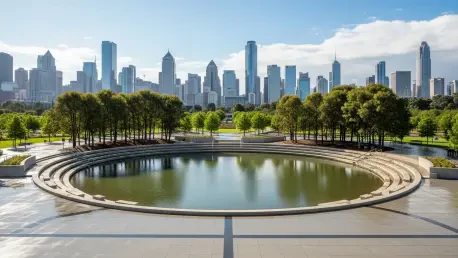
One of the most effective demonstrations of this strategy is the South Oak Cliff Renaissance Park, which has become a landmark for sustainable urban design since its inception. This facility utilizes advanced rain gardens and an extensive canopy of native trees to capture and filter approximately 13,000 gallons of stormwater annually, preventing it from overwhelming the city’s drainage systems. The ecological impact of the park extends beyond flood mitigation, as its reliance on native vegetation has reduced the need for irrigation by a staggering 82 percent compared to traditional municipal parks. This high level of efficiency proves that nature-based solutions are not only effective at managing extreme weather but are also economically viable in the long run. By significantly lowering maintenance costs and resource consumption, such projects provide a scalable model for other metropolitan areas seeking to balance fiscal responsibility with the urgent need for robust climate adaptation and long-term environmental sustainability.
Proactive Solutions and the Sponge Effect
Nature-based infrastructure encompasses a diverse toolkit of engineering solutions, including permeable pavements, green roofs, and bioswales that are specifically designed to absorb, delay, or treat runoff before it causes damage. Despite the proven efficacy of these methods, a substantial funding gap persists that often prevents municipal governments from adopting them on a wider scale. Projections indicate that communities across the United States are on track to spend approximately $100 billion on stormwater management over the next several years, yet a vast majority of this capital is currently allocated to reactive measures like post-flood cleanup and emergency repairs. Experts argue that redirecting these significant financial resources toward proactive green investments could reduce total storm runoff by up to 99 percent in many areas. This shift would tackle the root cause of urban flooding while simultaneously providing secondary benefits such as improved local air quality and the creation of valuable social spaces for residents.
The transformative power of the “sponge” design philosophy is perhaps most evident in Atlanta’s Rodney Cook Sr. Park, which was constructed to protect the historic Vine City neighborhood. This community suffered a catastrophic flooding event in 2002 that led to the permanent loss of dozens of homes, highlighting the inadequacy of traditional drainage systems in low-lying urban areas. In response, a 16-acre site was converted into a multifunctional park that serves as a massive reservoir during peak precipitation events. The true test of this infrastructure occurred recently during Hurricane Helene, when the park successfully captured 10 million gallons of stormwater that would have otherwise inundated the surrounding houses. By holding this immense volume of water and slowly releasing it into the city’s municipal system over a 72-hour period, the park functioned exactly as intended. This success story underscores the reliability of nature-inspired engineering and its ability to withstand high-volume weather events.
Global Applications and Economic Impact
The movement toward water resilience is not limited to North America, as international leaders increasingly recognize the undeniable link between environmental health and long-term economic stability. During recent high-level discussions at the Economist Water Summit, a consensus emerged that green infrastructure should be treated as a strategic public investment rather than an optional expense. In the European Union, this perspective has led to the implementation of innovative biological systems that address diverse infrastructure needs beyond simple flood control. For example, several towns in Ireland have pioneered the use of specialized reed beds, utilizing species like Phragmites australis to treat municipal wastewater. These biological filters leverage natural microorganisms to neutralize contaminants, which significantly reduces the need for chemical treatments and energy-intensive processing. Such projects demonstrate that nature-based strategies are highly scalable and can be adapted to solve a wide variety of complex urban challenges.
Furthermore, the economic benefits of these international projects extend to the reduction of operational costs associated with traditional waste management and heavy transport. By implementing nature-based systems in locations such as Carlow and Enfield, authorities have successfully lowered the carbon footprint of their utility services while simultaneously creating new habitats for local biodiversity. This holistic approach to infrastructure suggests that the integration of natural processes can provide a more resilient financial model for public works, especially as the costs of energy and chemical inputs continue to fluctuate. When urban planners prioritize biological solutions, they create a redundant system that can continue to function even when traditional technological grids are stressed. This global trend indicates a shift toward a more symbiotic relationship between the built environment and the natural world, where infrastructure is designed to enhance ecological health rather than just trying to contain or control it.
Collaborative Strategies for Future Development
Successfully implementing nature-based infrastructure at a meaningful scale requires a multidisciplinary approach that extends far beyond the technical expertise of landscape architects and civil engineers. Building truly resilient cities depends on the formation of strategic partnerships between the public and private sectors to secure the diverse funding streams necessary for large-scale construction. Moreover, policy innovation is essential to create new legislative frameworks that prioritize proactive environmental investments over the traditional model of reactive disaster relief. Involving local residents in the early planning and design phases is equally critical, as this ensures that the resulting infrastructure meets the unique social and cultural needs of the specific neighborhood it serves. By fostering a sense of community ownership, cities can secure the long-term public support and stewardship required to maintain these green spaces as functional assets for many decades to come.
The transition toward resilient urban design matured through the integration of scientific data and community-led planning initiatives. Policymakers recognized that the most effective way to secure urban centers involved moving away from rigid concrete barriers and toward flexible, natural systems. They prioritized the development of legislative incentives that encouraged developers to incorporate green roofs and permeable surfaces into new commercial projects. Local governments also expanded their use of biological wastewater treatment and large-scale urban reforestation to mitigate the urban heat island effect. These efforts ultimately transformed the city’s relationship with water from one of conflict to one of management and cooperation. By documenting the successful performance of parks during major storm events, officials demonstrated the tangible return on investment provided by nature-based solutions. This comprehensive strategy ensured that the built environment functioned in harmony with regional ecosystems, providing a stable foundation for future growth and community well-being.