
Expanding beyond low Earth orbit requires more than just high-performance rockets; it demands a fundamental shift in how humanity perceives extraterrestrial construction and logistics for long-term survival. Humanity no longer views the lunar surface as a destination for brief scientific excursions but as the cornerstone of a multi-planetary existence through the Lunar Innovation Park (LIP). This massive civil engineering initiative marks a departure from the Apollo-era philosophy of short-term exploration, focusing instead on the practical necessities of building and maintaining a permanent presence. By treating the Moon as a construction site rather than just a landing zone, engineers are prioritizing the development of robust foundations that can withstand the most hostile conditions known to science. The current strategy moves away from the singular goal of landing a capsule and toward the complex challenge of establishing an operational hub that functions year-round. This shift requires a level of planning that mirrors the development of major terrestrial cities, where basic services like transportation, power, and safety are integrated into a single, cohesive framework designed for longevity.
Adapting Terrestrial Engineering for the Lunar Frontier
Lessons from Large-Scale Infrastructure: Terrestrial Blueprints
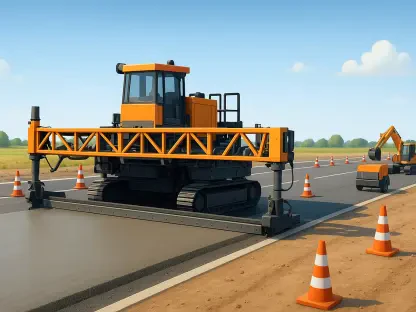
Drawing from the complexities of building major international airports on Earth, lunar planners are applying sophisticated logistics and grading techniques to the lunar South Pole. Terrestrial airports require massive earthmoving operations to create stable, level surfaces for heavy machinery, and the Moon presents a similar, albeit more difficult, challenge with its uneven terrain and abrasive regolith. Mastering these lunar-moving tasks is essential for ensuring that landing zones remain clear of debris and that transit paths between various facilities are safe for both human-driven and autonomous vehicles. The scale of this operation is unprecedented, requiring a deep understanding of how to manipulate soil in a vacuum with low gravity. By leveraging decades of experience in heavy infrastructure development, engineers are creating a blueprint that ensures the lunar base is not just a temporary camp but a resilient facility capable of supporting continuous operations and expanding as new needs and technologies arise.
Modern engineering on the Moon also takes inspiration from the way large-scale industrial zones are managed on Earth, focusing on the flow of materials and the efficiency of energy distribution. The current progress from 2026 to 2030 involves mapping out the lunar surface with centimeter-level precision to identify the best locations for heavy construction. This preparatory phase is critical because, unlike Earth, the Moon lacks the natural geological stability found in many terrestrial regions. Engineers are developing specialized autonomous graders and excavators that can operate in the extreme cold of permanently shadowed regions, where water ice is most abundant. These machines are designed to operate for thousands of hours without human intervention, performing the tedious but vital work of leveling the ground for habitats and laboratories. By applying the rigorous standards of civil engineering to the lunar environment, the Lunar Innovation Park is being built to withstand the test of time, serving as a stable platform for both scientific research and commercial enterprise for decades.
Security and Defense: Military Logistics for Harsh Environments
Military expeditionary bases provide a critical blueprint for lunar development by emphasizing a “protection first” philosophy that secures the environment before sensitive hardware is deployed. In high-risk terrestrial combat zones, engineers immediately prioritize the construction of berms, embankments, and reinforced perimeters to shield equipment from external threats. This same logic is being applied within the Lunar Innovation Park to protect high-value assets from solar radiation, extreme temperature fluctuations, and the devastating impact of high-velocity lunar dust kicked up by rocket exhaust. These protective structures act as a first line of defense, ensuring that power plants, communication arrays, and habitats remain functional despite the unforgiving nature of the lunar environment. By establishing these defensive perimeters early, the project minimizes the risk of catastrophic failure and provides a secure foundation upon which more complex systems can be built, effectively turning a barren landscape into a fortified and reliable operational headquarters.
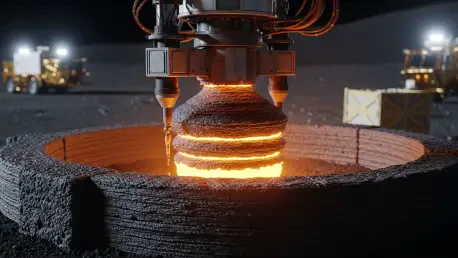
The implementation of these military-inspired logistics also involves the strategic placement of assets to minimize secondary damage during landings and takeoffs. On the Moon, a single rocket landing can send razor-sharp dust particles flying at thousands of miles per hour, potentially shredding nearby solar panels or habitat seals. To combat this, engineers are constructing massive blast walls and diversionary berms using sintered lunar soil. This process involves heating the regolith until it fuses into a solid, rock-like material, creating a natural shield that is both cost-effective and highly durable. This “expeditionary” mindset ensures that every piece of infrastructure added to the park is protected from the activities of its neighbors, allowing for a dense and active industrial zone. By focusing on physical security and structural integrity from the very beginning, the Lunar Innovation Park establishes a sustainable model for growth that can accommodate a wide variety of international and commercial partners without compromising the safety of the mission.
The Framework of the Lunar Innovation Park
Collaborative Ecosystems: Shared Hubs for Global Interests
The Lunar Innovation Park is designed to be an integrated ecosystem rather than a single isolated laboratory, fostering a unique environment where government and private interests overlap. Located at the lunar South Pole, this park serves as a common ground where government agencies, international partners, and private companies can share essential resources and logistical support. By providing basic infrastructure, NASA lowers the entry cost for other organizations to participate in the growing lunar economy, much like how a government-funded port facilitates private maritime trade. This collaborative model encourages innovation by allowing smaller entities to focus on specialized scientific or commercial goals while the overarching infrastructure handles the heavy lifting of power and life support. The result is a vibrant, multi-layered community where the costs of lunar operations are distributed across a wide network of stakeholders, making the permanent presence on the Moon more economically viable and politically stable.
This shared hub approach also streamlines the process of technological integration, ensuring that hardware from different countries and companies can work together seamlessly. Standardized docking interfaces, power connectors, and communication protocols are being established to ensure that the Lunar Innovation Park remains a truly open and accessible platform. This interoperability is crucial for the long-term survival of the base, as it allows for the rapid replacement of failed components and the easy addition of new modules from any partner in the network. Furthermore, the presence of multiple actors in the park creates a redundant safety net, where the resources of one organization can be used to support another in the event of an emergency. By moving away from the isolated mission models of the past, the current framework prioritizes collective resilience and mutual benefit, laying the groundwork for a lunar society that is as diverse as it is durable, and ensuring that the Moon remains a peaceful and productive frontier.
Foundational Utilities: Power and Resource Management
The framework of the Lunar Innovation Park relies on a suite of foundational utilities that operate as the lifeblood of the entire southern polar region. Reliable power grids, utilizing both advanced solar arrays and small modular nuclear reactors, provide the constant energy required to survive the long, frigid lunar nights. High-speed communication networks, featuring laser-based relay systems, ensure that data can flow seamlessly between the Moon and Earth, allowing for real-time control of robotic assets and scientific instruments. Additionally, a precise navigation and timing system, similar to a localized GPS, allows both astronauts and autonomous rovers to navigate the shadowed craters with pinpoint accuracy. These utilities are not just conveniences; they are the essential infrastructure that enables every mission to succeed. By centralizing these resources, the park creates an environment where specialized scientific missions can focus on their primary objectives without having to worry about basic survival and connectivity.
Central to this utility framework is the mastery of In-Situ Resource Utilization (ISRU), which focuses on harvesting local materials such as lunar ice and soil to create building supplies. Instead of hauling every ton of water and oxygen from Earth, the Lunar Innovation Park is equipped with specialized plants that extract these vital resources directly from the lunar regolith. These on-site processing facilities convert raw lunar materials into drinkable water, breathable air, and even rocket propellant, significantly reducing the logistical burden of resupply missions. This capability is the key to creating a truly sustainable presence, as it allows the base to grow and maintain itself using the natural bounty of the Moon. By transforming the lunar soil into a usable asset, the project ensures that the infrastructure remains self-sufficient and capable of supporting a growing population of researchers and workers. This shift toward local resource management represents a fundamental change in how space missions are planned, prioritizing self-reliance and long-term autonomy.
Ensuring Resilience Through Lifecycle Management
Integrated Systems: The System-of-Systems Mindset
Maintaining a permanent presence requires a move away from isolated missions toward a “system-of-systems” approach where every piece of technology is deeply interconnected. In this model, the failure of a single power source or a robotic construction unit could potentially shut down critical communication or life-support efforts across the entire park. This deep interdependency makes rigorous project management and risk mitigation more important than ever for the survival of the lunar colony. Engineers are now tasked with designing systems that are not only robust in their own right but also capable of providing redundancy for other parts of the network. This level of integration requires a holistic view of the lunar base, where the lifecycle of every component is tracked and managed as part of a larger, living entity. By prioritizing this interconnectedness, the Lunar Innovation Park can absorb localized failures without compromising the integrity of the overall mission, ensuring continuous operations.
The complexity of these systems also necessitates a sophisticated approach to data management and real-time monitoring to maintain operational stability. Every sensor, vehicle, and habitat module within the park feeds data into a centralized management system that analyzes the health of the entire infrastructure. This allows engineers to identify potential bottlenecks or systemic risks before they manifest into critical failures, providing a level of foresight that was previously impossible. This system-of-systems mindset also extends to the way different agencies and companies interact within the park, as their respective technologies must be compatible and capable of supporting one another. By fostering this culture of interdependence and shared responsibility, the project ensures that the lunar infrastructure remains resilient in the face of the many challenges presented by the lunar environment. This approach is essential for the long-term viability of the base, as it creates a foundation that can adapt and evolve alongside the needs of its inhabitants.
Virtual Management: Digital Twins and Durability
Because resupplying from Earth is expensive and slow, lunar assets must be built for extreme durability and easy maintenance using the latest advancements in virtual modeling. Engineers use “Digital Twins,” which are precise virtual models of physical equipment, to monitor wear and tear and predict failures before they happen in the harsh lunar conditions. These virtual counterparts are updated in real-time with data from sensors on the actual hardware, allowing teams on Earth to run simulations and test repair strategies without ever touching the physical asset. This proactive approach to maintenance ensures that older equipment can work seamlessly with more advanced technology arriving years later, preventing the base from becoming a collection of obsolete components. By mastering this virtual management technique, the Lunar Innovation Park can maintain a high level of operational efficiency while minimizing the need for risky and expensive manual repairs by astronauts, effectively extending the lifespan of the entire facility.
The use of Digital Twins also allows for the continuous optimization of lunar operations by identifying ways to improve energy efficiency and resource allocation. By simulating various operational scenarios in the digital realm, engineers can determine the best way to deploy robotic assets or manage power loads during the extreme conditions of the lunar night. This level of precision is vital for a base that must operate with limited resources and no immediate backup from Earth. Furthermore, the insights gained from these virtual models are used to inform the design of future hardware, ensuring that each new addition to the park is more resilient and efficient than the last. This cycle of continuous improvement, driven by high-fidelity data and virtual testing, is what allows the Lunar Innovation Park to remain at the cutting edge of space exploration. By bridging the gap between the physical and virtual worlds, the project ensures that the lunar infrastructure remains a modern and reliable platform for human endeavor, capable of supporting the transition to a permanent multi-planetary presence.
The Mechanics of Building on the Moon
Autonomous Engineering: Mastering Construction and Dust
Construction is the most vital capability for a long-term stay, specifically the ability to move and shape lunar soil autonomously using advanced robotic systems. These robots are being developed to build landing pads, roads, and protective berms to stop “plume surface interaction,” where rocket engines blast abrasive dust at nearby structures. Managing this high-velocity debris is a primary engineering hurdle that must be cleared to protect the long-term integrity of the park and its sensitive scientific instruments. The current generation of lunar robots uses machine learning and advanced sensors to navigate the rocky terrain and perform complex construction tasks with minimal human oversight. By automating these dangerous and repetitive jobs, the project reduces the risk to human astronauts and allows construction to continue around the clock, even during the lunar night. This capability is the foundation upon which all other activities in the park are built, providing the physical structures necessary for a permanent human presence.
The development of these autonomous construction techniques also involves innovative methods for creating building materials directly from the lunar environment. Sintering and 3D-printing technologies are being refined to turn raw regolith into solid bricks, structural beams, and even entire habitat shells. This localized manufacturing process eliminates the need to transport heavy construction materials from Earth, dramatically lowering the cost and complexity of expanding the base. Furthermore, these autonomous builders are designed to be modular and repairable, ensuring that they can continue to operate for years in the abrasive and radiation-heavy environment of the lunar surface. By mastering the art of building on the Moon with lunar materials, the Lunar Innovation Park is proving that humanity can truly live off the land in space. This breakthrough in engineering not only secures the future of the lunar base but also provides a scalable model for construction on other celestial bodies, making the eventual goal of human settlement on Mars a tangible and achievable reality.
Strategic Infrastructure: The Campaign Mindset and Future Expansion
Ultimately, the establishment of the Lunar Innovation Park provided a definitive roadmap for expanding human reach into the deeper regions of the solar system. By treating the lunar surface as a testing ground for civil engineering rather than a final destination, the project successfully demonstrated that infrastructure must precede any large-scale settlement. The development of autonomous construction and localized resource utilization changed the paradigm of space travel from one of limited resources to one of sustainable growth. These foundational steps ensured that the path toward Mars remained clear, proving that the lessons learned from the Moon were the essential building blocks for the future among the stars. Every berm constructed and every landing pad leveled served as a testament to the fact that preparation on the lunar surface was the primary catalyst for the next era of cosmic expansion. Through these efforts, the logistical and structural hurdles that once seemed insurmountable became the standard operational procedures for a multi-planetary civilization.
The project also established a new standard for international and commercial cooperation in space, creating a legacy of shared progress that transcended national boundaries. The collaborative environment of the park allowed for a rapid exchange of ideas and technologies, accelerating the pace of development and ensuring that the lunar presence remained at the forefront of human achievement. By prioritizing durability, resilience, and adaptability, the Lunar Innovation Park became more than just a collection of buildings; it became a living symbol of humanity’s commitment to exploring the unknown. The success of this initiative proved that with the right infrastructure and a long-term vision, the challenges of living and working in space could be overcome. These achievements provided the necessary confidence and technical expertise to push further into the solar system, ensuring that the first permanent human footprints on the Moon were merely the beginning of a much larger journey. Through this campaign mindset, the dream of a permanent presence in space was transformed into a functional and thriving reality.