
Luca Calarailli is a seasoned expert in construction and data center infrastructure, bringing a wealth of knowledge in design and industrial architecture. With a career defined by navigating the complexities of large-scale builds, he has become a leading voice on how technological tools can solve the industry’s most stubborn bottlenecks. In this discussion, we explore the transition from traditional building methods to modular systems, the impact of global labor shortages, and the strategic importance of future-proofing facilities for the next generation of high-powered computing.
The conversation touches on the logistical advantages of factory-built components, the shifting standards between European and American markets, and the critical role of adaptable power architectures in an era dominated by rapid AI hardware cycles.
How does the shift toward modular construction fundamentally change the way we approach the massive backlog of data center projects currently stuck in the planning phase?
The reality is that we are facing a massive logjam where 60% of the data center projects slated to go live in 2027 haven’t even broken ground yet. By shifting to a modular approach, we can effectively slash project timelines by 30% because we are no longer at the mercy of every on-site variable. We are moving the bulk of the complex work into controlled factory environments, which allows us to procure long-lead-time equipment much earlier in the cycle. This method also reduces the need for grueling on-site testing and cabling by a staggering 70%, meaning the facility is ready to hum to life much faster than a traditional build. It turns the construction site from a chaotic assembly line into a streamlined integration hub where precision is guaranteed.
With billions of dollars in projects being canceled due to permitting and resource constraints, what makes modularity a viable lifeline for developers facing these mounting external pressures?
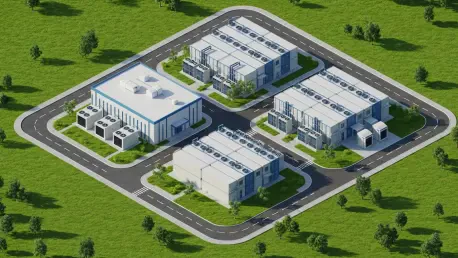
In just the first quarter of 2026, we saw at least 20 projects representing nearly $42 billion in investment get canceled, largely due to permitting hurdles and public pushback. When you use modular designs, like our “power pod” architecture, you gain a level of site flexibility that traditional concrete shells simply cannot offer. These pods can sit outside the main facility or on internal skids, making it easier to adapt to land constraints or strict local building codes. Beyond the physical footprint, building in a factory mitigates the risk of the finite pool of skilled labor, as you aren’t fighting for every electrician and pipefitter in a hyper-competitive local market. It takes the pressure off the local grid and workforce, making a project much more palatable to stakeholders and regulators alike.
Given the historical success of modular solutions in Europe, why are we seeing such a significant surge in adoption within the American market right now?
European developers were forced to innovate years ago because they hit the wall of high labor costs and restrictive national regulations that prevented workers from moving easily across borders. Now, the U.S. is feeling those same pinches—tight supplies of transformers, power generation equipment, and a genuine scarcity of suitable land. Modularity has transitioned from an alternative method to the de facto standard for any large-scale installation because it offers a level of consistency that on-site labor can’t always replicate under tight deadlines. It provides a safety net for developers who are terrified of their projects becoming obsolete before they even open their doors. There is a palpable sense of urgency now to replicate that European efficiency to keep up with the sheer volume of data demand.
Could you describe the practical advantages of moving critical infrastructure, like power and cooling, into external skids or pods rather than embedding them within the traditional concrete shell?
The biggest mistake you can make in this industry is pouring your future into concrete. Once you’ve laid electrical conduit in a concrete floor, any major change becomes an expensive nightmare of jackhammers and downtime. By placing power and cooling hardware in modular buildings or on skids, you create a plug-and-play environment that can be reconfigured as the technology evolves. This is vital when you consider that the cutting-edge chips of today might be outdated in just two years. We are currently working with partners like NVIDIA to ensure these modular designs are ready for the 800-volt, direct-current power architectures that will be required for next-gen server racks as early as next year.
As AI hardware cycles shrink so rapidly, how does modularity ensure that a facility built today won’t be obsolete by the time the next generation of chips arrives?
While the headlines are dominated by massive AI training clusters, roughly 80% of the facilities being built for the foreseeable future are actually lower-powered designs intended for conventional CPU chips. The beauty of a modular setup is that if an owner decides to pivot from these standard designs to high-performance AI racks, the infrastructure is already built to be upgraded. Those racks themselves are built modularly, allowing for a seamless transition to more intensive cooling and power needs without gutting the entire building. It’s about building a living, breathing facility that can scale up to those 800-volt requirements rather than a static monument to yesterday’s technology. This flexibility gives investors the confidence that their multi-million dollar assets will remain relevant for decades, not just months.
What is your forecast for the data center construction industry?
I see the industry moving toward a “productized” model of construction where the majority of a data center’s vital organs are manufactured and tested miles away from the actual site. As power demands skyrocket and the race for AI supremacy accelerates, the traditional, slow-moving construction methods will become a liability that few can afford. We will likely see a standardized global supply chain for these modular components, allowing developers to deploy capacity in months rather than years. The future is not just about building bigger, but building smarter and more adaptively to handle the relentless pace of silicon innovation.