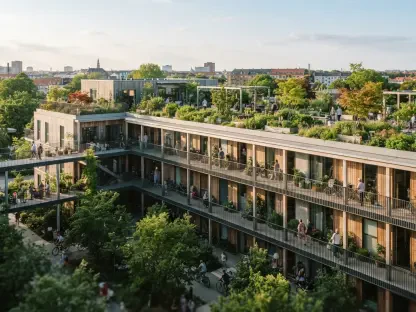

The shift toward high-density urban living reaches a new milestone as the Malago Road project officially moves into its full construction phase, promising to reshape Bristol’s residential landscape. This development is not merely a building project; it is a calculated response to the persistent housing shortage facing one of the United Kingdom’s most prominent academic hubs. By focusing on the Temple Quarter, developers are capitalizing on a region ripe for regeneration, ensuring that the city’s infrastructure keeps pace with its global reputation for excellence in higher education.
Addressing the Bristol Housing Crisis and Historical Context
Bristol’s housing market has historically struggled to balance the needs of its permanent residents with a rapidly growing student population. For years, the reliance on traditional residential conversions led to neighborhood friction and a scarcity of family homes, necessitating a strategic shift toward Purpose-Built Student Accommodation (PBSA). This transition reflects a broader industry trend where professionalized, managed living spaces replace informal housing arrangements to provide a more sustainable urban ecosystem.
The redevelopment of the Malago Road site, a former brownfield location, signifies a move toward densification and the revitalization of underutilized industrial land. These plots, once overlooked, are now viewed as essential assets for meeting modern residential demands. Understanding this background is vital for recognizing the project’s role in transforming Bristol’s industrial past into a functional, modern future that prioritizes efficient land use and community integration.
Strategic Execution and the Regulatory Pathway to Success
Navigating Regulatory Milestones and Design Innovation
Securing Gateway 2 approval represents a pivotal moment for the Malago Road scheme, signaling that the project has met every rigorous safety and planning standard required for large-scale execution. This clearance allows the joint venture between Watkin Jones and Maslow Capital to move forward with a 484-bed facility designed to accommodate a diverse student demographic. By offering a mix of studio apartments and shared rooms, the project addresses the varied financial and social preferences of modern learners.
Leveraging Infrastructure for Academic Connectivity
Location remains the primary driver of value in the PBSA sector, and this development is positioned to maximize connectivity. Situated just steps from Bedminster station and a short walk from the University of Bristol’s new Temple Quarter campus, the site adheres to the principles of transit-oriented development. Such proximity reduces the environmental impact of student commutes while ensuring high occupancy rates through sheer convenience and integration with the local academic infrastructure.
Strengthening Institutional Growth Through Nomination Agreements
A critical component of this market strategy is the use of nomination agreements with local universities. By guaranteeing a set number of beds for university students, developers de-risk the investment while providing the institution with predictable housing capacity. This collaborative model demonstrates how private capital can effectively function as an extension of public educational infrastructure, fostering a stable environment for both investors and the academic community.
Emerging Trends in the Regional PBSA Market
The progression of this project highlights a significant capital flight from London toward regional powerhouses where the demand-supply imbalance offers more attractive yields. Investors are increasingly drawn to cities like Bristol, where limited land availability and high student retention rates create a resilient asset class. Looking toward 2028, the market expects a continued emphasis on environmental sustainability and smart-building technologies to meet the expectations of a more eco-conscious generation.
Actionable Insights for Developers and Urban Planners
For stakeholders, the Malago Road project underscores the necessity of engaging with brownfield sites to secure planning approvals in dense urban cores. Developers must prioritize mixed-product offerings to remain competitive across different price points. Furthermore, early alignment with educational institutions through formal agreements remains the most effective tool for ensuring long-term financial stability and mitigating the risks of market volatility in a changing economic climate.
A New Benchmark for Bristol’s Academic Future
The commencement of construction at Malago Road proved that strategic partnerships and regulatory diligence could unlock the potential of even the most challenging urban sites. By 2028, this hub provided the necessary capacity to support Bristol’s status as a premier destination for global talent. Ultimately, the project successfully balanced commercial interests with the pressing need for sustainable urban regeneration.