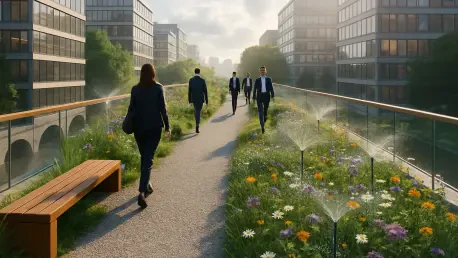

The concrete and masonry relics of the industrial revolution are often viewed as obstacles to modern development, yet the city of Leeds has demonstrated that these aging structures can serve as the foundation for a sustainable urban future. By reimagining the historic Monkbridge Viaduct, local planners and engineers have successfully turned a once-derelict railway line into a 300-meter-long linear garden that serves as a vital green transit corridor for the community. This transformation represents more than just a renovation; it is a profound shift in how metropolitan areas integrate natural ecosystems with historical preservation. As cities worldwide grapple with the dual challenges of climate change and rapid urbanization, the conversion of this 19th-century viaduct offers a compelling blueprint for reclaiming “dead zones” and fostering meaningful public engagement within the heart of an active urban center.
From Industrial Artery to Urban Decay
A Legacy of Rail and Ruin
Constructed in the 1840s, the Monkbridge Viaduct was once a centerpiece of the British railway expansion, facilitating the movement of goods and people that fueled the region’s economic engine. For over a century, the rhythmic thrum of steam engines across its elevated tracks was a symbol of Leeds’ industrial prowess, providing a direct link to the central transport hubs of the era. However, the march of technological progress eventually left the structure behind. When the Leeds Central Railway Station closed its doors in the 1960s, the viaduct lost its primary purpose overnight. Without the constant maintenance required for active rail lines, the masonry began to weather, and the tracks that once hummed with activity fell silent, leaving a massive stone skeleton looming over the city.
This silence lasted for more than four decades, during which the viaduct transitioned from a vital asset to a symbol of urban stagnation. The structure became a physical barrier that effectively severed the Leeds-Liverpool Canal from the burgeoning West End, creating a disconnected “no-man’s land” that hindered local connectivity. Neglect led to the encroachment of invasive weeds and the slow deterioration of the Victorian brickwork, making the site an eyesore in a district otherwise undergoing significant modern development. The viaduct’s dormancy reflected a broader challenge faced by post-industrial cities: the difficulty of repurposing massive, specialized infrastructure that no longer fits the needs of a contemporary workforce or residential population. Reclaiming this space required a total shift in perspective, moving away from viewing the site as a liability and recognizing its potential as an elevated sanctuary.
The Turning Point for Modern Leeds
The decision to revitalize the Monkbridge Viaduct was driven by a growing recognition that high-quality public space is essential for the health and economic viability of modern cities. By the mid-2020s, the area surrounding the viaduct had seen a surge in residential and commercial investment, yet it lacked the communal “green lungs” necessary to support such a dense population. This realization sparked a collaborative effort to transform the derelict rail line into a functional garden that could bridge the gap between historical heritage and 21st-century environmental goals. The project was not merely about aesthetics; it was designed to increase the “permeability” of the city, making it easier and more pleasant for pedestrians to navigate between different neighborhoods while enjoying a respite from the surrounding traffic and noise.
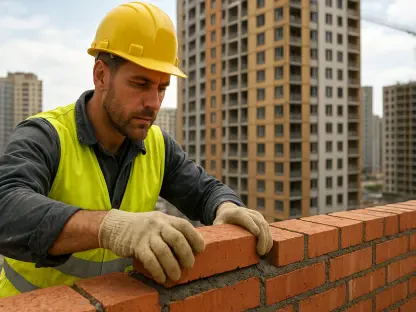
Reclaiming a site that had been written off for nearly half a century involved navigating complex legal and structural hurdles. Engineers had to assess the decades of decay to determine if the 1840s masonry could support the significant weight of modern landscaping materials, including thousands of tonnes of soil and specialized irrigation systems. This phase of the project required a delicate balance between preserving the authentic character of the Victorian engineering and introducing the technical upgrades needed for a safe, public-facing park. The successful transition from a “dead zone” to an active construction site marked the end of the viaduct’s period of ruin, signaling a new chapter where industrial history serves as a stage for ecological restoration and community life.
Mastering the Challenges of Elevated Landscaping
Logistical Synergy and Structural Care
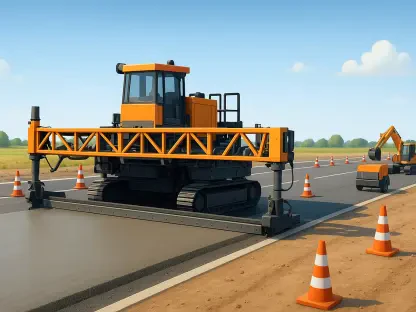
Transforming an elevated railway into a lush garden is a logistical feat that requires surgical precision, particularly when working with a structure built nearly 200 years ago. The 16-month development phase was characterized by an intense collaboration between the main contractor, Galliford Try, and specialized firms like Gavin Jones Ltd and Green-tech. Unlike ground-level parks where heavy machinery has ample room to maneuver, the viaduct presented a narrow, high-altitude workspace with limited access points. Every piece of equipment and every cubic meter of soil had to be carefully managed to avoid overloading specific sections of the historic masonry. This required a constant feedback loop between structural engineers and the landscaping team to ensure that the distribution of weight remained within safe limits throughout the installation process.
The success of the project hinged on the “spot-on” timing of material deliveries, as there was no space on the viaduct for long-term storage of bulk supplies. Contractors utilized a combination of full loads and specialized bulk bags to move materials onto the elevated platform, often coordinating deliveries to the minute to prevent congestion in the surrounding city streets. This logistical choreography ensured that the 1840s brickwork was never compromised by excessive vibration or uneven weight distribution. Furthermore, the installation of modern drainage systems within the old rail bed was critical to prevent water from seeping into the core of the stone structure, which could cause catastrophic damage over time. By merging old-world masonry with new-world engineering, the team created a stable foundation for the greenery that feels like a natural extension of the original architecture.
Engineering a Sustainable Green Canopy
The technical demands of the project extended far beyond simple planting, as the viaduct is essentially a 300-meter-long roof garden exposed to the elements. High-altitude environments are often harsher than ground-level sites, with increased wind speeds and higher rates of evaporation that can quickly desiccate plants. To combat these challenges, the team implemented a sophisticated irrigation network featuring specialized rings designed to deliver water directly to the root zones of the trees and shrubs. This targeted approach minimizes water waste and ensures that the vegetation remains hydrated even during the increasingly frequent dry spells seen in the current climate. By prioritizing water efficiency, the project aligns with broader sustainability goals while reducing the long-term maintenance burden on the city.
In addition to water management, the selection of materials for the garden’s “floor” was paramount. Because the viaduct cannot support the same depth of soil as a natural forest floor, the designers had to use high-performance substrates that provide maximum nutrient density in a relatively thin layer. This scientific approach to landscaping ensures that the garden is not just a temporary installation but a self-sustaining ecosystem capable of thriving for decades. The integration of these technical solutions demonstrates that urban greening is as much a matter of engineering as it is of horticulture. The result is a robust, resilient landscape that offers all the benefits of a traditional park while existing in a space that was once deemed entirely unsuitable for life.
Science-Driven Greenery and Biodiversity
Specialized Materials and Ecological Design
The foundation of the Monkbridge Viaduct Garden lies in the 2,000 tonnes of scientifically specified topsoil that were hoisted onto the structure to create a fertile environment for growth. This topsoil, certified to rigorous British Standards, was chosen for its specific chemical balance and physical structure, ensuring it would not compact too tightly or leach essential nutrients over time. In an elevated environment, the soil must perform multiple roles: it must provide structural support for tree roots, retain moisture effectively, and facilitate drainage to prevent the structure from becoming waterlogged. By utilizing high-quality, contaminant-free substrates, the project team ensured that the diverse plant palette would have the best possible start in its new, artificial home.
The ecological design of the garden was carefully curated to maximize biodiversity within a relatively small footprint. Rather than opting for a uniform, manicured lawn, the designers introduced a meadow-like environment using a specialized mix of grasses and wildflowers. This 80/20 blend was specifically formulated to be low-maintenance while providing a rich habitat for local pollinators, including bees and butterflies that often struggle to find food sources in dense urban centers. The inclusion of hardy shrubs and vertical interest from strategically placed trees helps to break up the wind and provide shade, creating a microclimate that is significantly cooler than the surrounding asphalt streets. This intentional focus on “functional” greenery helps to mitigate the urban heat island effect, making the viaduct a vital tool for climate adaptation in the heart of Leeds.
Fostering a Resilient Urban Ecosystem
Beyond the immediate aesthetic appeal, the planting strategy on the viaduct was designed to evolve and mature over time, creating a resilient ecosystem that requires minimal intervention. The use of nutrient-rich compost and advanced soil additives allowed the initial vegetation to establish deep, healthy root systems quickly, which is essential for surviving the fluctuations of a city environment. This long-term perspective is a hallmark of modern landscape architecture, where the goal is to create “living infrastructure” that provides ongoing ecosystem services. The garden now serves as a high-altitude corridor for wildlife, connecting isolated patches of green space throughout the city and allowing for the movement of species that would otherwise be blocked by the urban grid.
The success of this ecological intervention has also had a measurable impact on the well-being of the local human population. Studies have consistently shown that access to biodiverse green spaces reduces stress and improves mental health, particularly in areas where residents lack private gardens. By bringing nature to an elevated platform, the project provides a unique perspective on the city, offering a sense of tranquility and a “slow-speed” alternative to the frantic pace of the streets below. The garden is not just a collection of plants; it is a carefully engineered environment that balances the needs of the local fauna with the recreational requirements of a modern metropolitan community. This dual-purpose design ensures that the Monkbridge Viaduct remains a relevant and cherished asset for generations to come.
Shaping the Future of Urban Connectivity
The Global Trend of Linear Parks
The transformation of the Monkbridge Viaduct is part of a significant global movement toward the creation of “linear parks,” which prioritize the adaptive reuse of existing infrastructure over demolition and new construction. This trend, popularized by high-profile projects like New York City’s High Line and Manchester’s Castlefield Viaduct, recognizes that abandoned transit corridors are uniquely suited to become continuous green arteries through the urban core. By following this model, Leeds has effectively converted a historical barrier into a bridge, linking the Leeds-Liverpool Canal with the West End in a way that encourages active travel. These parks function as more than just leisure spaces; they are critical pieces of transit infrastructure that promote walking and cycling, helping to reduce the city’s overall carbon footprint.
The success of the Monkbridge project highlights the potential for other cities to look at their own industrial ruins with a fresh eye. As urban land becomes increasingly scarce and expensive, the ability to “upcycle” existing structures provides a cost-effective and environmentally friendly way to expand public space. This approach also preserves the historical narrative of the city, keeping the physical evidence of its industrial past alive while giving it a new, contemporary meaning. By integrating these “green lungs” into the urban fabric, planners can create more porous, walkable cities that prioritize the human experience over vehicular flow. The Monkbridge Viaduct now stands as a prime example of how linear parks can solve multiple urban challenges simultaneously, from historic preservation to climate resilience and public health.
Actionable Strategies for Integrated Urban Design
The completion of the Monkbridge Viaduct Garden provides a clear set of actionable strategies for future urban redevelopment projects. First, the project underscores the importance of multi-disciplinary collaboration; the integration of structural engineering, soil science, and landscape architecture was essential to overcome the unique physical constraints of the site. Future projects should prioritize this holistic approach from the earliest planning stages to ensure that aesthetic goals are grounded in technical reality. Second, the use of scientifically specified, high-performance materials is non-negotiable for elevated gardens. Investing in certified topsoils and advanced irrigation systems significantly reduces the risk of plant failure and structural damage, ensuring that the initial investment yields long-term benefits for the community.
Moving forward, cities should view their aging infrastructure not as a series of isolated problems, but as an opportunity to build a more connected and resilient metropolitan network. The Monkbridge Viaduct demonstrates that even the most decayed “dead zones” can be revitalized into vibrant social and ecological hubs when approached with creativity and technical rigor. As urban populations continue to grow, the demand for these integrated green spaces will only increase. By applying the lessons learned in Leeds—such as the value of historical upcycling and the necessity of science-driven ecological design—other municipalities can begin to transform their own industrial legacies into flourishing sanctuaries that enhance both the environment and the local economy. The final result is a city that is not only more beautiful but also more functional and better prepared for the challenges of the future.