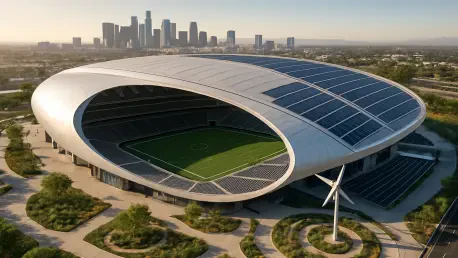

The massive concrete structures that once symbolized urban sprawl and unchecked resource consumption are rapidly evolving into sophisticated landmarks of environmental responsibility and high-tech efficiency. This transformation marks a significant departure from the historical view of sports venues as inevitable energy sinks, reimagining them as central pillars of urban sustainability. As the demand for greener public spaces grows, stadium owners are adopting rigorous benchmarks to prove that high-traffic entertainment hubs can operate in harmony with ecological goals.
This article explores the rise of the Leadership in Energy and Environmental Design program within the realm of professional and municipal sports. It addresses how these complex facilities achieve high performance through architectural innovation, renewable technology, and circular resource management. Readers will gain insight into the specific strategies used by elite venues to reduce their carbon footprints while maintaining the high standards required for hosting global events.
Key Questions or Key Topics Section
How Does LEED Certification Redefine the Footprint of Modern Arenas?
Large-scale sports complexes have traditionally been criticized for their immense water and power requirements during game days. However, the U.S. Green Building Council has successfully challenged this narrative by providing a framework that measures and rewards efficiency across various operational categories. As of June 2026, the organization has conferred LEED status on 31 stadiums across North America, signaling a industry-wide shift toward measurable environmental stewardship.
These certified facilities serve as civic models that go beyond simple energy savings. By achieving specific point thresholds in categories like water efficiency, indoor environmental quality, and sustainable sites, these venues prove that massive crowds do not necessitate a massive ecological toll. The integration of these standards helps city planners and sports franchises align their recreational goals with broader climate action plans, turning the local stadium into a source of community pride for more than just the home team.
What Technological Innovations Power the High-Efficiency Stadium Trend?
Modern engineering allows stadiums to produce their own power and manage resources with surgical precision. MetLife Stadium in New Jersey, for example, achieved Gold LEED status by implementing a comprehensive energy strategy that includes on-site solar generation and advanced LED lighting paired with motion sensors. These upgrades significantly lower the peak demand placed on the local power grid during evening events. Furthermore, the use of hybrid-electric vehicles for stadium operations reduces the localized emissions typically associated with venue maintenance.
In California, Levi’s Stadium pushed these concepts further by becoming the first to earn Gold certification in 2014, utilizing over 1,100 solar panels and high-efficiency plumbing. A notable feature of this venue is its 7,500-square-foot rooftop garden known as Faithful Farms. This space does more than just provide insulation; it produces dozens of crop varieties used for concessions and local food banks. This type of circular resource management shows that every square foot of a stadium can be utilized to benefit both the environment and the local community.
Is It Possible for Legacy Stadiums to Reach Platinum Environmental Status?
The perception that only new, purpose-built arenas can be green is being debunked by impressive retrofitting projects. Mexico City’s Estadio Banorte provides a striking example, where a 60-year-old facility underwent a $159 million renovation to achieve the prestigious LEED Platinum status. By replacing outdated mechanical systems with high-performing HVAC infrastructure, the venue achieved an energy use intensity far below the industry median for its size and age.
Other historical venues use architectural adaptations to leverage their natural surroundings for efficiency. Vancouver’s BC Place utilizes the largest retractable roof of its kind to enable natural ventilation, reducing the reliance on artificial cooling systems. Additionally, the strategic use of carbon credits to offset thousands of tons of greenhouse gases allows these older structures to compete with the sustainability metrics of modern builds. These efforts demonstrate that historical significance and environmental performance are not mutually exclusive.
Summary or Recap
The current landscape of North American sports infrastructure reflects a unified move toward sustainable management. With 31 certified stadiums as of mid-2026, the industry is proving that energy efficiency is achievable through a blend of high-tech upgrades and unconventional land use. The data reveals that these venues are no longer just passive consumers of resources but are active participants in the global effort to reduce carbon footprints.
By focusing on renewable energy and holistic waste management, stadium operators are setting new standards for the construction and renovation of high-capacity buildings. These landmarks show that architectural innovation, such as retractable roofs for natural airflow and rooftop farming, can coexist with the logistical demands of professional sports. This progress provides a clear roadmap for future developments in the public and private sectors.
Conclusion or Final Thoughts
The transition toward green sports venues demonstrated that the most complex facilities in our cities could lead the way in resource conservation. These projects showed how targeted investments in technology and sustainable design transformed the environmental legacy of professional athletics. The industry successfully proved that high-performing infrastructure benefited both the business operations and the local ecosystems they inhabited.
Moving forward, the lessons learned from these 31 certified stadiums should encourage municipal leaders to apply similar standards to other large-scale public works. This evolution highlighted the importance of viewing sustainability not as a hurdle, but as a catalyst for long-term operational resilience. As more venues aim for platinum status, the synergy between entertainment and ecology will likely become the expected norm for every major metropolitan area.