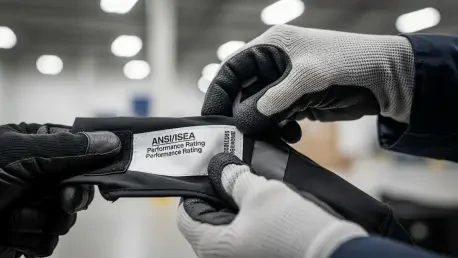

A construction worker entering a high-risk job site today might believe that every piece of equipment they wear offers the highest possible level of protection simply because it bears a regulatory approval stamp. This assumption, while understandable, often masks a dangerous reality where personal protective equipment (PPE) meets legal minimums but fails to incorporate modern safety advancements developed over the last several years. The Occupational Safety and Health Administration (OSHA) serves as the primary enforcement body for workplace safety, yet its mandates are frequently rooted in decades-old benchmarks that have been superseded by more rigorous industry standards. As technology evolves and the understanding of physical mechanics and injury prevention deepens, the gap between what is legally required and what is truly effective continues to widen. Organizations that prioritize the health of a workforce must recognize that compliance is a starting point, not the ultimate goal, in creating a truly safe environment for every team member.
1. The Foundation: Understanding the Regulatory Lag and Performance Standards
Regulatory compliance functions as the mandatory baseline for job site safety, providing a necessary framework that prevents the most egregious violations of worker welfare. However, these standards often fail to reflect the latest safety advancements because the process for updating federal regulations is notoriously slow and bureaucratic. By the time a new OSHA rule is finalized, the industry may have already moved two or three generations ahead in terms of material science and design ergonomics. This regulatory lag creates a scenario where a contractor can be fully compliant with the law while still providing gear that is technically obsolete. This discrepancy is particularly evident in high-risk sectors like construction and heavy manufacturing, where the pace of innovation in protective textiles and impact-resistant materials outstrips the ability of government agencies to revise their formal documentation and enforcement protocols on a consistent or timely basis.
Organizations such as the American National Standards Institute (ANSI) and the International Safety Equipment Association (ISEA) are the primary drivers of performance standards. Unlike federal regulations, which may remain stagnant for years, these organizations typically update their performance standards roughly every five years to reflect current technological capabilities. These updates are the result of extensive testing and collaboration between manufacturers, safety professionals, and researchers who seek to improve how gear performs in the field. By reviewing these standards periodically, these groups ensure that testing methods remain relevant to the hazards found in modern work environments. When a standard is updated, it often introduces new classification levels or more rigorous stress tests that provide a clearer picture of how a product will hold up under extreme conditions. Relying on these current versions allows companies to access the highest level of protection available.
2. The Gaps: Identifying Common Areas Where Protection Falls Behind
Common areas where protection gaps exist frequently include head, eye, and face protection, where older benchmarks often fall short of modern requirements. Modern safety helmets have transitioned away from the traditional hard hat design to focus on multi-directional impact protection and better integration with other gear, such as hearing protection and communication systems. While OSHA might still point to older benchmarks for lateral impact, the latest industry standards provide much more detailed criteria for rotational force mitigation, which is a major cause of concussions. Similarly, current standards for eye and face protection offer better labeling systems that help workers quickly identify specific protection levels against chemicals, high-velocity debris, or radiant heat. These newer labels eliminate the guesswork that often occurred with older equipment, ensuring that a worker is never under-protected because they misidentified the purpose of their safety goggles.
First aid kits represent another critical area where the gap between old regulations and modern standards is particularly wide and potentially life-threatening. Newer standards include better trauma care supplies, such as high-quality tourniquets and hemostatic dressings, which are essential for managing severe bleeding on a job site. Older regulations often do not mandate these advanced supplies, sticking instead to basic bandages and antiseptics that are insufficient for serious industrial accidents. Furthermore, updated requirements for remote work sites now specify the types of equipment needed when emergency services are more than a few minutes away, a consideration that older federal rules often overlook. By adopting the most current standards for medical supplies, contractors ensure that their teams have the tools necessary to stabilize an injured worker until professional medical help arrives. This proactive approach to first aid reflects a commitment to the reality of the work environment.
3. The Action Plan: Implementing Proactive Measures for Better Safety
To bridge the gap between compliance and true protection, contractors followed a series of proactive measures beginning with a thorough inspection of current safety gear. This involved identifying which version of safety standards each piece of equipment met by reviewing internal labels and manufacturer data sheets. By comparing these labels to the most recent industry updates, safety managers could pinpoint exactly where their inventories fell short of modern best practices. Following this, organizations needed to evaluate procurement specifications and contract wording to move away from vague terms. Instead of using generic ANSI-compliant language, bid documents were updated to require specific, modern editions of safety standards. Furthermore, it became necessary to interview suppliers regarding equipment standards directly. Vendors were asked whether their products met the absolute latest industry benchmarks or merely satisfied the minimum requirements enforced by OSHA for basic legality.
Education and strategic placement formed the final pillars of this proactive safety strategy for forward-thinking contractors. Safety education programs were updated to teach employees how to read and interpret complex PPE labels, empowering them to select the correct gear for specific tasks independently. When workers understood the difference between basic impact protection and multi-directional safety features, they became active participants in their own well-being. Parallel to this educational push, firms worked to optimize the placement of emergency medical supplies across job sites. It was no longer enough for first aid kits to be merely compliant; they had to be stocked with modern trauma care supplies and located where crews could reach them immediately during a crisis. These efforts ensured that the safety infrastructure was as responsive as it was protective, creating a comprehensive safety net that exceeded the stagnant requirements of federal mandates for all employees.
4. The Goal: Achieving Real Protection and a Sustainable Safety Culture
Achieving real protection on the job site required a shift in perspective where safety was no longer viewed as a series of boxes to be checked for a site inspector. Instead, successful organizations aligned their equipment and protocols with the actual risks present in their specific environments, regardless of what the federal minimums demanded. This transition meant that buying decisions were driven by performance data and the latest research rather than just price points or regulatory compliance. By choosing to prioritize the most current safety standards, companies were able to offer their employees a higher level of consistency in their protection. This focus on modern excellence served to foster a stronger safety culture, as workers recognized that their well-being was valued above the basic requirements of the law. The result was a more resilient workforce that felt confident in the gear they used every day, knowing it was designed for the hazards they actually faced on the ground.
The process of closing the safety gap led to significant improvements in long-term injury rates and overall operational efficiency for those who took it seriously. By moving beyond the limitations of regulatory lag, contractors demonstrated that proactive leadership could create safer work environments without waiting for a change in government policy. The insights gained from modern testing methods allowed for a more nuanced understanding of how to prevent both acute accidents and chronic health issues related to equipment use. Looking ahead, the industry moved toward a model where safety gear was integrated into a larger ecosystem of digital monitoring and personalized protection levels. This transition proved that the most effective way to manage risk was to stay informed and stay ahead of the curve. Ultimately, the decision to invest in current standards instead of just compliant ones provided a foundation for a safer and more professional industry that valued human life as its most precious asset.