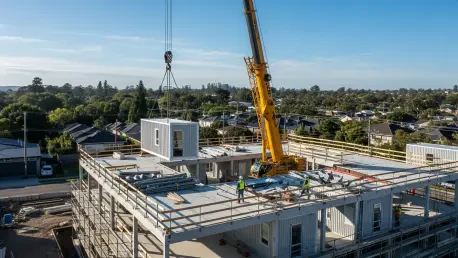

The rapid transformation of suburban hubs like Upper Mount Gravatt into high-density residential corridors has necessitated a fundamental shift in how developers approach the physical act of building. As the demand for housing continues to outpace traditional construction timelines, the local landscape is witnessing a surge in modular design applications that promise to mitigate the common headaches of urban sprawl. Residents and business owners often face months of road closures and noise pollution when a new complex breaks ground, but the modular method shifts much of this burden away from the community. By moving the majority of the assembly process into a controlled factory setting, the industry is effectively decoupling progress from local disruption. This shift is not merely about convenience; it represents a sophisticated response to the geographical and economic pressures of the region. As the skyline begins to change, understanding the nuances of this technology becomes essential for those living in the area.
Engineering Efficiency: Suburban Contexts
Precision Manufacturing: The Factory-First Approach
The shift toward off-site fabrication allows for a level of precision that traditional on-site methods struggle to match in the open air. In a climate-controlled environment, builders utilize advanced robotics and automated assembly lines to create structural modules with millimetric accuracy. This systematic approach ensures that every component, from the internal wiring to the insulation layers, meets rigorous quality standards before it ever reaches its final destination. Such consistency is particularly valuable in Upper Mount Gravatt, where the topography and soil conditions can sometimes present challenges for conventional foundations.
Moreover, the parallel nature of modular construction significantly compresses the overall project timeline, allowing site preparation to occur simultaneously with the building’s creation. While excavators are clearing land near Logan Road, the actual rooms of the future apartments are being finished miles away. This synchronization can reduce total construction time by up to fifty percent, allowing residents to move into new homes much sooner. By the time the modules arrive on-site, the assembly process resembles a large-scale puzzle, where units are craned into place in a matter of days rather than months.
Sustainability Metrics: Minimizing Environmental Footprints
Sustainability has become a primary driver for modular adoption as the community becomes more conscious of the environmental costs of urban expansion. Traditional construction is notoriously wasteful, often resulting in significant amounts of leftover timber and concrete that end up in landfills. In contrast, the factory setting allows for optimized material usage and comprehensive recycling programs that are difficult to implement on a chaotic building site. By calculating exact requirements for a series of identical modules, developers can minimize waste to almost negligible levels, benefiting both the environment and the project’s bottom line.
Beyond material efficiency, the reduction in on-site activity translates to a smaller carbon footprint regarding logistics. Instead of hundreds of daily truck deliveries for individual supplies, modular projects require a concentrated number of shipments to move the finished sections. This reduction in traffic is a significant relief for the local road network, which already manages heavy volumes. The result is a cleaner, quieter development process that respects the surrounding ecosystem and the daily lives of established residents, making modular design a more neighborly alternative to traditional builds.
Community Integration: Architectural Diversity
Design Versatility: Moving Beyond Standardized Boxes
A common misconception about modular design is that it results in monotonous structures that lack character or aesthetic appeal. Modern architectural software now allows for incredible variety in exterior finishes and internal layouts, ensuring that new developments in Upper Mount Gravatt can reflect local styles. From sleek glass facades to traditional cladding, these buildings are indistinguishable from their site-built counterparts once the finishing touches are applied. This flexibility allows architects to create bespoke solutions that cater to the specific demographics of the area, including students and retirees.
The adaptability of modular units also extends to the internal functionality of the building, where spaces can be easily reconfigured as needs evolve. High-quality acoustic materials and advanced structural engineering provide superior soundproofing between units, addressing frequent complaints in high-density living. By prioritizing user experience through high-end finishes and thoughtful layouts, developers are proving that speed does not have to come at the expense of luxury or comfort. Consequently, these structures are becoming a preferred choice for those who value modern design and high-performance living environments.
Strategic Planning: Economic Resilience
The adoption of modular strategies served as a critical turning point for the urban development of the region, providing a blueprint for sustainable growth. It became clear that the integration of high-tech manufacturing with traditional urban planning was the most effective way to address the housing shortage. Stakeholders recognized that by embracing these methods, they could deliver high-quality infrastructure without compromising the quality of life for existing citizens. Looking ahead, the focus shifted toward refining these systems to ensure they remained adaptable to changing environmental and social demands.
Ultimately, the local government supported modular initiatives by streamlining the approval process for prefabricated structures. This move encouraged more developers to invest in the technology, leading to a more diversified housing market. The successful implementation of these projects demonstrated that innovation was key to urban longevity. To maintain this momentum, future urban planners should prioritize the zoning of mixed-use modular developments. Investing in local fabrication facilities could also reduce transportation costs and provide new high-tech manufacturing jobs for the growing population in the district.