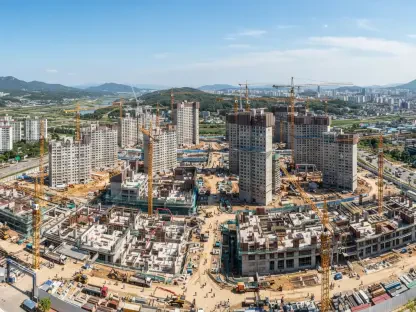

Therelentlessmigrationofglobalpopulationstowardmetropolitancentershasreachedacriticalzenithin2026,placinganunprecedentedstrainontheaginginfrastructureofworldwidespreadcities. This physical pressure has necessitated a fundamental shift in how urban environments are designed and managed, moving away from the rigid structures of the past toward a fluid, responsive model. The primary driver of this evolution is the Internet of Things, which embeds digital connectivity directly into the physical fabric of the metropolitan landscape. By turning roads, utility grids, and public spaces into data-generating assets, municipal leaders are now capable of moving away from reactive fixes toward a proactive, data-driven governance model that anticipates the needs of its residents before they even manifest. This evolution relies on a sophisticated, multi-layered architecture that functions much like a biological nervous system, where a vast array of sensors acts as the sensory organs of the city. These devices monitor everything from the subtle vibrations of bridges to the concentration of air particulates in dense commercial districts. This data is then transmitted through a variety of communication networks, ranging from low-power systems for simple tasks like water metering to high-bandwidth 5G for complex applications like real-time video surveillance and autonomous traffic management.
Enhancement: Reshaping Mobility and Resource Management
Smart mobility represents perhaps the most visible area where connected technology is making an immediate impact on the daily lives of urban dwellers. By leveraging real-time traffic sensors and connected infrastructure, cities can optimize signal timings across vast grids to reduce vehicle idling and significantly cut down on carbon emissions. This is not merely about traffic flow; it is about the integration of multiple transportation modes into a single, cohesive ecosystem. Smart parking systems now allow drivers to locate available spots via mobile applications, which effectively eliminates the cruising time that traditionally accounted for nearly thirty percent of downtown congestion. Furthermore, the integration of public transit with these data streams ensures that commuters receive accurate, second-by-second arrival times, while transit authorities can deploy demand-responsive shuttle services to underserved neighborhoods. This shift has turned the act of moving through a city from a source of frustration into a streamlined experience, as the infrastructure itself adapts to the shifting volume of human activity throughout the day and night.
Resource management is simultaneously undergoing a revolution through the implementation of smart grids and highly connected utility systems. These systems allow for a sophisticated two-way dialogue between energy providers and consumers, facilitating the seamless integration of decentralized renewable energy sources like rooftop solar and localized wind turbines. In the realm of sanitation, waste management has been transformed by the deployment of smart bins equipped with ultrasonic fill-level sensors. These devices ensure that collection trucks only stop at bins that are actually full, which optimizes routes and reduces the operational costs and fuel consumption of municipal departments by a substantial margin. This data-driven approach extends to water management as well, where acoustic sensors can detect microscopic leaks in subterranean pipes before they lead to catastrophic bursts. By identifying these inefficiencies in real time, cities are not only saving millions of dollars in lost resources but are also significantly reducing their overall environmental footprint, making the urban center a more sustainable habitat for future generations.
Strategic Governance: Security and Collaborative Ecosystems
Successfully deploying these high-tech solutions requires a complex and often delicate ecosystem of hardware manufacturers, software vendors, and telecommunications providers. Because the capital expenditure required for city-wide upgrades is so high, many municipalities have turned to public-private partnerships to share the financial risk and operational burden of these massive projects. While these collaborations are essential for fostering rapid innovation, they also introduce significant questions regarding the ownership of the vast amounts of data generated by public infrastructure. Negotiating the balance between private profit and public benefit has become a central task for modern city planners, as they must ensure that the insights gleaned from citizen data are used to improve public services rather than simply for commercial exploitation. The governance of these digital assets requires a transparent framework that outlines how data is collected, who has access to it, and how it is utilized to enhance the equitable distribution of resources across various socioeconomic sectors.
Technical and social hurdles must be cleared with precision before the full potential of these connected systems can be realized across the board. Interoperability remains a primary concern for many municipal IT departments, as many cities currently operate as a patchwork of proprietary systems that cannot communicate with one another effectively. Furthermore, as the number of connected devices grows into the millions, the potential attack surface for cybercriminals and hostile actors increases exponentially. This reality has made it vital for planners to bake security and data anonymization into the design of every system from its inception to maintain public trust. Protecting the privacy of residents while collecting enough data to run the city efficiently is a tightrope walk that requires robust encryption and clear regulatory oversight. Without these safeguards, the smart city risks becoming a tool for surveillance rather than a platform for empowerment, making the social contract between the city and its residents more important than ever in this increasingly digitized world.
Innovation: The Rise of Virtual Replicas and Hyper-Connectivity
The future of urban living is currently being shaped by the convergence of connected sensors with Artificial Intelligence and the sophisticated implementation of Digital Twin technology. A Digital Twin serves as a hyper-accurate virtual replica of the physical city, allowing planners to run complex simulations to see how a new bus route, a change in zoning laws, or a major construction project will affect the surrounding environment before any physical changes are actually made. This predictive capability ensures that urban development is both efficient and sustainable, as it allows for the testing of “what-if” scenarios in a risk-free digital space. By feeding real-time data from the physical world into these virtual models, city officials can witness the impact of weather patterns on energy consumption or the effect of a street closure on neighboring traffic arteries. This level of foresight marks a departure from the guesswork of previous decades, enabling a scientific approach to urban growth that prioritizes the long-term health of the city over short-term fixes.
As the rollout of 5G infrastructure reached its peak and the potential for 6G became a tangible reality, the capacity to support millions of devices per square mile became a cornerstone of urban design. This hyper-connectivity, paired with sensors that possessed the ability to think and act locally through Edge AI, turned cities into self-optimizing ecosystems that functioned with minimal human intervention. These advancements promised to create urban environments that were not only more efficient but also more equitable and responsive to the evolving needs of their diverse citizenries. The integration of high-speed connectivity with localized intelligence allowed for a level of service customization that was previously impossible, from adaptive street lighting that followed pedestrians to emergency response systems that pre-emptively cleared traffic paths for ambulances. Ultimately, the successful synthesis of technology and governance demonstrated that the path toward a sustainable urban future depended on the careful management of data to foster both innovation and public security.