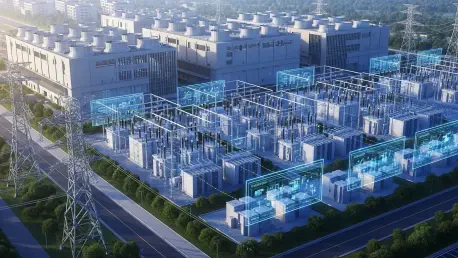

The rapid acceleration of digital infrastructure expansion and artificial intelligence integration has forced the American energy sector to abandon its longstanding reliance on static demand forecasts. This shift marks a dramatic departure from the era of predictable energy use, ushering in a period where computational capacity dictates the pace of infrastructure development. The American electric grid is currently pivoting away from a twenty-year plateau in energy consumption toward a period of rapid, unprecedented expansion that the existing regulatory framework was never designed to handle. This sudden surge is primarily fueled by the massive computational requirements of artificial intelligence and a broader industrial move toward electrification across the continent. To address these challenges, the Federal Energy Regulatory Commission (FERC) has introduced “show cause” orders aimed at streamlining the integration of massive data center loads. These regulatory changes are poised to reshape the relationship between high-tech infrastructure and the national transmission system, ensuring that the digital economy can grow without compromising the reliability of the power grid.
Transitioning from Stagnant Demand to the AI-Driven Power Surge
For nearly two decades, utilities and grid operators enjoyed a period of relative stability where annual energy growth remained flat or grew at a negligible pace. This predictability allowed for long-term planning cycles that focused more on maintenance and reliability than on massive capacity additions. However, the landscape changed abruptly as the global race for computational supremacy shifted into high gear, bringing with it a wave of data center development that has completely upended traditional load forecasting models. Grid operators now find themselves in a race to accommodate gigawatts of new demand in regions that previously saw almost no change in their power requirements for years.
Recognizing the potential for this surge to create a bottleneck for technological advancement, federal authorities directed regulators to establish modernized rules for how these large loads connect to the high-voltage system. The resulting “show cause” orders were the product of an exhaustive review process involving thousands of pages of public testimony and technical data. These directives target the major regional transmission organizations across the country, forcing them to prove that their current interconnection procedures are capable of handling the speed and scale of modern industrial growth. The focus has moved from merely reacting to demand to proactively managing the grid’s evolution in an era of digital dominance.
This period of growth is not just about the volume of energy required but also about the speed at which that energy must be delivered. Tech developers operate on timelines that are significantly shorter than the traditional decade-long cycles used by utility companies to plan and build new transmission lines. This fundamental disconnect between the digital economy’s “sprint” and the utility sector’s “marathon” has created a friction point that federal regulators are now determined to resolve. By shifting the regulatory focus toward efficiency and rapid deployment, the commission is attempting to synchronize the heartbeat of the energy sector with the rapid pulse of the technological revolution.
Breaking the Bottlenecks: A Multi-Pillar Approach to Interconnection Reform
Mandating Modern Transmission Technologies Over Traditional Grid Upgrades
Regulators are signaling a major shift in how grid capacity is identified and utilized, moving away from a traditional reliance on slow, multi-year construction projects toward the immediate deployment of Alternative Transmission Technologies (ATTs). For decades, the default response to grid congestion was to propose “steel in the ground” solutions—new towers and wires that often take years to permit and build. Under the new reforms, grid operators must now justify why they cannot use advanced power flow controls or dynamic line ratings before they resort to traditional infrastructure projects. This requirement forces a technological evolution within the utility sector, prioritizing digital and hardware efficiency to unlock hidden capacity that already exists within our current wires.
By utilizing dynamic line ratings, for example, operators can adjust the power capacity of a line in real-time based on ambient weather conditions, often finding that lines can carry significantly more power during cooler or windier periods. This technological first-look approach challenges the long-held industry assumption that physical expansion is the only answer to load growth. Instead, it prioritizes technological agility, allowing data centers to come online much sooner than they would if they had to wait for the completion of a major transmission corridor. Industry leaders recognize that this shift is essential for maintaining the nation’s competitive edge in the global digital market, as it bypasses the most significant time-based hurdles in the interconnection process.
Establishing Economic Guardrails to Prevent Cost-Shifting to Everyday Ratepayers
A primary concern for federal regulators in this new era is the potential for massive infrastructure costs to be unfairly offloaded onto residential and small business consumers. As data centers request massive amounts of power that necessitate expensive grid upgrades, the question of who pays for those improvements has become a central point of debate. The new reforms advocate for “skin in the game” through stringent readiness requirements and pro forma cost recovery agreements. By mandating that data center developers bear the financial risk of their specific network upgrades, the commission ensures that private industrial growth does not become a public financial burden that shows up on a family’s monthly utility bill.
Furthermore, these economic guardrails are designed to clear the “queue” of speculative projects that often clog the study process. In the past, developers could submit multiple interconnection requests with little financial commitment, causing delays for viable projects. Now, escalating financial milestones and transparent cost-allocation audits mean that only the most prepared and serious projects move forward. This approach creates a more disciplined market where developers must be transparent about their energy needs and financial capabilities from day one. It strikes a balance between encouraging industrial investment and protecting the economic interests of the average ratepayer who relies on the same grid for basic daily needs.
Integrating Co-located Generation and the Emergence of Flexible Load Services
The commission is also investigating how “behind-the-meter” generation and flexible load profiles can alleviate grid stress during times of peak demand. Unlike traditional industrial plants that require a steady, uninterrupted stream of power to maintain operations, many modern data centers have the unique ability to modulate their power draw. Some facilities can utilize on-site backup systems or shift non-critical computational tasks to different times of the day. FERC’s push for non-firm contract demand allows these facilities to connect to the grid more quickly, provided they accept the operational risk of occasional curtailment during system emergencies or periods of extreme congestion.
This emergence of flexible load services represents a new frontier in grid management where large consumers become active participants in maintaining system stability. By allowing for “interim network integration,” regulators are creating a pathway for faster connections that do not require the same level of exhaustive network studies as a firm, 24/7 power request. For developers, this provides a trade-off: they gain faster access to the grid in exchange for operational flexibility. This model is particularly attractive for facilities that can leverage on-site renewable energy or storage, as it allows them to act as a buffer for the grid rather than just a massive drain on its resources.
Navigating a Fragmented Regulatory Landscape Through Regionalized Governance
Recognizing that the needs of the Mid-Atlantic differ significantly from those of the California or Midwest markets, federal regulators have rejected a “one-size-fits-all” national standard in favor of regionalized governance. This approach respects the jurisdictional boundaries of individual states and the physical realities of different regional power pools while forcing Regional Transmission Organizations (RTOs) to modernize their specific tariffs. For developers, this creates a more complex due diligence process, as the timeline and cost structures for a project in one region may be entirely different from those in another. A project in the PJM territory might face different congestion challenges than one in CAISO, and the rules must reflect those differences.
This regionalized strategy also preserves the concept of “cooperative federalism,” ensuring that federal oversight does not overreach into state authority over retail sales or the siting of local facilities. While this preserves local control, it also requires a higher level of sophistication from data center planners who must navigate a patchwork of regional rules. Each grid operator is now under pressure to prove that its specific rules are “just and reasonable” in the context of the AI-driven power surge. This ensures that the solutions are tailored to the local grid’s unique architecture, rather than being forced into a generic federal template that might not account for local constraints or opportunities.
Strategic Adaptations for Data Center Developers in a Changing Regulatory Environment
To thrive under these new rules, industry stakeholders must shift from speculative applications to high-readiness project models that prioritize transparency and technical feasibility. The era of “placeholder” applications is over, replaced by a system that rewards developers who have secured their sites, finalized their engineering plans, and have the capital ready to fund necessary upgrades. Developers who can demonstrate a high level of project maturity will find themselves moving through the revised interconnection queues more efficiently, while those with vague plans will likely be filtered out by the new financial milestones.
Moreover, developers should prioritize sites that allow for maximum operational flexibility and explore the use of advanced conductors or on-site generation to bypass traditional interconnection hurdles. Engaging early with regional grid operators and preparing for transparent cost-allocation audits has become an essential component of a successful deployment strategy. By embracing the “non-firm” service models and investing in technologies that allow for load shedding, developers can mitigate the risks of long waiting periods. In this changing environment, the most successful projects will be those that view the grid as a collaborative partner rather than just a utility provider, finding ways to add value to the system through flexibility and technological innovation.
The Future of American Digital Infrastructure Under Enhanced Federal Oversight
The recent FERC orders signaled a definitive end to the era of incremental grid management, replacing it with a framework designed for the speed and scale of the digital age. By balancing the urgent need for digital expansion with the necessity of grid reliability and economic fairness, these reforms provided a comprehensive roadmap for the next generation of American infrastructure. The Commission effectively created a blueprint that required grid operators to embrace modern technology while ensuring that the costs of growth were borne by those driving the demand. Stakeholders across the energy and tech sectors realized that maintaining the status quo was no longer a viable option in the face of such rapid technological evolution.
As the digital economy continued to scale throughout 2026, the success of these mandates was measured by the stability of the national power system and the continued growth of computational capacity. The implementation of these rules ensured that the United States maintained its technological lead without compromising the affordability of electricity for the general public. Looking forward, the transition toward a more flexible and technologically advanced grid will require ongoing cooperation between federal regulators, state authorities, and private developers. The foundation laid by these reforms established a precedent for how the nation could integrate massive, game-changing technologies into its most critical resource: the power grid. Through this strategic oversight, the energy sector adapted to meet the demands of a world that increasingly runs on data.