
In the high-pressure environment of contemporary urban development, the success of a multi-billion dollar project often hinges on the ability of disparate teams to synthesize vast amounts of technical data into a single, cohesive operational strategy. Visualization serves as much more than a preliminary design phase; it functions as a fundamental cognitive tool that converts complex, abstract concepts into a clear, shared language for every project member involved. By effectively bridging the gap between individual ideas and collective action, visual representation allows diverse teams to navigate the high-stakes world of construction with significantly greater clarity and precision. In an environment where timing, logistics, and safety are absolutely critical to the bottom line, these visual tools ensure that every stakeholder understands the path forward. This process transforms what could easily become a chaotic set of competing ideas into a manageable, predictable reality, allowing project leaders to identify potential conflicts long before the first shovel even hits the ground on the job site.
Biological and Historical Foundations of Visual Thinking
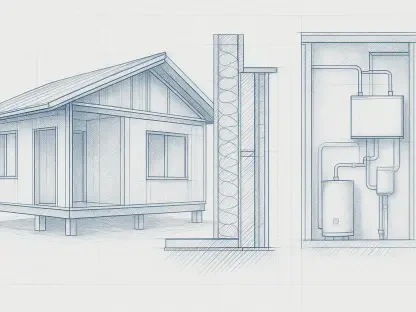
The inherent power of visual communication is deeply rooted in both biological evolution and human history, serving as a primary method to signal quality and intent long before the advent of modern computer technology. Throughout the natural world, intricate structures built by various species serve as visual signals of resourcefulness and survival capability, a concept that humans have refined over millennia to solve increasingly complex architectural puzzles. The revolutionary anatomical and engineering sketches of Leonardo da Vinci represent a pivotal moment in this history, demonstrating how making internal thoughts visible is the most effective way to analyze and solve multifaceted engineering challenges. In the context of modern construction, this historical precedent mirrors how architects and engineers utilize physical models and sophisticated drawings to move beyond abstract reasoning. By externalizing these ideas, they make complicated engineering concepts accessible and actionable, ensuring that the underlying logic of a structure is evident to those tasked with its physical creation.
This critical transition from internal thought to external reality is frequently observed in the professional evolution of designers who eventually move from viewing sketches as simple drawings to recognizing them as binding commitments. These visual artifacts act as a comprehensive summary of every decision made during the planning process, creating a narrative that aligns diverse teams who often come from very different technical or cultural backgrounds. By establishing a common understanding through sketches, three-dimensional models, and detailed renderings, project leaders can ensure that every member of a massive operation is working toward the same specific goal. This alignment is not merely about aesthetic agreement but about technical synchronicity, where the visual medium serves as the ultimate arbiter of truth in a project. As the scale of builds increases, the reliance on these visual foundations becomes even more pronounced, serving as the primary anchor for communication in an industry where a single misunderstanding can lead to catastrophic delays or safety failures.
Traditional Methods: Enhancing Collaborative Workflow
Even the most basic physical tools, such as color-coded sticky notes arranged on a large-scale planning board, can radically improve the way construction teams coordinate their complex daily tasks. This hands-on approach builds a significant sense of ownership and personal accountability among the workforce, as individual team members can physically place and move their responsibilities within the context of the larger project schedule. When workflows are mapped out chronologically in a public space, the dependencies and handoffs between different trades become immediately obvious to everyone involved in the process. This transparency allows the entire team to visualize the potential ripple effect of any single delay, providing the foresight necessary to resolve bottlenecks before they have a chance to disrupt actual work on the construction site. The physical act of moving a task card creates a psychological commitment to the timeline that digital spreadsheets often fail to replicate, fostering a culture of proactive problem-solving.
Furthermore, these traditional visual methods facilitate a level of immediate feedback that is essential for maintaining the momentum of a project during its most intensive phases. By using a wall-based planning system, site supervisors can conduct stand-up meetings where the visual representation of the week’s goals serves as the primary agenda, keeping discussions focused and efficient. This method encourages tradespeople to communicate directly about overlaps in their work zones, such as when electrical installations might interfere with mechanical ductwork. Because the plan is visible and tangible, it invites participation from those who might otherwise feel disconnected from the high-level scheduling process. The result is a more resilient plan that reflects the reality of the field rather than the idealized assumptions of an office-based planner. This grounded approach ensures that the schedule remains a living document that adapts to the daily challenges of the site while keeping the long-term milestones clearly in sight for the whole team.
Scaling Visibility: The Shift to Digital Innovation
While manual planning boards remain highly effective for small groups, the implementation of digital planning software has become essential for maintaining visibility across large, complex projects involving hundreds of contractors. Modern digital tools apply the same logical principles as the physical sticky note wall but add sophisticated layers of consistency and automated intelligence to manage vast amounts of project data. By utilizing uniform color-coding and standardized digital tags, these platforms prevent the visual fatigue that often accompanies massive data sets, allowing participants to quickly scan a comprehensive schedule to find their specific commitments. These systems are designed to update in real-time, ensuring that a change made by a structural engineer in one location is immediately reflected on the tablets of site foremen elsewhere. This instantaneous synchronization eliminates the lag time associated with paper-based updates, reducing the risk of work being performed based on outdated or incorrect information.
These advanced digital systems also introduce specialized features like logic ties and visual anomalies that act as early warning signals for the overall health of a construction project. Connector lines between tasks visually represent complex dependencies, using intuitive signals such as green for on-time progress and red for critical delays to provide an instant status check for management. Furthermore, unique visual cues, such as the digital “tilting” of a task tag when a commitment is missed, force team members to acknowledge failures immediately and publicly within the system. This ensures that problems are highlighted for resolution rather than being buried in the rows of a traditional spreadsheet or forgotten in an email chain. By making the status of every task visually undeniable, these platforms cultivate a high-performance culture where transparency is the norm. This level of digital visibility allows for a more granular analysis of project performance, enabling teams to identify recurring patterns of delay and adjust their strategies accordingly.
Future Directions: Implementing Visual Decision Support Systems
The industry successfully transitioned toward integrated visualization systems that treated planning as a dynamic, visual dialogue rather than a static, one-way document. Companies that adopted these strategies found that the implementation of real-time visual feedback loops effectively mitigated the risks associated with schedule compression and labor shortages. Moving forward, the emphasis shifted toward training field personnel to interact directly with digital models, ensuring that the visual language was not confined to the home office but lived on the job site. Stakeholders prioritized the development of standardized visual protocols to ensure seamless interoperability across various software platforms and contracting firms. This evolution demonstrated that the most effective path toward construction efficiency was rooted in making the invisible aspects of workflow visible to all participants. Ultimately, the transition to these visual systems established a new benchmark for project transparency and safety across the global construction landscape, proving that clarity was the ultimate tool for success.