
The transition from a modest family-run operation in 1986 to a sophisticated construction leader on Vancouver Island represents a significant case study in regional business scaling and operational excellence. Over the decades, the company formerly known as Island West Coast Developments has managed to navigate the volatile shifts of the real estate market while expanding its workforce to over 140 dedicated professionals. This transformation was not a matter of chance but the result of a deliberate strategy to move beyond the limitations of single-family residential construction into more complex, large-scale commercial and industrial arenas. By focusing on disciplined internal processes and the cultivation of long-term professional relationships, the firm redefined its identity. Today, its portfolio serves as a blueprint for how small enterprises can successfully transition into multidisciplinary powerhouses capable of handling high-stakes projects across diverse sectors including automotive and multi-residential housing.
Evolutionary Shifts and Commercial Foundations
Establishing a foothold in the commercial development sector required a fundamental pivot in business capabilities that extended far beyond the technical requirements of homebuilding. The founders recognized that personal credibility was their most valuable asset, leveraging it to secure early projects such as warehouses and local strip malls which served as critical testing grounds. These initial ventures provided the necessary experience to manage the increased regulatory and logistical demands inherent in non-residential construction projects on Vancouver Island. Rather than viewing these projects as simple one-off contracts, the firm treated them as opportunities to prove their reliability to a broader network of developers. This strategic approach allowed the company to “get its feet wet” in the commercial arena without overextending its resources, laying a stable foundation for the complex specialized construction work that would eventually define its market presence.
Success in the commercial realm was largely predicated on the firm’s ability to navigate the intricate web of local regulations and municipal requirements that often stymie less experienced builders. By consistently delivering projects that met strict deadlines and budget constraints, the company solidified its reputation as a dependable partner for regional developers looking for stability. This transition period was characterized by a meticulous focus on documentation and site management, which effectively bridged the gap between small-scale residential work and large-scale commercial development. As the firm gained confidence, it began to attract larger investors who valued the transparency and precision the team brought to every job site. This phase of growth was instrumental in developing the organizational structure needed to support a larger workforce, ensuring that the company’s expansion was both sustainable and rooted in a deep understanding of the local landscape.
Integrating the Design-Build Methodology
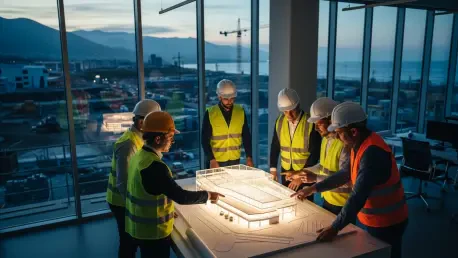
The most significant turning point in the firm’s trajectory arrived when it entered the automotive sector, a move that necessitated a complete overhaul of traditional general contracting methods. Constructing modern car dealerships demands an exceptional level of precision and extensive pre-construction planning that standard approaches often fail to provide effectively. This niche sector acted as a catalyst for innovation, forcing the firm to refine its front-end capabilities and adopt a more integrated role in the design process from the very beginning. By taking the lead during the early conceptual phases, the company was able to ensure that architectural visions remained aligned with practical financial constraints and technical feasibility. This shift toward a more proactive management style allowed the team to anticipate potential roadblocks before they materialized on-site, drastically reducing the likelihood of costly delays or design errors.
Refining the design-to-budget methodology over three decades has provided the organization with a substantial competitive advantage that few regional competitors can match. While many contemporary firms are only recently beginning to integrate their construction teams into the design phase, this company has already perfected the art of balancing aesthetics with economic reality. This historical lead allows them to offer a more predictable and efficient delivery method, providing clients with a level of certainty that is rare in the high-stakes world of commercial construction. The automotive sector did more than just fill a portfolio with impressive structures; it established a rigid internal process discipline that governs every project the firm undertakes today. By internalizing these complex management systems, the company has positioned itself as a primary choice for sophisticated owners who require a builder capable of steering a project from the first sketch to the final walkthrough.
Scaling Through Strategic Diversification
Identifying the burgeoning demand for high-density housing on Vancouver Island approximately 12 years ago, the firm initiated a calculated expansion into the multi-residential market. Instead of rushing into this new sector with existing staff, the leadership team adopted a methodical approach by specifically recruiting project managers and site supervisors with deep expertise in residential density. This strategy ensured that the nuances of condominium and apartment construction were handled by professionals who understood the unique mechanical, electrical, and life-safety requirements of multi-family buildings. By adapting their proven commercial processes to fit the residential landscape, the firm successfully completed a diverse range of projects including purpose-built rentals and publicly funded supportive housing. This intentional talent acquisition allowed the company to enter a competitive market with immediate credibility, avoiding the common pitfalls associated with rapid sector diversification.
Strategic diversification has resulted in a robust business model that offers remarkable resilience against the cyclical fluctuations of the construction industry and the broader economy. By maintaining an active presence across the automotive, commercial, industrial, and multi-residential sectors, the firm has effectively insulated itself from downturns in any single market segment. This balanced portfolio allows resources to be shifted dynamically as demand changes, ensuring that the organization remains stable even when specific industries face temporary headwinds. Furthermore, the ability to operate as a multidisciplinary leader has made the firm an attractive partner for large-scale developers who have interests in multiple property types. This stability not only protects the company’s bottom line but also provides a secure environment for its 140 employees, fostering a culture of long-term commitment and professional growth that is often missing in more volatile firms.
Sustaining Excellence Through Relationships
A core tenet of the firm’s enduring success is the rejection of the transactional mindset that often characterizes the construction industry in favor of deep, relationship-based business. The leadership operates on the fundamental principle that repeat business serves as the ultimate metric of organizational health and project quality. This philosophy manifests in long-term partnerships with automotive groups and residential developers who return to the firm project after project because of the established trust. By prioritizing these connections, the company reduces the costs associated with client acquisition and fosters a profound understanding of each client’s specific standards and expectations. This level of intimacy in professional relationships allows for more streamlined communication and a collaborative atmosphere where problems are solved through mutual respect rather than adversarial negotiation. Consequently, the firm has built a reputation as a reliable partner.
The commitment to building equity extends beyond client interactions to include the vital relationships maintained with subcontractors and specialized tradespeople throughout the region. In a market like Vancouver Island where the pool of skilled labor is finite, treating trades as essential partners rather than disposable vendors is a critical strategic advantage. The firm has cultivated an ecosystem where the success of every sub-trade is viewed as inextricably linked to the success of the overall project and the satisfaction of the owner. This collaborative approach ensures that the highest quality of craftsmanship is maintained and that project schedules remain reliable even during periods of high demand. Internal culture also plays a pivotal role, as the company invests in the growth and pride of its own workforce to ensure high retention rates and motivated teams. By combining these relationship strategies, the organization has created a unified front that delivers excellence.
Implementing Long-Term Strategic Success
The successful transition of leadership from the original founders to the current management team secured the firm’s future by preserving its core values while embracing modern efficiency. This generational succession was managed through a seamless multi-year plan that involved outside professionals and focused on maintaining the high standards of reliability established back in 1986. By pairing the agility of its family-run roots with the sophisticated systems of a modern powerhouse, the organization demonstrated how to evolve without losing its original identity. Looking forward, the industry must recognize that the integration of design-build processes and the prioritization of human capital are the most effective ways to navigate increasing complexity. The firm proved that by investing in pre-construction planning and fostering a culture of continuous self-evaluation, construction companies can achieve sustainable growth and regional dominance.
These findings suggest that the future of the sector lies in moving away from fragmented delivery models toward the unified, relationship-driven approach that this firm has championed over the last several decades. For developers and stakeholders, the key takeaway is that early collaboration between the builder and the design team results in significantly lower risk and higher quality outcomes. Moving into the next phase of regional development, it is recommended that companies prioritize the establishment of a “design-to-budget” framework to mitigate the impact of rising material costs and labor shortages. The ability to manage both the creative and the technical aspects of a build under one roof is no longer just an advantage but a necessity for surviving in a mature market. By following this blueprint of disciplined growth and multidisciplinary expertise, organizations can ensure they remain competitive while delivering projects that meet the evolving needs of their local communities.