
The landscape of English urban development is shifting as the need for accessible living spaces becomes more acute than ever. With the recent approval of the Academy Way project in Warrington, the Habiko consortium is setting a bold precedent for how we can transform redundant commercial spaces into vibrant residential hubs. This 240-unit development serves as the opening chapter in a massive 12-year national housing initiative designed to bridge the gap between supply and demand. In this discussion, we explore the architectural vision, the socio-economic impact of affordable rental models, and the collaborative power of public-private partnerships in revitalizing town centers.
The Academy Way project in Warrington repurposes a former commercial site into a residential hub; how does this transition reflect the broader trends in urban regeneration today?
It is a classic example of breathing new life into underutilized land, specifically the 1.5-acre former DW Sports site near the bustling Time Square district. By placing 240 apartments right where people work and play, we are effectively cutting down on the urban sprawl that has plagued our cities for decades. You can almost feel the shift in energy as these two six-story blocks replace a quiet commercial lot with the footsteps and voices of hundreds of new residents. This isn’t just about putting roofs over heads; it’s about stitching the fabric of the town center back together with high-quality rental units that keep the streets active and the local economy thriving.
With architectural firms leading the design, what specific elements are being used to ensure these 162 one-bedroom and 78 two-bedroom apartments feel like a true community rather than just a housing complex?
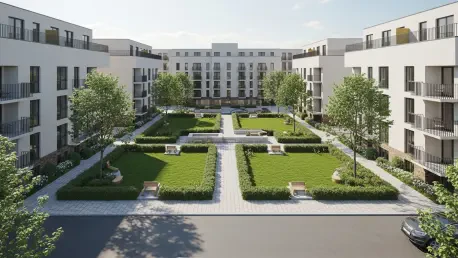
The design really centers on human connection, specifically through a beautifully landscaped communal courtyard that acts as the lungs of the development. It is a sensory experience where the sight of greenery and the accessibility of open air provides a much-needed sanctuary from the hard concrete of the city surroundings. We are also looking at very high building standards that prioritize low-carbon living, ensuring that these 240 homes are as efficient as they are aesthetically pleasing. When residents walk into these spaces, they should feel the warmth of a modern home that doesn’t just look good but actually lowers their monthly energy bills through smart, sustainable engineering.
The commitment to keeping rents at least 20% below local market rates is a cornerstone of this initiative; how does this pricing strategy impact the long-term viability of urban centers?
Keeping costs within the Local Housing Allowance thresholds is a game-changer for the workforce that keeps our cities running every single day. When people aren’t spending every penny of their paycheck on rent, they have the breathing room to contribute to their local communities, which creates a more resilient and vibrant urban culture. This 20% discount isn’t just a dry number on a spreadsheet; it is the difference between a family thriving or merely surviving in an increasingly expensive market. By securing these rates, the partnership is ensuring that the people who work in Warrington’s shops and services can actually afford to live within walking distance of their jobs.
Warrington is just the beginning of a 12-year plan to deliver 3,000 homes; how do the upcoming projects in Solihull, Chester, and Liverpool build upon this initial success?
Each of these locations—Solihull, Chester, and Liverpool—presents a unique set of challenges, but the Warrington approval provides the essential blueprint for navigating the complex planning landscape. We are building a momentum that will carry us through the next decade, proving that public-private partnerships can deliver at a massive scale. The 3,000-home goal is incredibly ambitious, but by starting with these 240 units, we are refining a repeatable model of high-quality, sustainable architecture. It is exciting to think about the thousands of lives that will be changed as these developments break ground across England, turning once-forgotten plots into modern, proud neighborhoods.
The collaboration between Muse, Homes England, and the Pension Insurance Corporation is a significant alliance; what does this partnership represent for the future of housing delivery?
This partnership is the engine room of the entire mission, blending the agility of private development with the long-term stability of institutional investment and government support. It allows for a level of scale and financial security that single developers often struggle to achieve, especially when dealing with the tight margins of affordable housing projects. You see a real synergy here where the expertise of developers and the backing of national agencies create a foundation of trust for the local authorities. It is a powerful statement that when the right players sit at the table, we can overcome the bureaucratic hurdles that often stall critical regeneration projects for years.
What is your forecast for the future of affordable housing in major English towns over the next decade?
I expect to see a massive surge in mixed-use, high-density developments that prioritize environmental performance and social equity above all else. Projects like Academy Way are the vanguard of a movement where “affordable” no longer means “low quality,” but rather represents the pinnacle of modern, sustainable urban living. We are going to see more redundant commercial spaces being reclaimed for the people, with a heavy focus on pedestrian-friendly zones and integrated green spaces that boost wellbeing. As long as we continue to leverage these public-private partnerships, I believe we can finally begin to bridge the gap in the housing shortage while simultaneously revitalizing our town centers for the 21st century.