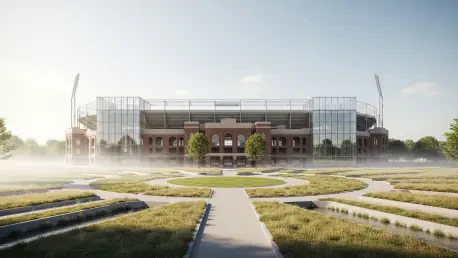

The roar of eighty thousand fans gathered under brilliant floodlights often masks a staggering demand for energy and water that could power a small city for several days. Historically, these architectural behemoths were viewed as environmental burdens, yet a recent shift has converted them into the vanguard of metropolitan ecological stewardship. The U.S. Green Building Council now utilizes sophisticated digital tools to track North American venues achieving Leadership in Energy and Environmental Design (LEED) and Total Resource Use and Efficiency (TRUE) certifications. This initiative does not merely label buildings; it highlights how massive infrastructure can bolster urban resilience during peak seasons of professional baseball and international soccer tournaments. By treating these venues as anchors within a wider sustainability ecosystem, cities are learning to integrate large-scale operations with local economic growth. This connectivity ensures that environmental responsibility extends beyond the turnstiles to encompass the entire fan experience, including transportation, lodging, and local dining options.
Transforming Civic Landmarks Into Living Laboratories
As central landmarks in many cities, stadiums are uniquely positioned to influence public behavior and contemporary urban planning through their sheer scale and visibility. Because they operate as high-density hubs, they serve as “living laboratories” that demonstrate how to manage resources effectively during periods of extreme heat or rising utility costs. Their commitment to sustainability offers a public example of how large-scale operations can save energy and water while maintaining high levels of spectator satisfaction. By implementing advanced climate control systems and smart lighting, these venues show that comfort and conservation are not mutually exclusive goals in modern architecture. These facilities provide a testing ground for technologies that might eventually be scaled for residential or commercial neighborhoods across the globe. As these laboratories produce real-time data on energy loads, city planners can better understand the stressors placed on the electrical grid during major civic gatherings.
The measurable impact of these green venues is significant, with data showing massive savings in energy and water that were previously thought impossible for such large structures. Collectively, certified stadiums utilize thousands of high-efficiency solar panels and save millions of gallons of water each year, which is enough to fill hundreds of Olympic-sized pools. These environmental efforts also make profound sense for the bottom line, as comprehensive energy upgrades can save operators over a million dollars in annual costs while removing millions of single-use plastics from the waste stream. By replacing traditional irrigation with gray water recovery systems, stadiums reduce their strain on municipal water supplies, especially in drought-prone regions of North America. This shift toward resource autonomy allows stadiums to function as emergency shelters or community hubs during climate-related disruptions, further cementing their value. The financial incentives, combined with the ecological benefits, create a compelling case for owners to invest in retrofitting.
Modernizing Performance Through Operational Excellence
A major trend in the industry is the focus on LEED for Operations and Maintenance, which targets the daily performance of existing buildings rather than just new construction. This approach is vital for historic stadiums that cannot be easily rebuilt but can still be modernized for efficiency through strategic system overhauls. By upgrading antiquated heating, ventilation, and air conditioning systems for superior energy and water use, even the oldest venues in North America achieve top-tier sustainability ratings. This process preserves cultural history while ensuring that these iconic structures do not become obsolete in a world that increasingly values carbon neutrality. The modernization of legacy venues proves that sustainability is achievable through persistent incremental improvements and rigorous monitoring of operational metrics. It also demonstrates a commitment to longevity, as these historic landmarks continue to serve their communities without the environmental footprint associated with demolition. Maintaining these venues requires a balance between heritage and progress.
Zero-waste goals are also becoming a standard part of venue management through certifications like TRUE, which focus on establishing a circular economy within the stadium walls. Managing the huge volume of trash from food and drinks is a significant challenge, but many stadiums are now diverting nearly all of their waste from landfills through composting and recycling. By using sophisticated material recovery facilities and reusable containers, these venues set a new bar for how large-scale public events handle mass consumption. This transformation requires a complete rethinking of the supply chain, from selecting compostable packaging to training staff on proper sorting techniques. Fans are increasingly participating in these efforts, as clearly labeled waste stations and educational messaging become common features of the concourse experience. The result is a system where materials are kept in use longer, reducing the demand for raw resources and minimizing the impact on local waste infrastructure. This circularity is a cornerstone of the modern sports venue.
Advancing the Blueprint for Resilient Metropolitan Centers
Expanding the scope of sustainability involves linking stadiums to a broader network of certified hotels and restaurants, creating an eco-friendly tourism corridor. This holistic view of the fan experience shows that environmental responsibility is most effective when it connects travel, lodging, and dining into a single cohesive strategy. By identifying nearby green-certified businesses, stadium operators provide a blueprint for local economic growth that does not come at the expense of the environment. This strategy encourages visitors to make conscious choices throughout their entire trip, reinforcing the values promoted during the game. It also fosters a sense of community pride, as local businesses align their practices with the high standards set by the city’s major sports infrastructure. Such integration ensures that the economic benefits of hosting large-scale events are distributed across a resilient and sustainable local market. As cities become more densely populated, these interconnected networks will be essential for managing the load.
The transition to environmentally conscious venues solidified the role of sports as a catalyst for broader societal change across North America. It became evident that success was not measured solely by attendance figures but by the efficiency of the systems supporting the event. Operators who prioritized early adoption of data-driven resource management found themselves better prepared for fluctuating utility costs and stricter urban regulations. To continue this momentum, it was necessary for municipalities to mandate high-performance standards for all new public developments. Investing in modular energy storage and decentralized water treatment became a logical next step for facility managers who sought to insulate their venues from external shocks. This evolution proved that the sports industry possessed the unique ability to normalize complex sustainability concepts for the general public. By integrating these practices into the fabric of urban life, the legacy of modern stadiums transitioned from temporary entertainment hubs to permanent pillars of civic resilience.